


Measure the base, not just the height
A short idol with a wide base can take more dashboard than a tall slim one. Check height, width, depth and base footprint for the exact variant you are buying.

 Menu
Menu
Svastika's
शुभ यात्रा
A few inches of brass or gold at the edge of the windscreen, steady through every turn. The oldest habit in Indian driving.
 Lord Ganeshaश्री गणेश
 Tirupati Balajiगोविन्दा
 Lord Hanumanजय श्री राम
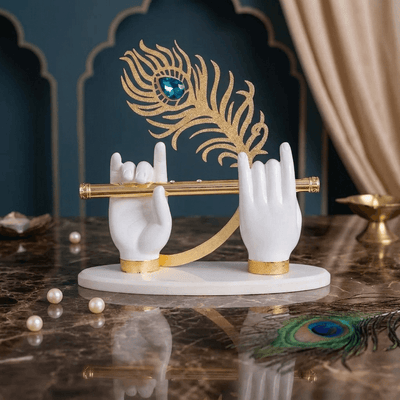 Lord Krishnaश्री कृष्ण
 Lord Shivaॐ नमः शिवाय
 Sikhism
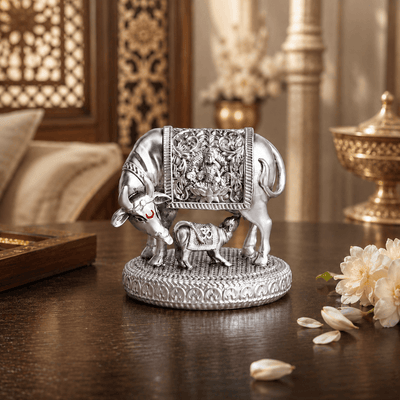 Gold & Silver Plated Idols
 Brass Idolsपीतल
A short idol with a wide base can take more dashboard than a tall slim one. Check height, width, depth and base footprint for the exact variant you are buying.
Never fix anything on or above a marked airbag cover. Check your owner's manual, and keep the idol below the line between your eyes and the road.
Interior polish leaves a silicone film that adhesive cannot grip. Wipe the spot, let it dry, press the pad firmly, then leave it a few hours before driving.
A dashboard idol sits in your eyeline on every drive, so it has to work as a devotional object and as part of the car interior. The pieces here are made for that: compact heights, weighted bases, finishes that hold up to sun and heat. Most sit between 1.5 and 4.5 inches, small enough to stay below the driver's sightline without crowding vents, screens or controls. For full size murtis meant for a home mandir, see the wider god idols and figurines range.
There is no single correct answer, and the honest advice is to choose the form you already pray to. Some are picked far more often than others, usually for reasons rooted in the tradition itself.
Ganesha is the most common choice by a wide margin, because Ganapati is invoked at the start of any undertaking and a journey counts as one. Compact forms work best: Om Ganesh, Modak Ganesha, Pagdi Vighnaharta and small Dagdusheth Halwai Ganpati murtis. Larger seated and Mushak designs belong on a shelf. See Ganesha idols.
Tirupati Balaji is our single best selling piece here. Balaji Charan, the feet of Venkateswara with Shankh, Chakra and Namam, has a flat footprint that suits a dashboard better than most standing figures. More in Tirupati Balaji idols.
Hanuman is kept for protection, which is the reason most people give for wanting an idol in a car at all. Sinduri and Abhaya Mudra forms, in gold plated and brass. See Hanuman idols.
Krishna has the most direct textual link to travel of any deity here, since in the Bhagavad Gita he is Parthasarathi, Arjuna's charioteer. Flute, peacock feather and divine hands designs suit narrow dashboards. See Krishna idols.
Shiva as a full murti is usually too tall, so most buyers take an emblem: Trishul and Damru, Om, or the Shiva hands design. See Shiva idols.
Ek Onkar and Khanda in gold plate, sized for a dashboard and difficult to find well made at this scale. Also the choice for anyone who would rather keep a symbol than a figure. See Sikh symbols and idols. Shirdi Sai Baba and compact Jagannath idols are stocked in smaller numbers.
Almost every page on this subject opens with the words "as per Vastu", so it is worth being straight. The classical Vastu texts deal with buildings, temples and settlements. They were composed centuries before the motor car and contain no rules about dashboards. Anything presented as a Vastu regulation for a vehicle is modern convention, not scripture.
What does have genuine grounding: invoking Ganapati before beginning something, Hanuman's role as protector, Krishna as charioteer, and vahan puja, the ritual blessing of a new vehicle, which is widely observed across India.
What is popular belief, held sincerely and worth respecting if it matters to you, but not scriptural: that the idol should face the driver, that one is better than several, and that a chipped murti should be immersed rather than kept. We would not tell you to ignore any of it. We would also not tell you it comes from a text.
What you can disregard: claims that a metal never fades in dashboard heat, or that a posture affects your concentration while driving. That is sales copy.
Do not judge from the photograph. Check height, width, depth and base footprint per variant, because several designs come in both a dashboard size and a larger shelf size.
Three to four inches suits most sedans and hatchbacks, but height is not the only number that matters. A 2 inch Balaji Charan with a broad base can occupy more surface than a 4.5 inch half face figure. Measure the flat area you have, then compare it to the base. Sit in the driver's seat and hold your hand where the idol would go. If it interrupts the road, a mirror or a screen, go smaller.
This is the part most listings skip. A loose idol slides on an Indian road, and a heavy brass one becomes a projectile under hard braking.
Start with a genuinely clean surface. Dashboard plastics carry a film of silicone from interior polish and nothing adheres through it, so wipe the spot with a lint free cloth and, if the dash has been polished, a little isopropyl alcohol tested on an inconspicuous patch first. Let it dry fully. Then use a removable automotive adhesive pad or a mount rated for interior trim, not household superglue and not stationery tape. Press firmly for about thirty seconds and leave it a few hours before driving.
Textured and steeply curved dashboards hold adhesive poorly. There, a non slip mat under the base works better than forcing an adhesive that will let go in May. Check the fixing after the first hot week, after any interior cleaning, and after a long run on rough road.
Worth stating plainly, because very few listings do: never mount anything on or directly above a marked airbag cover. Passenger airbags deploy upward and outward from the dash at high speed, and a solid metal object in that path is dangerous. Airbag locations differ between models, so check your owner's manual rather than guessing.
Keep clear of the instrument cluster, the infotainment screen, air vents, parking sensors, and any camera or radar module behind the windscreen. Keep the idol low enough that it never sits between your eyes and the road.
A car parked in the Indian summer gets far hotter inside than the air outside, and the dashboard is the hottest part of the cabin. That affects adhesives more than metal, but finish matters too.
Gold and silver plated pieces make up most of this collection: bright, sharply detailed, light enough for a standard adhesive pad. Keep them dry, soft dry cloth only, and never dashboard polish or glass cleaner. See gold and silver plated idols. Brass is heavier and develops a patina many people prefer to a permanent shine; a 3 inch brass Ganpati needs a proper mount, not a thin adhesive dot. See brass idols. Painted and marble dust finishes carry the finest colour work and are least forgiving of direct sun and abrasion, so they suit a garaged car. A windscreen sunshade helps all three and costs less than replacing any of them.
A dashboard idol is one of the few new car gifts that gets used every day rather than put in a drawer. Vahan puja, performed when a vehicle is first brought home, is the natural occasion. Choose the recipient's own deity where you know it; where you do not, Ganesha or a plain Om is safer. For housewarming or wedding gifting instead, see housewarming gifts and wedding gifts. Dashboard idols are also a common pick for dealership handovers and Diwali gifting; see bulk gifting or send the details on the bulk order enquiry page.
Add ₹ 4,999 more for A Free Brass "माँ" Diya


