


Where it belongs
Face the murti east or north-east in a clean, quiet corner of your home mandir, raised a little above the floor.

 Menu
Menu
Svastika's
The Jaipur enamel craft: colour worked into engraved metal and fired to glass. Peacocks, elephants and camels in jewel colours that do not fade like paint.
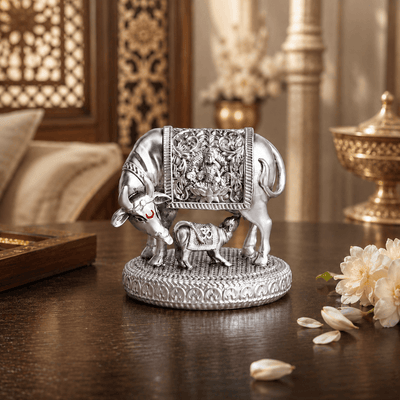 Animal Decor
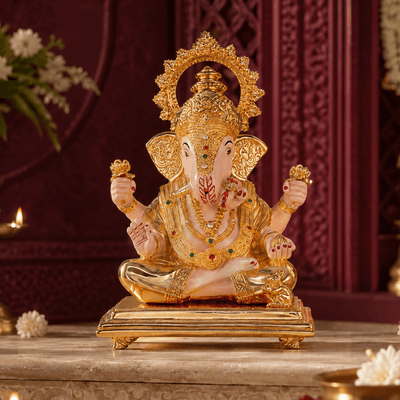 Home Decorगृह सज्जा
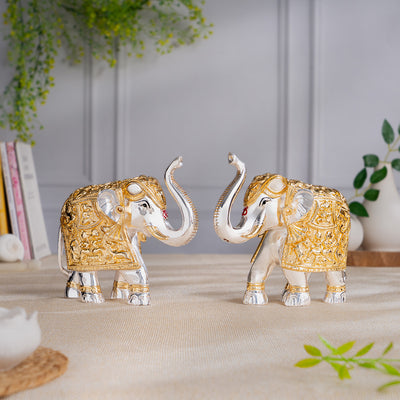 Table Decor
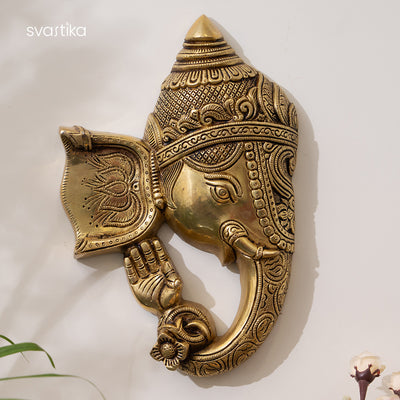 Wall Decor
 House Warming Ceremony Gifts
 Corporate Gifts
 Wedding Gifts for Couple
Face the murti east or north-east in a clean, quiet corner of your home mandir, raised a little above the floor.
Pick a height that suits your altar — a 4–6 inch murti sits beautifully on most home mandirs, while taller pieces anchor a dedicated pooja room.
Wipe gently with a soft, dry cloth. Keep away from water and harsh polish — the finish keeps its lustre for years with a light touch.
Meenakari is enamel on metal: coloured mineral enamel worked into an engraved metal surface, fired at high heat so it fuses to glass, then polished back so the colour sits flush and jewel-bright. It is one of the great decorative crafts of Rajasthan, most associated with Jaipur, and it is among the most labour-intensive finishes we sell. This collection is meenakari animal figures, the peacock, elephant, camel, horse, tortoise and parrot.
Worth understanding, because meenakari sits above plain brass on price and the reason is in the making. Each colour is a separate application, and each is fired separately, since different mineral colours mature at different temperatures. A multi-colour piece goes through the kiln repeatedly, and the engraving that holds the enamel is cut by hand first. The depth and the way the colours catch light are the result of that layering. A printed or painted imitation, which exists, is flat by comparison and does not survive handling the same way.
All decorative figures rather than ritual objects. The peacock is the signature form, the tail giving the enamel the most room to show. Elephants, plain and with the Ambari howdah, in several sizes. Camel and horse, handsome craft objects rather than symbolic ones. The tortoise and parrot, smaller pieces. These sit on a console, a shelf or a mantel and are bought for the colour and the craft, not for worship.
For the same animal forms in solid or plated metal, see brass elephant and animal statues.
Meenakari is enamel, which is glass, so it is beautiful and it is fragile in a specific way. Wipe dry only, and never scrub or use any paste. A cleaning paste, an abrasive cloth or a metal polish will scratch or dull the enamel, and a chip in fired enamel cannot be filled. A soft dry cloth is the entire routine. Keep the piece where it will not be knocked, since the enamel chips at an edge if it takes a hard tap against a hard surface.
Kept sensibly, the colour does not fade. Fired enamel is far more stable than paint, which is much of the point of the craft.
Meenakari is a strong gift because it reads as craft and colour at once, and it does not require the recipient to be religious, since these are decorative objects. It suits a housewarming, a wedding and corporate gifting where you want something recognisably Indian and handmade. See griha pravesh and housewarming gifts, wedding gifts and corporate gifts, or the bulk order enquiry page. For the wider decorative range, home decor and showpieces for the living room.
Add ₹ 4,999 more for A Free Brass "माँ" Diya


