Someone calls to say the function is next month. You say yes, put the phone down, and realise you have no idea what you are supposed to bring.
Nobody writes these rules down, because everyone learned them by watching. The ceremony also answers to a different name in every state, so looking it up sends you in circles.
What it is called where you are
| Region | What families call it |
|---|---|
| Andhra Pradesh, Telangana | Half saree function · langa voni · voni function · pattu langa |
| Tamil Nadu | Pavadai Davani · Manjal Neerattu Vizha (the turmeric-water ceremony) |
| Karnataka | Ritusuddhi |
| Sanskrit, on invitations | Ritu Kala Samskara |
| Casual Indian English | Maturity function · puberty function |
One ceremony, regional clothes. If the invitation says Ritu Kala Samskara and your cousin says voni function, nobody is doing anything unusual. Every one of those names is describing either the outfit or the bath, and we pulled them apart word by word in what the half saree function actually means.

Is it in the scriptures?
No. The classical list of sixteen samskaras carries no coming-of-age rite for a girl at all; those household manuals route her into adulthood through marriage instead. The boys' thread ceremony is on the list. This one is not.
You will also find lists online that slot ritusuddhi in among the sixteen, so a search result may tell you the opposite. We go through what those lists actually say in the longer piece on what the ceremony is called and where it comes from.
The household version is what actually survived. Hinduism Today's Rites of Passage records it as a home rite for a girl's first menses, with new clothes, jewellery and her first sari handed over. So the day is regional custom, strongest in the south, held up by families and not by text. That is not a downgrade. It means whatever your family does is correct, and nobody gets to quote a verse at you.
What age, and why the date keeps moving
Eleven to fourteen in most families. There is no calendar date to plan against: the day follows her first period, then waits on a muhurat, which usually pushes it a couple of months out. Many families now run it as a straight celebration with no stated link to the biological event at all.

The practical filter for you: the girl is a young teenager, and whatever you give should still make sense to her at twenty-five. That rules out most bad gift ideas on its own.
Who gives what
The maternal uncle gives the half saree. In most families the girl's mama brings the langa voni, often with bangles, and that cloth is his job on the day. It gets spoken about and photographed. So leave the saree alone unless you are the mama: a second one either doubles up on his or sits next to it being compared.
Grandparents and close family give jewellery, or something in silver or gold to keep. Everyone else, meaning aunts, family friends, neighbours and parents' colleagues, gives something for the girl or for the home she will eventually have. If you are reading this, you are almost certainly in that last group.
The shape is the same as a godh bharai or seemantham: one relative carries the headline gift, and the rest of the room brings something small that lasts.
Gifts for the girl
She is thirteen now, and in four or five years her room gets packed into two suitcases. What lasts through that is small, sturdy and hers.
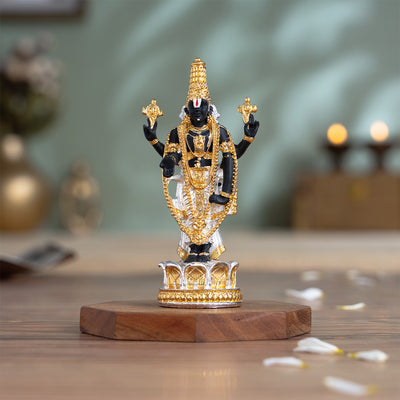
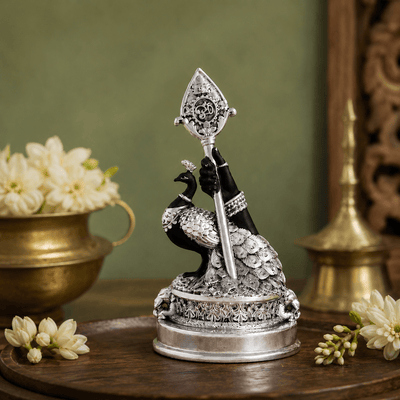
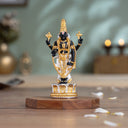
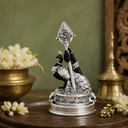
A deity idol is the standard South Indian answer and it works. For a Telugu family Tirupati Balaji is the least risky thing you can carry: he is the house deity in an enormous number of them, and she grew up on the Tirumala story. In a Tamil household Murugan lands better, and the Vel Mayil piece carries the peacock and the vel together.
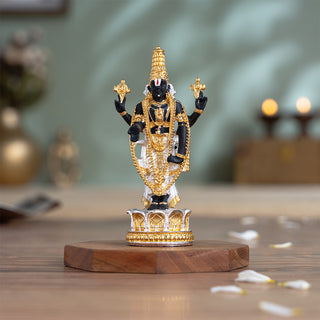
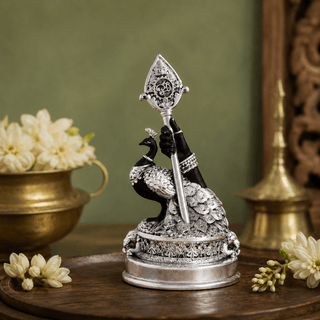
Keep the size sensible. A twelve-inch statue is a gift for a house. A three to five inch idol is a gift for a person, and it is the one that actually travels with her.
Why silver keeps coming up, and what "silver" means
Silver has been the default gifting metal in Indian families for generations. It reads as auspicious, and it does not carry the weight of a gold purchase.
Most affordable silver gifting idols, including ours, are not solid silver. They are built on a resin core, given a copper layer, then electroplated in silver or gold. That build is why a piece with this much detail still weighs almost nothing and still sits under ₹2,000. Cast the same idol solid and the price multiplies.

Buy one as a gift and nothing else. If a shop is quoting you silver rates on a plated piece, walk.
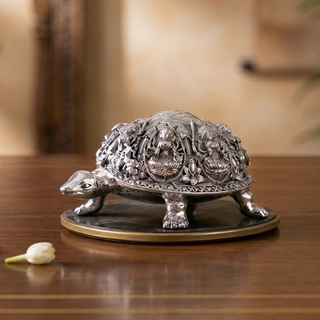
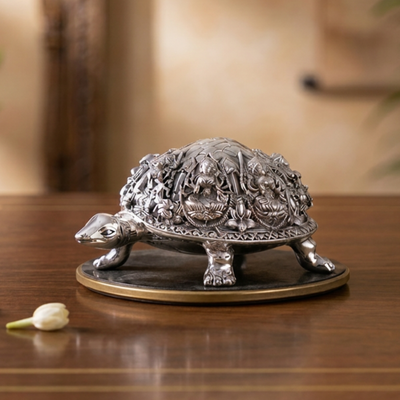
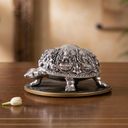
The Kamdhenu cow is a common pick here. As the wish-fulfilling cow of the Kamdhenu story she reads as a blessing for abundance rather than a religious instruction, which makes her easy to give across families. The Ashtalakshmi tortoise does the same job in a household that keeps Lakshmi at the centre.
Something she keeps, not something she displays once
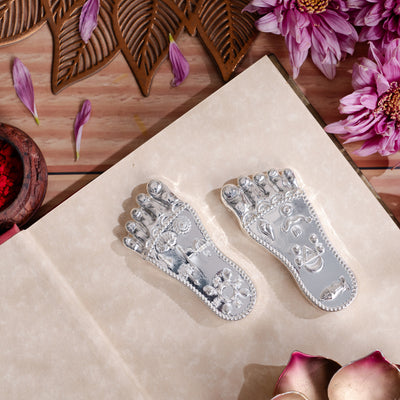
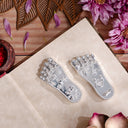
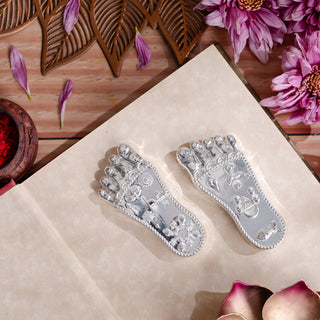
Charan padukas, the sacred feet, are the strongest keepsake on this list. Nobody mistakes them for decoration, and they need about as much shelf as a phone. They do come with a placement rule, worth reading before you hand them over so you can pass it on to her.

A pocket temple is the underrated option for this exact age. It shuts flat, weighs almost nothing, and lives in a suitcase pocket, so it moves with her to a hostel or a first rented flat. For a girl two or three years from leaving home, that beats anything which has to sit on a shelf.

Return gifts, answered honestly
If you are the girl's parents, the maths changes. One gift becomes eighty.

Plenty of families do this at under ₹100 a head, sometimes under ₹50. At that price you are buying from a bulk vendor: small steel tumblers, boxed sweets, printed pouches. For a two-hundred-name guest list that is the sensible call, and we are not the right shop for it.
It changes around ₹300 to ₹600 a head. That is where most families with forty to eighty guests actually land, and there a small steel or brass item that people take home and keep is within reach. Our own bulk gift range starts higher, at about ₹1,000 a head, so it suits the shorter list, and the same logic applies as at a naming ceremony or a house warming: the item that survives is the one with a use or a place.
Order early. Plating takes time, and forty pieces of anything is not a next-day decision. We covered what actually survives the event at length if you want the longer version.
What not to give
- Anything with her face printed on it. Mugs, cushions, framed collages from the function. She will be embarrassed by all of it within three years.
- Adult jewellery. Heavy gold goes into a locker on day two and stays there. Something light she can actually wear beats something expensive she cannot.
- Black. Most families still read it as the wrong colour for an auspicious morning, and nobody will say so to your face.
- An envelope on its own. Fine in plenty of houses, awkward in conservative ones, where elders expect a thing to physically hand over. If you are giving money, put a small item with it.
When the dhoti function is on the same day
A lot of invitations carry two names. Families club a brother's or a cousin's dhoti function onto the same muhurat, so there is one hall, one caterer, one round of relatives flying in. If both are on the card, that is two ceremonies and two gifts.
The boy's side has its own names: dhoti function, panchala function, pancha kattu, and upanayanam where the thread comes on the same morning. What to give there is a different question with a different answer, and the pieces sit in our dhoti function gift range.
Easiest fix if you are attending both: pick one category and buy it twice, sized to each child. Two idols. Two padukas. Nothing for anyone to compare.
Everything we stock for the occasion sits in our half saree function gifts collection, ordered so the pieces families actually buy for this day come first.
Also read: Half Saree Function Meaning | Upanayanam and Dhoti Function Gifts | What Is Kamdhenu Cow? | Return Gifts for a Naming Ceremony | 12 Wedding Return Gift Ideas | Godh Bharai, Seemantham and Valaikappu