The invitation says dhoti function. Your cousin says upanayanam. Your aunt calls it panchala function, and the WhatsApp group has settled on thread ceremony. It is one morning, and you still have no idea what to carry.
Two things make this harder than it should be. The ceremony has a different name in every language, and the one obvious gift is already taken.
Six names for one morning
| Region or language | The names you will hear |
|---|---|
| Andhra Pradesh, Telangana | Dhoti function · pancha kattu · panchala function · puttu panchalu · panchalu · upanayanam or odugu when the thread is given |
| Tamil Nadu | Poonal · poonal kalyanam · brahmopadesam |
| Karnataka | Upanayana · munji · vratabandha |
| Maharashtra | Munja · munj · mounji bandhana |
| Hindi belt and north India | Janeu · yagyopavit |
| Sanskrit, on the invitation | Upanayana · yajnopavita |
| English | Sacred thread ceremony · thread ceremony · dhoti ceremony |
Two of those names are not the same thing. Upanayanam is the rite where a boy receives the sacred thread and is taught the Savitri verse of the Rig Veda (3.62.10), the one everybody knows as the Gayatri mantra. Dhoti function, or panchala function, is the celebration around him wearing a pancha for the first time. In most Brahmin families they are the same morning. In plenty of other Telugu families the dhoti function is held on its own, with no thread at all. One invitation can honestly say either.

Who brings the pancha
The pancha comes from the maternal uncle. In most Telugu households the boy's mama, or his maternal grandparents, bring the new dhoti and often the angavastram with it. The morning opens with mangala snanam, the ceremonial bath, and he steps out of it into their cloth. That is their job on the day, and it gets photographed. So skip the cloth unless you are the mama: his is the one unwrapped in front of everybody, and yours would only sit next to it.
Grandparents and the maternal side give gold: a thin chain, a ring, sometimes ear studs. That is the ₹5,000-and-up end of the day, and very few people.
Once the thread is on there is the bhiksha. The boy takes a small bowl and asks for alms, beginning with his mother: bhavati bhiksham dehi. Every woman in the family puts something in. In most houses that has become cash, and nobody remembers it a week later.
Everyone else in the hall, from aunts to his parents' colleagues, gives one lasting thing. That is most of us. The same split runs through a godh bharai or seemantham.
What age is a boy's upanayanam?
Around eleven, for most invitations you will actually get. Hinduism Today's Rites of Passage puts it between nine and fifteen, far closer to how families run it than the texts are. They are waiting on a muhurat, a school holiday, and an uncle who can get leave.
A dhoti function held without a thread ceremony usually runs later, eleven to thirteen, because it is tied to the boy looking old enough to carry a pancha.
The practical filter: he is a schoolboy today. Buy for the twenty-five-year-old he turns into.

Where the thread ceremony comes from
Unlike the girls' half saree function, which the classical lists leave out, upanayana sits inside the household ritual manuals themselves. The Āśvalāyana Gṛhya Sūtra fixes the year of initiation by varna, and the same chapter names the girdle tied at the boy's waist: munja grass for a Brahmana, a bowstring for a Kshatriya, wool for a Vaisya. That grass is where Maharashtra got its name for the entire ceremony. Munja. Most households have quietly dropped that part and kept the day. The rest of the textual side, the ages and the line between the thread rite and the dressing, is in what the dhoti function actually is.
Upanayanam gifts for the boy
In five years his room gets packed into a trunk and shipped to a college town, so whatever you give has to fit in it. That is the whole logic behind the dhoti function gifts for boys we keep in stock.
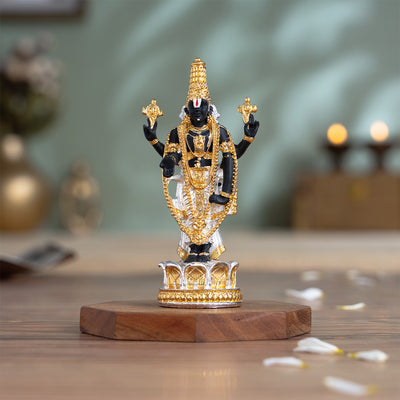
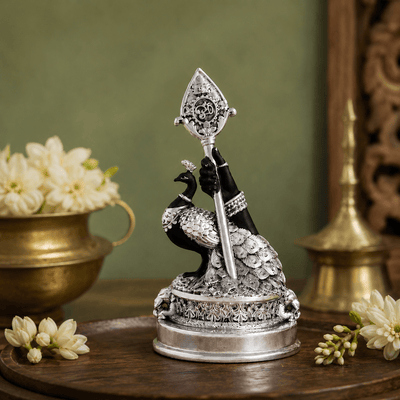
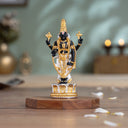
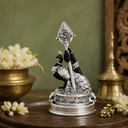
A deity idol is the standard choice across the south and it does not date. In a Telugu house Tirupati Balaji is the safe answer, since Venkateswara is who they pray to and the Tirumala story is one he has heard at home since he was small. For a Tamil family Murugan fits better, and the Vel Mayil piece puts the peacock and the spear in one casting.
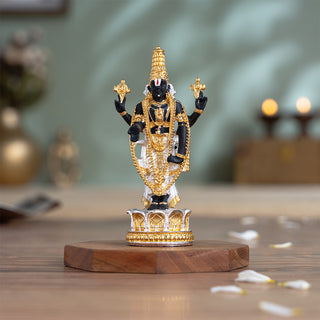
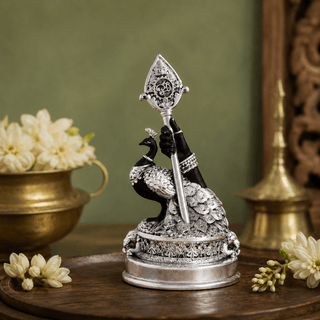
Keep it to three or five inches. Anything bigger is a gift for the house, not for him, and it will not move when he does. Ganesha works if you want something the whole family uses; we went through which form suits a home separately.
What "silver" actually means at this price
Almost every gifting idol in this price band, ours included, is not solid silver. It is a resin core, a copper layer, then a silver or gold electroplate. Doing it that way keeps the weight down and the price under ₹2,000. The same idol cast solid runs several times higher.
Treat it as a present, not as metal you are storing value in. Any shop pricing a plated piece off the silver rate is having you on.
The gift that goes with him to college
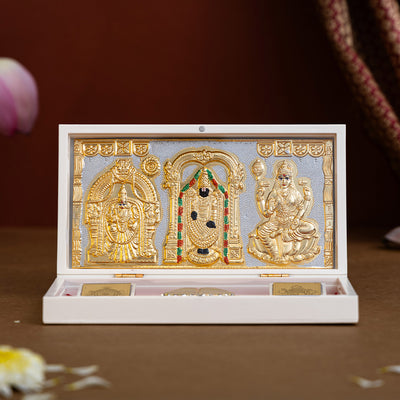
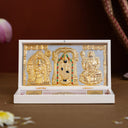
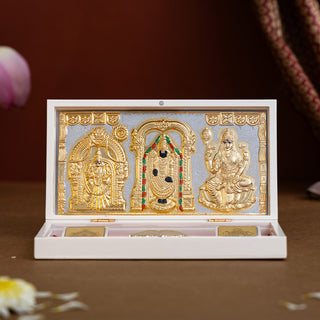
A pocket temple is the underrated gift for this exact age. The Balaji one closes into something about the size of a paperback, so it goes into a bag with his clothes when he moves out. For a boy who has just been handed a daily sandhyavandanam to do, having somewhere to do it matters more than a shelf piece.
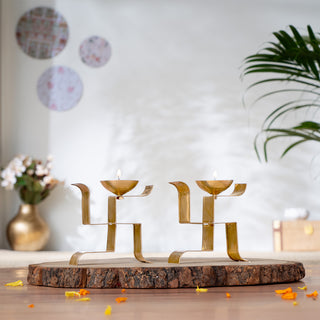
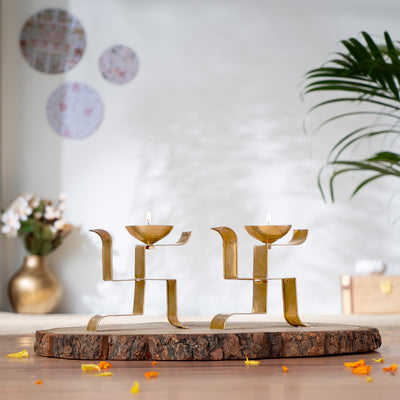
Charan padukas are the other thing that holds. A pooja corner always has room for a pair, and nobody ever mistakes them for décor. Where they go in the house does matter, so read that before you gift them. A pair of brass diyas does the same job for the household, and brass survives a twelve-year-old handling it in a way plated resin does not. The guest end of our upanayanam gift ideas starts around ₹1,200, and brass pairs for close family run past ₹5,000.
Return gifts, gift bags, and the under-₹500 question
If you are the boy's parents you are not buying one gift. You are buying a hundred and twenty.
Under ₹500 a head is where most people want to be, and the traditional answer already lives there. A thamboolam (betel leaves, areca nuts, a coconut, bananas, turmeric and kumkum, with a blouse piece or a small cloth) costs very little and is what elders actually expect to be handed. Put one small metal item on the tray and you are still under ₹500.

Above ₹500 the question changes. Between ₹500 and ₹1,000 you can put one small brass piece in the bag instead of a plate, such as a single symbol diya. From about ₹1,000 a head our bulk gift range opens up, which only makes sense for a short guest list or for the people who travelled, the same split we worked out for a naming ceremony and a house warming.
Order early either way. A hundred plated pieces is not a next-day decision, and we wrote up what actually survives the event.
Gifts to skip
- A watch, a phone, any gadget. Good birthday present, wrong ceremony present. It dates fast, and it competes with the gold coming from the maternal side.
- Merchandise with his photo on it. He is eleven. He will hate it by fourteen.
- Anything black. Traditional homes still treat it as the wrong colour to bring to an auspicious morning.
- An envelope by itself. Common enough, but on this day elders expect something to put in his hands. Add a small item to it.
Two ceremonies on one card
One card often carries both. His dhoti function and a sister's or a cousin's half saree function go on the same morning, so the family books one hall and feeds everyone once. If the card names both children, you owe two gifts, and the girl's side has its own rules about who gives what.
Buy in pairs. Whatever you pick for him, pick the same kind of thing for her, so neither one ends the day holding the better present.
If you only have ten minutes before the shops shut, start with our upanayanam and janeu gift shelf. It is sorted by what families on this exact day actually buy, not by price.
Also read: What Is the Dhoti Function? | Half Saree Function Gifts | Who Is Balaji? | What to Keep in a Pooja Room | Return Gifts for a Naming Ceremony | Trending Bulk Gift Items