Luxury table decoration is mostly subtraction. The tables that look expensive have fewer things on them than you expect, in better materials, at different heights, lit low.
This guide covers what to buy for a dining table, a console and a centre table, what each piece costs, five arrangements that work, and how to keep it looking good. One thing up front: there is no Vastu rule about table decoration, and anyone selling you one has invented it. More on that below.
What actually makes a table look expensive
Four things, and only one of them costs money.
One object that leads. A table with six equal-sized things reads as clutter. A table with one clear centre and two quiet supports reads as designed. Pick the piece that will lead, a wide urli, a tall lamp, a single idol, and let everything else defer to it.
Empty space. The hardest one for Indian homes, because we are generous by instinct. But the gap around an object is what tells the eye the object matters. Aim for the table being about half empty. Genuinely half.
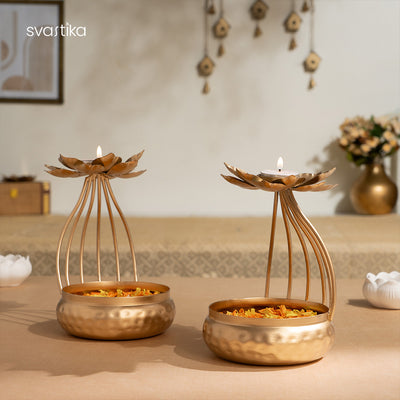
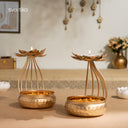
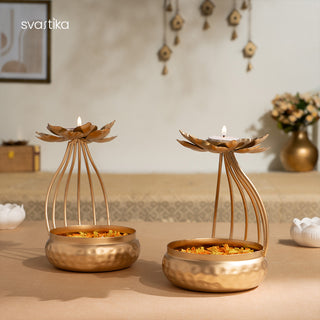
Height variation. Three objects at three heights always beat three at the same height. A low urli, a mid-height diya, one tall stem. That is the whole trick behind every styled table you have saved on your phone.
Materials that age. Brass darkens. Marble picks up warmth. Silver develops a soft grey in the recesses no new piece has. Plastic and shiny lacquer do the opposite: they only ever look worse than the day you bought them. Choosing between a small good-material piece and a big cheap-material one, take the small one every time.
That last point is where budget stops mattering as much as people think. The same argument at a lower price point is in budget-friendly living room decor.
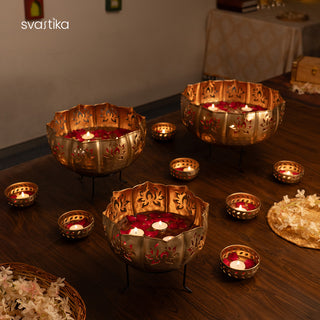
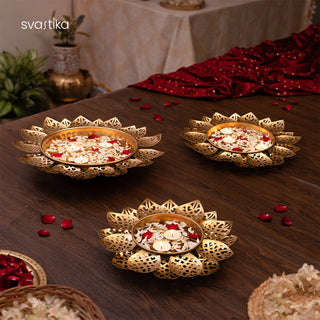
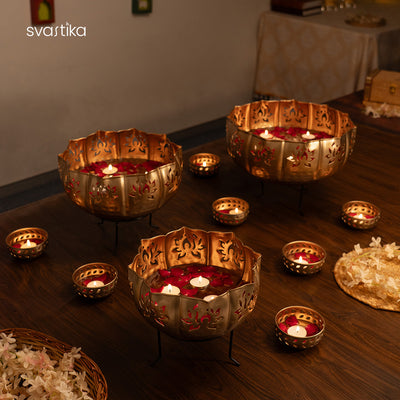
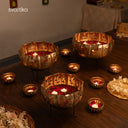
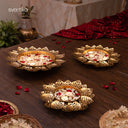
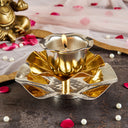
The urli is the single best table object we have
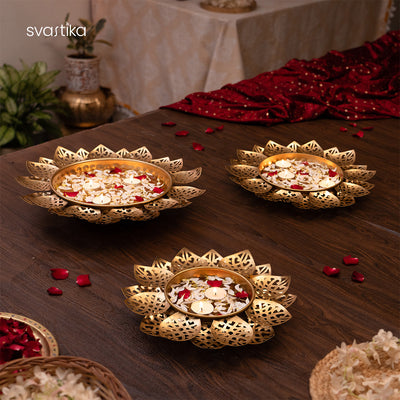
If you buy one thing, make it an urli (₹1,500 to ₹3,500). It solves more problems than anything else in the table decor category.
It is low, so it never blocks a conversation across the table. It is wide, so it fills space without stacking up. It holds water and flowers, so it changes with the season instead of becoming furniture your eye stops seeing. And a set of three in graduated sizes gives you the height variation from the last section without buying three unrelated things.
Working notes from actually living with one:
- Shallow water, few flowers. Two or three heads floating, not a full bowl. A packed urli looks like a bucket. A sparse one looks composed.
- Marigold and rose petals last longest. Jasmine looks beautiful for four hours and then looks tired. Frangipani is the middle ground.
- Change the water every second day or the brass develops a ring at the waterline. It cleans off, but it is easier not to let it happen.
- Off-centre beats centred on a long dining table. Push it a third of the way along and the table stops looking like a display.
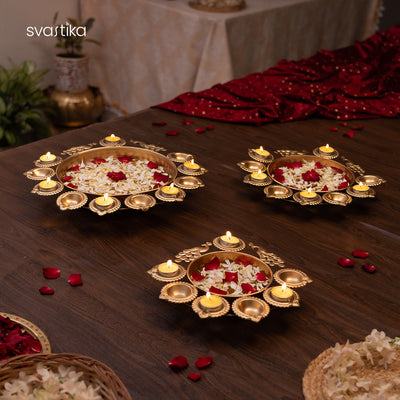
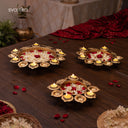
Floating diyas in an urli is the Diwali version and it does look wonderful: Diwali diya decoration and Diwali home decoration items cover it. The rest of the year, water and flowers alone are enough.
What to buy, by budget
| Spend | Buy | Goes on |
|---|---|---|
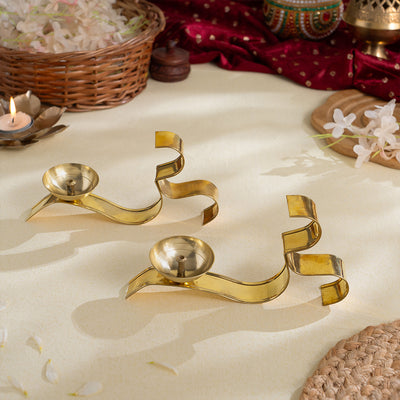
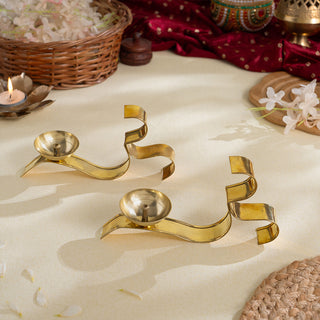
| ₹1,500 to ₹2,500 | One urli, or two brass diyas | Centre table, dining table |
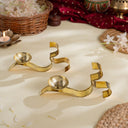
| ₹2,500 to ₹4,000 | Urli set of three, or a mid brass piece | Dining table, sideboard |
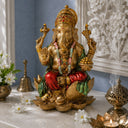
| ₹4,000 to ₹8,000 | One statement idol plus a low urli | Entrance console |
| ₹8,000 up | A large brass or marble-dust piece | The one table people see first |
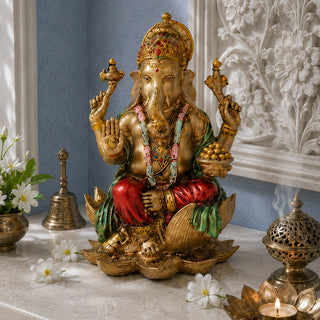
Start in table decor and home decor. For the leading object, brass idols and the antique finish range hold up best on an open surface; the marble-dust pieces are the top-end option. For a console that needs a top edge, wall decor above it does more than another object on it. Non-figurative options that suit a modern room are in crystal trees, animal decor and Vastu and Feng Shui.
Is there a Vastu rule for table decoration?
No, and this is worth knowing before someone charges you for one.
The Brihat Samhita, Varahamihira's sixth-century compendium and the oldest surviving authority most Vastu writing leans on, gives a chapter to house-building, one to finding underground water, one to temples, and two to idols and their installation. That is the scope: buildings, wells, temples, consecrated images. Nothing about what sits on a dining table.1
Even the core grid is disputed. A 1983 comparative study in the Bulletin of the Deccan College Research Institute set the Paushkara Samhita's Vastu-Purusha-Mandala beside the Brihat Samhita's and found they diverge.2 Anyone selling a single settled chart for where to put a vase is selling something invented much later.
Domestic direction customs are real and held sincerely in many families, and there is nothing wrong with following yours. They are just not a reason to rearrange a table you liked. The same goes for material: tradition never built the hierarchy the market runs on, and a modest piece is not a lesser one. There is more in Vastu-friendly home decor ideas and in can we keep horse statues at home, where the seven-running-horses rule turns out to have no classical text behind it either.
Putting a devotional object on a table without it becoming a shrine
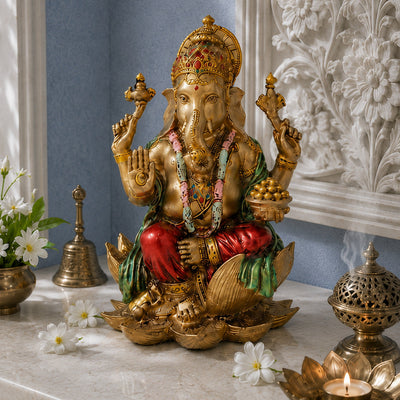
This is the real question behind a lot of table styling in Indian homes. You want the brass Ganesha or the silver conch on the console, but you do not want the console turning into a mandir by accident.
Three rules keep it reading as decor.
- Do not put ritual objects around it. The moment you add an agarbatti stand and a thali, it is a shrine, and it will look like an unfinished one. Keep those in the actual pooja space; things to keep in the pooja room covers what belongs there instead.
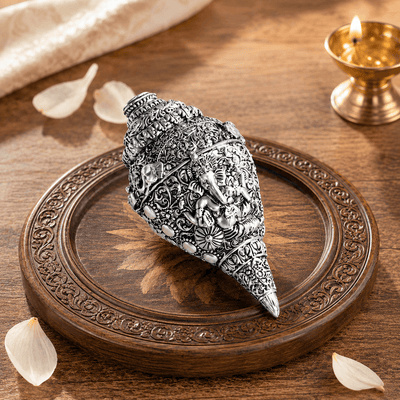
- Give it a base. A wooden plinth, a stone coaster, a folded runner, or a small chowki. A raised object reads as considered; the same object flat on the table reads as put down.
- Keep it clean. A dusty idol on a display table is worse than no idol. Marble picks up grime faster than people expect, and how to clean a marble idol has the safe method.
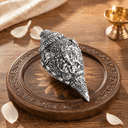
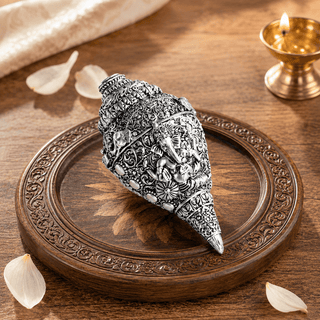
A conch works particularly well here, partly because it does not read as instantly devotional to a guest. The Ganesh shankh is a good-looking object on its own terms, and if it ends up in the mandir instead, how to keep a shankh in the pooja room covers that.
Light is the cheapest luxury on a table
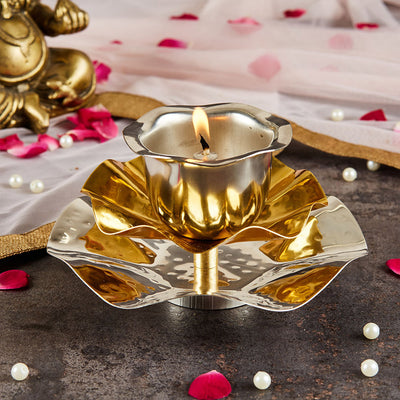
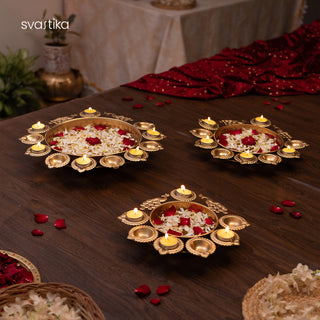
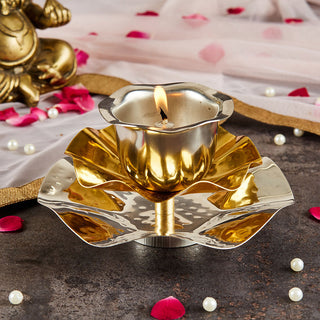
Nothing changes a table faster than moving from overhead light to low light. A single lit brass diya at dinner does more for a room than an extra object ever will, because it makes the brass around it work. Flat brass under a ceiling light looks yellow. Brass under a flame looks like brass.
Two or three diyas at slightly different heights, one urli, one plant. That is a complete table. You can stop there.
It scales up for festivals without new pieces. The same logic runs through Durga Puja decoration and Navratri decoration for home temples. Add, do not replace.
Five arrangements that actually work
The long dining table. One urli a third of the way along, two diyas trailing off it diagonally, nothing at the ends. Ends stay empty for serving. The single most forgiving layout there is.
The entrance console. One tall object, one low object, and a shallow tray for keys so the table has a job. A framed piece above gives the group a top edge and stops it looking like things left on a surface.
The centre table. Low only. Nothing above eye level when seated, or the sofa conversation gets a wall in the middle of it. An urli set of three works better here than anywhere else in the house.
The sideboard. Group in odd numbers and cluster tight rather than spreading evenly. Three objects almost shoulder to shoulder, then a long clear stretch, then one object. That rhythm is what makes hotel styling look like hotel styling.
The festive table. Add a runner in a single flat colour, keep everything else the same, and let the flowers do the change. A patterned runner under patterned brass is where most festive tables lose their footing. Same point as in the Onam decoration ideas piece, where the pookalam already carries all the pattern a room can take.
What to avoid
Matching sets bought as a set, which look like a catalogue page rather than a home. Anything above eye level on a centre table. Artificial flowers, which is where an otherwise good table gives itself away. Scented candles as decor, because the jar is almost always ugly. Glass-topped display cases on a dining table. And filling the table because it looks bare: bare is the effect you are paying for.
Care, so it stays looking good
Luxury on a table is mostly maintenance. Three habits cover almost everything.
Brass. Lemon and salt for a light clean, then dry immediately and completely. Water left on brass causes the spotting people blame on quality. If you like the darker patina, leave it and just dust. A lot of good brass looks better at year three than year one.
Silver-plated pieces. A dry soft cloth, never an abrasive. Plating is thin by definition, and scrubbing a plated bowl the way you would scrub steel is how it goes patchy. The gold and silver plated range all follows this rule.
Everything. Lift the whole table once a week, wipe the surface, and put things back slightly differently. Rearranging is free, and it is the reason some homes look styled and others look stuck.
For gifts, the same material logic applies and durable pieces travel better: see housewarming return gifts, or if the piece is heading for a mandir, the Ganesh Laxmi murti position guide.
The short answer
Buy fewer, better things. Leave half the table empty. Vary the heights. Use materials that improve with time, and light them low. And do not let anyone tell you a sixth-century text has an opinion about your centrepiece, because it does not. That freedom is the point, not a loss.
Also read: Vastu-Friendly Home Decor Ideas | Budget Home Decor for the Living Room | How to Keep Shankh in the Pooja Room | Best Diwali Home Decoration Items | How to Decorate a Krishna Idol at Home