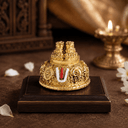
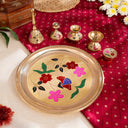
First, the direct answer
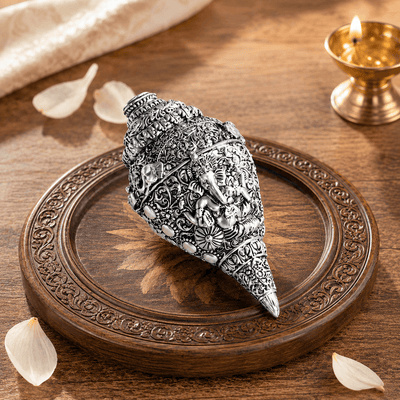
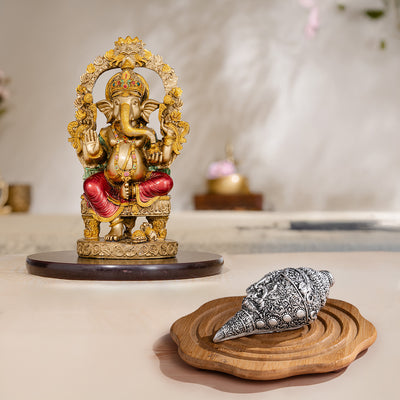
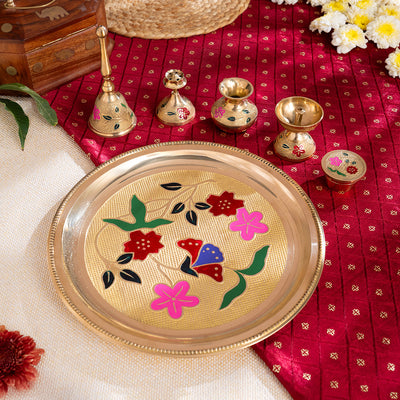
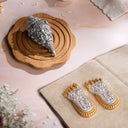
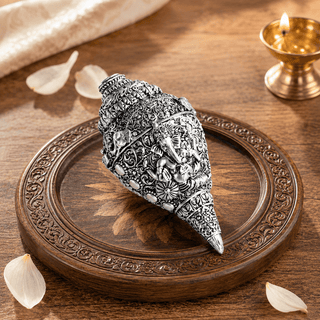
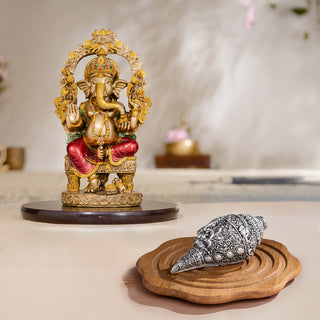
Put the shankh somewhere clean, slightly raised, and easy to pick up. A small brass plate, a wooden stand, a folded cloth. Beside the idol, not in front of its face. Empty out any water after you use it, wipe it dry, and let it breathe.
That is genuinely it. Everything else you have read (the shankh must face this way, you must never keep two, the mouth must point north) comes from custom.
The conch in your pooja room was once a demon
Krishna's conch has a name. Panchajanya. Most people know that much. Fewer people know where he got it.
In the tenth canto of the Bhagavata Purana, Krishna and Balarama go looking for their teacher's drowned son. The trail leads into the sea, to a demon named Panchajana who moved through the water in the form of a conch. Krishna kills him, and takes the shell:
तदङ्गप्रभवं शङ्खम् आदाय रथम् आगमत् । ततः संयमनीं नाम यमस्य दयितां पुरीम् ॥
In plain English: Taking the conch that had grown out of his body, he came back to the chariot, and then went to Samyamani, the city dear to Yama.
Bhagavata Purana 10.45.42
So the most famous conch in Hindu tradition is, in the strictest reading, a demon's body. Krishna carries it into every battle afterwards. It is on his hand in nearly every image of him you have ever seen, and the same is true of Vishnu, who is almost never depicted without it.
I find this a much more interesting theology than "the conch is pure." The shell became sacred because of whose hands it passed into.
If you want the companion story, the discus he holds in the other hand has its own origin, and we have written about who gave the Sudarshan Chakra to Krishna separately. The shankh and the chakra travel together through the texts, which is why they usually travel together on a shelf too.
What scripture actually says about keeping a shankh
Scripture names the conch directly, in a verse almost nobody quotes. The Bhagavata Purana's chapter on deity worship (Canto 11, Chapter 27) is a long, practical set of instructions for worshipping at home. Listing the articles to be honoured, it names the conch by its own name:
सुदर्शनं पाञ्चजन्यं गदासीषुधनुर्हलान् । मुषलं कौस्तुभं मालां श्रीवत्सं चानुपूजयेत् ॥
In plain English: One should also honour the Sudarshana disc, the Panchajanya conch, the mace, sword, arrow, bow, plough and pestle, the Kaustubha gem, the garland and the Shrivatsa mark.
Bhagavata Purana 11.27.27
That is your textual warrant. The shankh is not a decorative extra that crept into pooja rooms. It is named, in a practical chapter, as an object of honour.
What the same chapter does not do is tell you which corner to put it in. The chapter is remarkably relaxed about material things. It lists eight legitimate substances for a deity image: stone, wood, metal, a smearable substance like clay, painted, sand, jewels, and an image held purely in the mind (11.27.12).1 Sand and a mental picture sit in the same sentence as gold. If the tradition were as fussy about substance as the market is, that verse would read very differently.
It also splits images into two classes (the moved and the not-moved) and says only the formally installed one is bound to stay where it is (11.27.13). A home shrine mostly holds non-installed objects. That is precisely why home practice is legitimately more flexible than temple practice, and it is the same logic that makes a travelling dashboard idol unproblematic.
One more, because it corrects the single most repeated mistake in this whole category. The chapter's one clear direction rule governs the worshipper, not the object: lay the seat with kusha grass pointing east, then sit facing east or north, or simply face the deity (11.27.19).1 The direction belongs to the person, not to the shell. The same correction applies to the endless Ganesh idol direction debates and to most of the Vastu decor rules circulating online.
Where to keep it, practically
Since scripture stops at "honour it," the rest is care and common sense.
- Raise it. A shankh sitting flat on a shelf rocks, rolls and chips. Give it a small stand, a ring of cloth, or a plate.
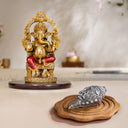
- Beside the deity, not in front. Nothing in the texts forbids either. But a conch is bulky and it will block the face of a small murti, which defeats the point of having one.
- Away from the flame. Keep it clear of the diya and the agarbatti. Soot settles into the ridges and is miserable to get out.
- Keep the mouth clear. If you use it for water, it needs to drain. If you only keep it for darshan, this does not matter.
- Do not stack things on it. It is an article of worship in the same list as the chakra. Treat it the way you would treat a pooja thali, not as a paperweight.
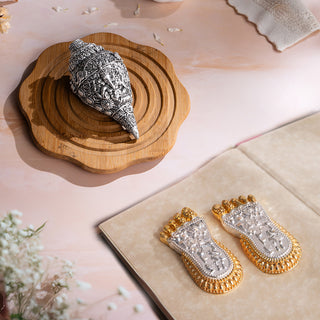
If your pooja room is small, group it with the other honoured objects rather than scattering things. A tidy shelf with four objects reads better than a crowded one with twelve. Our guide to what to keep in a pooja room explains why the traditional "essentials" list is shorter than the internet suggests.
Dakshinavarti and vamavarti: what is real here
You will be told that a right-turning conch (dakshinavarti) is rare, auspicious and associated with Lakshmi, and that the common left-turning vamavarti is ordinary. The price difference between the two can be enormous.
The distinction is real as a natural fact: right-coiling shells genuinely are uncommon in the species used. The valuation attached to that rarity is living tradition, held sincerely across many families and temples, and I am not going to sneer at it. But I could not locate it in the Bhagavata's worship chapter or in the Brihat Samhita, and I will not invent a verse number to dress it up.
The same applies to the other rules that circulate: that you must not keep two shankhs in one shrine, that shankh water should never be offered to Shiva, that a conch must be kept on a red cloth. These are customs. Some are old, some are regional, some are strongly held. None of them showed up in the texts I could open. If your grandmother follows one, follow it: continuity in a household is its own good reason. Just do not let anyone sell you a rule as scripture. The question of Shiva at home attracts the same kind of confident invented rulebook.
Three things people get wrong about the shankh
1. "The shankh came out of the churning of the ocean"
This is stated everywhere as settled fact, and it does not hold up. We searched the churning passage in both the printed vulgate and the Bhandarkar Oriental Research Institute's critical edition, including every variant line the editors recorded from the manuscripts. The word shankha does not appear once: not among the Moon, Lakshmi, wine, the white steed, the Kaustubha gem, Dhanvantari with the nectar, Airavata or the Kalakuta poison.4
The Bhagavata's Canto 8 inventory opens with the yielder of the sacrificial offering, whom commentators name as Surabhi the cow of plenty (8.8.1). No conch there either.3 So "the shankh emerged from the samudra manthan" deserves a "some traditions say," not a full stop. If the churning itself is what you are after, the Kurma avatar and the Mohini avatar stories both sit inside that episode, and the full arc runs through the ten avatars of Vishnu.
2. "The conch is auspicious because it is intrinsically pure"
The Panchajanya was a demon's body.2 Krishna's use of it is what made it what it is. In these stories a thing becomes holy through use, not through what it is made of. That is why the "which material is the most powerful Shree Yantra" question has such a thin textual floor under it.
3. "Vastu Shastra prescribes where the shankh goes"
Classical Vastu is about buildings. The Brihat Samhita, the standard early authority, gives a chapter to house-building and one to finding water springs; its chapters on idols and their installation follow its chapter on temples.5 There is no classical chapter about arranging objects on a household shelf. Scholarship makes the ground even less firm. A 1983 comparative study of the Vastu-Purusa-Mandala across the Paushkara Samhita and the Brihat Samhita found that the texts handle the core grid differently.6 Even the foundation is a discussion rather than a rulebook. The same reality check applies to the seven running horses claim and to most Ganesh Lakshmi placement charts.
Cleaning and caring for a shankh
A natural shell and a metal one need different handling, and people routinely ruin both.
A natural conch should be rinsed with plain water and dried thoroughly, inside and out. Water left sitting inside will smell within a day or two. No acid, no bleach, no scrubbing powder: the surface gloss is thin and does not grow back. If it has dulled, a drop of coconut or sesame oil rubbed in with a soft cloth brings the shine back and does no harm.
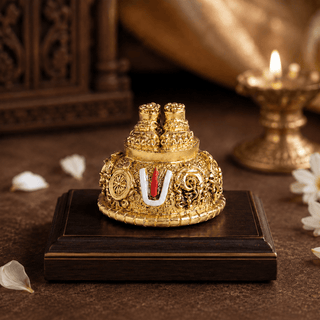
A plated or brass shankh (the kind most people actually keep on a shrine) should be dusted dry more often than it is washed. Silver and gold plating is microns thick. Polish it with a metal cleaner and you will take the plating off, not the tarnish. A dry microfibre cloth, and if it is genuinely soiled, a barely damp one followed immediately by drying. The same restraint applies to stone murtis, which we covered in how to clean a marble idol.
If you pour water during aarti, rinse and invert it afterwards so it drains.
What about blowing it?
Blowing the shankh at the start and end of aarti is one of the oldest surviving devotional habits in Indian homes, and you need no verse's permission. The conch runs through the epics as a sounded instrument: the Bhagavad Gita opens with both armies blowing theirs before a word of the dialogue.
Two practical notes. A shankh used for sound needs its tip cut or bored, which not every decorative piece has. And it should be your own, for ordinary reasons that have nothing to do with ritual purity.
If yours is a display piece with an intact tip, that is completely fine. A silver-plated Ganesh Shankh kept for darshan is doing the same work as a sounded one: it is there to be honoured, which is exactly what the text asks of it.
Choosing one, if you are buying
Buy for the thing you will actually do with it. If you want to sound it during Lakshmi puja or morning aarti, you need a natural shell with a proper bore, and size matters more than finish. If you want it on the shelf as a companion to your murtis, a plated or brass piece will hold its look for years and will not smell.
Weight is the honest tell in metalware. A hollow, tinny conch feels wrong in the hand no matter how bright the plating is. Sit it on its base and check it does not rock.
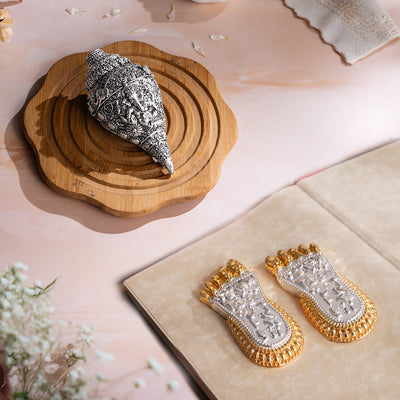
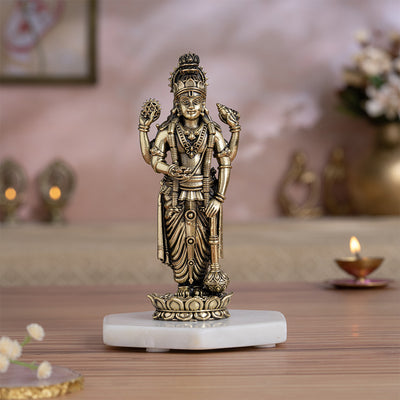
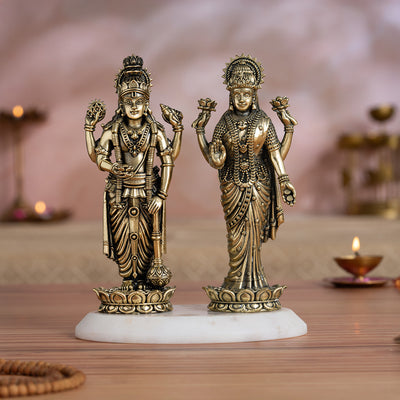
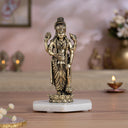
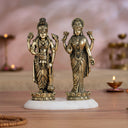
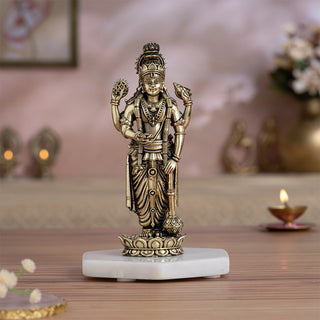
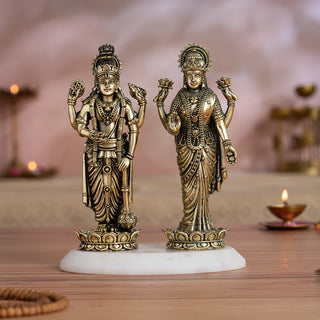
And if you keep a Vishnu murti or a standing Vishnu idol at home, a shankh beside it is not an addition at all: it is part of the same iconography, the object he is already holding. The same is true of Ganesha forms where the conch is carved into the piece itself, and of the Lakshmi charan paduka, which people usually keep in the same arrangement.
So, how should you keep it?
Clean, raised, dry, beside the deity, treated as an object of honour rather than as decor. That covers everything scripture asks and everything the shell physically needs.
The rest, the direction and the coil and the cloth colour and the count, is custom. Custom is not a lesser thing: it is how a family keeps its memory, and there is real warmth in doing something the way your mother did. It is just not the same category as a verse, and articles that blur the two do readers no favours.
The Bhagavata names the conch among the objects worthy of honour and then stops talking. There is a kindness in that silence. It leaves the arrangement to you.
Also read: Things to Keep in Pooja Room | How to Clean Marble Idol | Which Shree Yantra is Best for Home | Can We Keep a Standing Vishnu Idol at Home | Who Gave the Sudarshan Chakra to Krishna