Somewhere along the way, decorating an Indian living room turned into a shopping problem. Copper over brass. Marble over resin. Crystal over everything. And a whole layer of "Vastu rules" telling you which corner each object belongs in, as though the wrong shelf could cost you money.
I went looking for where those rules come from. Most of them come from the last hundred years, not from the classical texts they borrow authority from. And the one line the texts do give about material is unexpectedly generous.
The short answer: what actually makes a living room feel good
Rooms don't feel expensive because of price tags. They feel expensive because of three things you can get cheaply: warm light, a bit of breathing space around each object, and materials that age well instead of chipping.
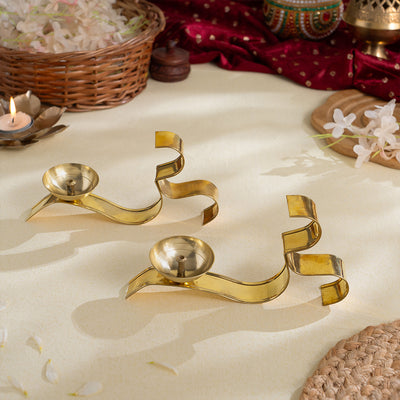
Under ₹2,500 in India, that translates to a fairly short list: brass, which only looks better as it darkens; a shallow urli you can float flowers in; one framed or sculpted wall piece so the largest surface in the room isn't blank; one or two figures with real craft in them; and a set of diyas you actually light rather than store.
That's it. Everything else in this article is either detail on those, or a correction to something you may have been told. If you want the wider version of this, we've written separately about Vastu-friendly home decor and what survives scrutiny, and about Diwali home decoration items when the room needs to look festive rather than everyday.
The one old line worth knowing before you spend anything
The Bhagavata Purana has a chapter on deity worship: Canto 11, Chapter 27, the kriya-yoga chapter. It's the closest the tradition has to a practical manual for keeping an image at home.
At 11.27.12 it lists the materials a deity image may be made from:
शैली दारुमयी लौही लेप्या लेख्या च सैकती । मनोमयी मणिमयी प्रतिमाष्टविधा स्मृता
In plain English: An image may be of stone, wood, metal, clay, paint, sand or jewels, or held only in the mind. Eight kinds in all.
Bhagavata Purana 11.27.12
Sand and a mental image sit in the same verse as jewels. Read that again if you've ever felt guilty about buying the affordable version. The text people quote to justify material hierarchies contains no hierarchy. It contains a list, and the cheapest thing on it is free.
The same chapter, at 11.27.13, makes a second distinction that quietly settles a lot of household anxiety: images are of two kinds, moved and not-moved. Only the formally installed image is bound to stay where it is.1 Almost everything in a living room is the movable kind, which means you can rearrange your shelf without committing an offence.
If you want that idea in more depth, it also underpins what's actually worth keeping in a pooja room and how to decorate a Krishna idol at home without following invented rules.
Where "Vastu decor rules" actually come from
Classical Vastu is architecture. That's not a dismissal, it's just what it is.
The oldest surviving authority people cite is the Brihat Samhita, Varahamihira's sixth-century compendium. In V. Subrahmanya Sastri's 1946 English edition, its chapters run: Chapter 58 on house-building, Chapter 59 on finding water springs, Chapter 62 on temples, Chapter 64 on the description of idols, Chapter 66 on the installation of idols.4 (Chapter numbers shift between editions, so treat those as the structure, not gospel.)
Notice what's there: siting a building, finding water, building a temple, carving and consecrating a temple image. And notice what isn't there: any chapter on where an ornament goes inside somebody's living room.
There's also a scholarly point worth borrowing. A 1983 comparative study by Apte and Supekar in the Bulletin of the Deccan College Research Institute set the Vastu-Purusa-Mandala of the Paushkara Samhita against the Brihat Samhita's version and found real divergence between them. Even the foundational grid isn't one settled rulebook. It's a tradition with arguments inside it.
So when a chart tells you the exact corner for a mirror, a fountain and a wall clock, it isn't relaying Varahamihira. It's twentieth-century interior advice wearing an older name.
What to actually buy, in rough order of impact
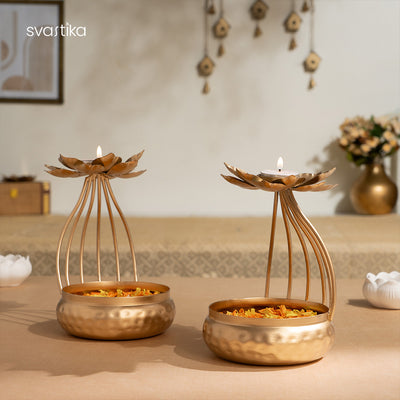
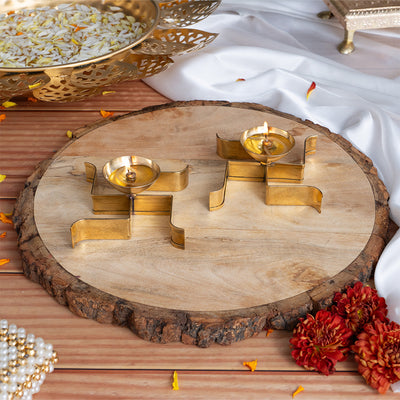
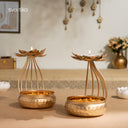
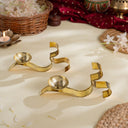
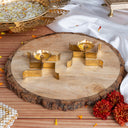
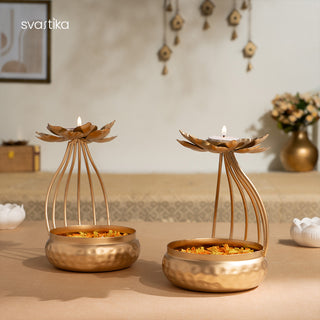
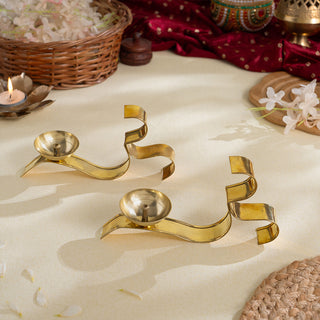
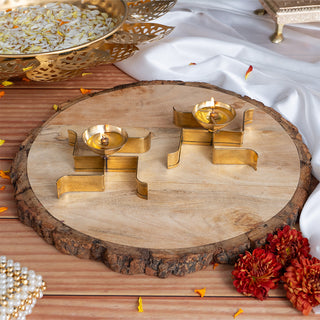
Diyas, first. Nothing changes a room faster or cheaper than real flame. A set of two brass diyas costs less than a mid-range cushion cover and will outlive the sofa. Brass is the budget material that doesn't read as budget: it dulls into a patina instead of peeling. Browse the whole range in brass diyas, and if you want the story behind the lamps, we've covered diya decoration and its Ramayana roots.
An urli, second. A shallow metal bowl with water and a few flowers is the single most forgiving decor object in an Indian home. It fills a coffee table, it costs little, and it changes every week for the price of marigolds. The urli collection is worth a look if your centre table currently holds a remote and a charger.
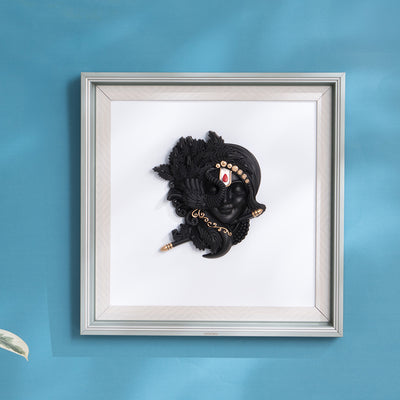
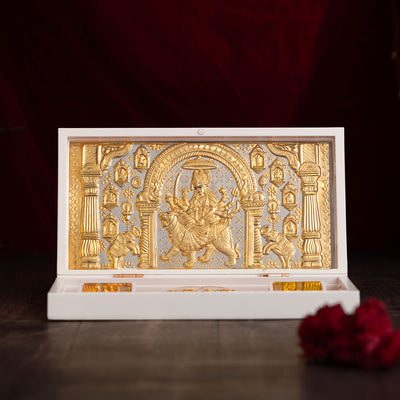
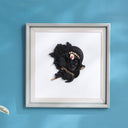
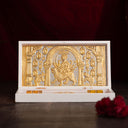
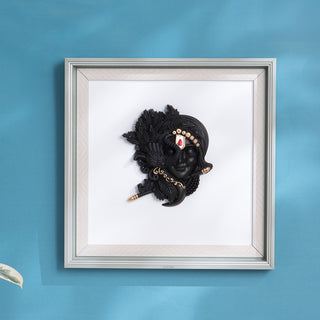
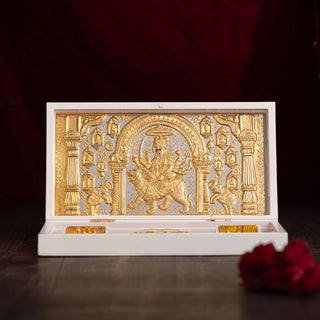
One wall piece, third. Most Indian living rooms are over-furnished and under-decorated on the walls. One 12-inch framed face or murti frame does more than three small frames scattered around. Restraint is free.
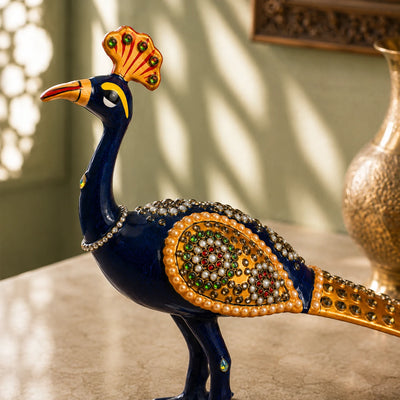
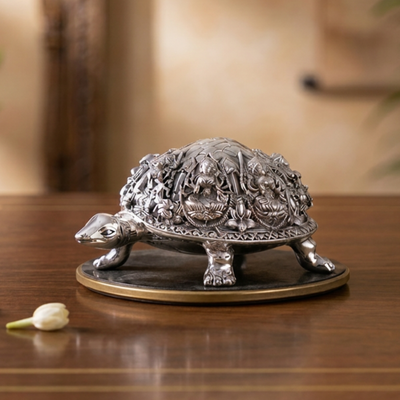
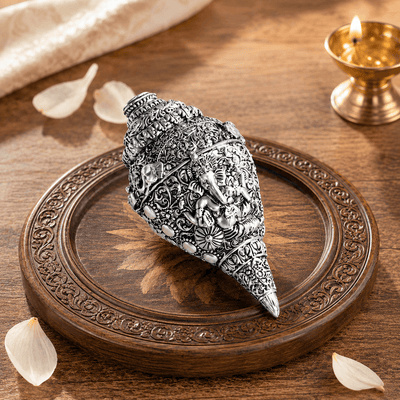
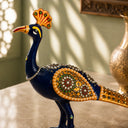
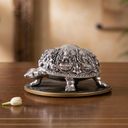
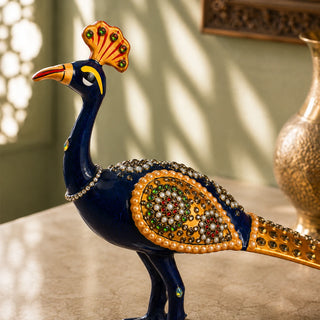
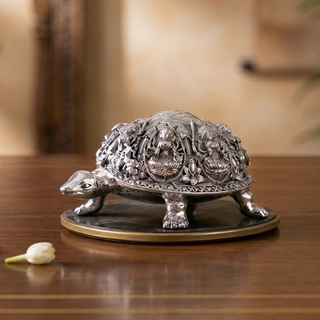
Then one figure with craft in it. A meenakari bird, a small silver-plated idol, a peacock. One. Grouped with the urli or on its own shelf, not competing with five other things.
Light is the cheapest upgrade there is
If you have ₹1,000 and want the room to look different tonight, spend it on light rather than objects.
Warm bulbs instead of cool white. One lamp at seated height rather than only ceiling light. And diyas or tealights that actually get lit: a brass diya sitting unused in a cupboard is not decor, it's storage. An ₹849 brass Maa diya lit every evening will do more for a room than a ₹5,000 ornament nobody looks at.
This is also the honest reason festival decor works so well: the objects aren't better, the lighting is. You can see the same logic at play in budget Navratri decoration at home and in Durga Puja decoration with brass idols and diyas.
One practical note on brass and plated pieces: they need wiping, not polishing chemicals every month. The same care logic we set out for cleaning a marble idol applies: gentle and regular beats aggressive and occasional.
Four things people get wrong about decorating a living room
1. "Vastu Shastra says where to put your decor." It doesn't. The Brihat Samhita's scope is buildings, water, temples and consecrated temple images. Its idol chapters (64 and 66) sit after the temple chapter, and they're about carving and installing temple murtis: applying them to a shelf in a flat is a category error. What genuinely survives from the building tradition is worth keeping: orientation, light, air, an uncluttered entrance, a clean and defined space for worship.
2. "Seven running horses bring success." This is one of the most confidently repeated claims in Indian home decor, and we could not find a classical text behind it. The horses that matter in scripture are Uchchaihsravas, who (in the Mahabharata's Adi Parva, Section XVII) "at the churning of the Ocean for nectar arose, divine, graceful, perpetually young", and Devadatta, whom Kalki rides in the Bhagavata's twelfth canto. Both are divine mounts inside a story, not remedies for a living-room wall. Keep a horse figure because you like what horses mean: speed, vitality, carrying something greater than yourself. That's a real reason. We go into it properly in can we keep horse statues at home.
3. "A crystal yantra is more powerful than a copper one." The Saundarya Lahari, the classic stotra behind the Sri Chakra, describes the yantra's interlocking triangles and their protective corners at verse 11, and never names a material anywhere in the text.7 The crystal-over-copper-over-gold ranking is a market idea. Judge a yantra by whether the geometry is accurate, which is the argument we make in which Shree Yantra is best for home.
4. "Place this object here and prosperity follows." The Bhagavata's own portrait of Lakshmi cuts against this. At 8.8.24–25 her residence is Vishnu's chest, and she is described as surveying the entire assembly, finding no one fully worthy, and choosing. At 8.8.29 those she passes over are simply left disheartened.3 That is a goddess who responds to worthiness and attention, not to the angle of an object. It's the same point we make about where to place Laxmi charan paduka: the custom is lovely, the threat attached to it is invented.
How to make inexpensive things look expensive
Four habits, none of which cost anything.
- Group, don't scatter. Three objects together on one surface read as a considered arrangement. The same three spread across the room read as clutter.
- Vary height, repeat material. A tall lamp, a mid-height figure, a flat urli (all in brass) looks designed. Five materials at one height looks accidental.
- Leave empty space. Expensive rooms are mostly empty. This is the hardest one and the most effective.
- Buy fewer, better. One ₹2,000 piece beats four ₹500 pieces every time, and it's the same money.
If your living room doubles as the place guests are received, the same restraint applies to the table: we've written it up in table decoration ideas for modern homes, and the table decor and wider home decor ranges are organised roughly the way this article recommends buying.
If you have ₹5,000 and want to start tomorrow
A set of brass diyas (₹1,000–1,200). An urli or a small figurine for the centre table (₹1,300–1,500). One wall piece (₹1,900–2,100). Stop there. Live with it for a month before adding anything.
Where a devotional object enters the room, the material question is already settled by 11.27.12: clay, wood, painted and metal images are all valid, so an affordable idol is not a lesser one. If it's a Ganesha you're choosing, which type of Ganesha idol is good for home is the practical guide; for a pair, see the Ganesh Laxmi murti position guide; for Shiva, can we keep a Shiva statue at home.
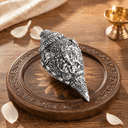
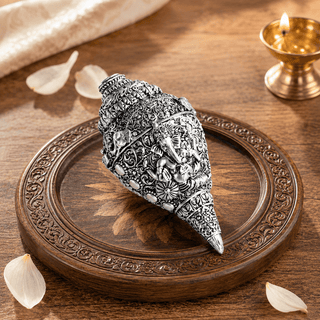
And if a conch ends up on your shelf, it has a better story than most decor: the Bhagavata names the conch among the honoured articles of worship (11.27.27), but the Panchajanya itself was once the body of a sea-demon named Panchajana, whom Krishna killed: the shell "had grown as a part of the demon" (10.45.40–42).2 Its sanctity came from whose hands it passed into. More on that in how to keep a shankh in the pooja room, and if you're setting up a small shrine within the living room, home temple decoration ideas is the closest thing we have to a floor plan.
That's really the whole argument. Buy less, light it well, and stop paying a premium for a hierarchy that the texts never wrote down.
Also read: Vastu-Friendly Home Decor Ideas | Luxury Table Decoration Ideas | Can We Keep Horse Statues at Home | Things to Keep in Pooja Room | Best Diwali Home Decoration Items