Try this. Open any Vastu decor listicle and count how many rules come with a text name, a chapter, a verse. Usually zero. You get "as per Vastu Shastra" and then a rule about wind chimes.
So I looked at what the classical texts contain. Not a summary. The actual table of contents.
What I found: the building tradition is real and old, and the decor rulebook is neither.
What Vastu Shastra is actually about
The Brihat Samhita is a sixth-century compendium by Varahamihira, the text almost every modern Vastu claim traces back to. V. Subrahmanya Sastri's 1946 translation is freely readable on archive.org, so you can check this yourself.
Look at the chapter list. Chapter 58 is House-Building. Chapter 59 is Exploration of Water Springs. Chapter 62 is Description of Temples. Chapter 64 is Description of Idols. Chapter 66 is Installation of Idols.1
Read that sequence again. Where to put your house. Where to dig a well. How to build a temple. How to carve a temple image. How to consecrate it.
The idol chapters sit inside the temple section. They are about sculpting and installing images in a place of worship, with priests, with rites, with permanence. They are not about a shelf in a two-bedroom flat.
(A note on precision: chapter numbers vary between editions, Kern's 1865 translation numbers them differently, and I am describing the scope of these chapters from the translation's own contents, not quoting from inside them.)
There is a second layer. The Vastu-Purusha-Mandala, the grid everyone reproduces as fixed law, is handled differently by different classical texts. A 1983 study by P. P. Apte and S. G. Supekar in the Bulletin of the Deccan College Post-Graduate and Research Institute set the Paushkara Samhita's version against the Brihat Samhita's and found meaningful divergence.2
So classical Vastu is not one settled rulebook. It is a tradition of architects who argued with each other. That is a far more honest and more human thing than the chart on your builder's brochure.
Three things people get wrong about Vastu decor
1. "Vastu tells you where to place decor items"
It doesn't. There is no classical chapter on ornaments inside a dwelling: no rule about mirror placement, no prescribed count of objects, no direction chart for a console table. Those charts were assembled in the last century, largely by the interior and real-estate trades, and then given an ancient name so they would carry weight. The building tradition is real and old. The decor rulebook is neither.
2. "The idol must face east or it brings misfortune"
This is the most useful correction in the whole subject, so it is worth being precise. The Bhagavata Purana's chapter on deity worship does give a direction instruction, and it governs the worshipper, not the image:
शुचिः सम्भृतसम्भारः प्राग्दर्भैः कल्पितासनः । आसीनः प्राग् उदग् वार्चेद् अर्चायां त्व् अथ सम्मुखः ॥
In plain English: Clean, with the articles gathered and a seat laid with darbha grass pointing east, let him worship seated facing east or north, or else facing the image.
Bhagavata Purana 11.27.19
The word for the person is asinah, "seated." The instruction is about where you sit, not which way the murti looks.
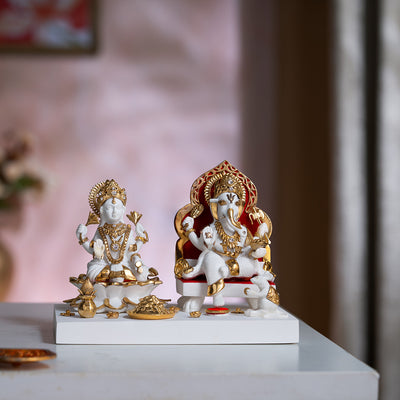
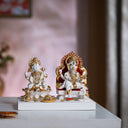
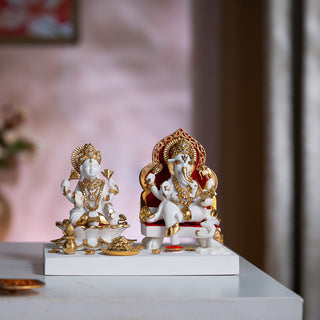
The elaborate idol-facing rules are later household convention. They are widely held and often lovely, and honouring your family's version costs nothing. Just don't let anyone sell you anxiety about it. The same applies around which way a Ganesha idol should face or how a Ganesh and Lakshmi pair should be arranged. The arrangements are custom, and custom deserves to be described as custom.
3. "Only expensive materials are proper"
The Bhagavata Purana, at 11.27.12, lists eight legitimate materials for a deity image: stone, wood, metal, a smearable substance such as clay, painted, sand, jewels, and an image held purely in the mind.
Sand. Paint. A mental image. In the same list as stone and gems.
A tradition that puts a thought and a jewel on the same line was never running a material hierarchy. That one is entirely ours, and it is worth remembering the next time somebody tells you a clay murti is a compromise. It's also why decorating a living room on a budget breaks no rule that ever existed.
So what actually survives? Five principles worth keeping
When you strip out the invented rules, what's left is better than what you removed. It comes from a tradition of people who actually built houses in a hot country before electricity.
Orientation and light
The house-building chapters care about where a structure sits, how it is oriented, how the site drains, where the water is. Translate that into a flat you didn't design and it becomes simple: don't block your light sources. If a room has one good window, that window is the most valuable feature in it, and a tall cabinet in front of it is a genuine loss.
Put seating where the daylight falls. Keep sills clear. This is not mysticism, it's what the tradition was doing all along.
Air, and the idea of a centre
The mandala grid, for all the ways different texts disagree about it, consistently treats the centre of a dwelling as something to be kept open rather than filled. Whatever you make of the metaphysics, a room with a breathable middle and furniture around the edges is a room people move through easily. Cross-ventilation matters more in an Indian summer than any object you can buy.
The threshold
The entrance is the one place where classical concern and household custom genuinely overlap. Doorways are structurally significant in the building texts, and the daily practices around an entrance (the rangoli, the toran, the lamp near the door) are among the oldest continuous domestic habits in the country.
Keep the entry clear. Keep it lit. Keep it the part of the house that gets cleaned most, not least. If you want a water-and-flower urli or a hanging near the door, that's a beautiful custom with real roots. Just enjoy it as custom rather than as insurance.
Clutter
No text says "declutter to attract positivity." But every ritual instruction in the Bhagavata's worship chapter assumes a clean seat, clean hands, clean articles. Cleanliness is the one place where scripture, Vastu and your grandmother all agree, and it needs no supernatural framing to be true. A shelf you can dust in ten seconds gets dusted. One you can't, doesn't.
A defined space for worship
This is the principle I'd keep above all the others. Give the sacred part of your home an edge: a corner, an alcove, a low chowki for the murti, a shelf that is only for this. Not because a direction chart demands it, but because a defined space gets attended to and an undefined one drifts into being a place where keys pile up.
The pooja corner, honestly
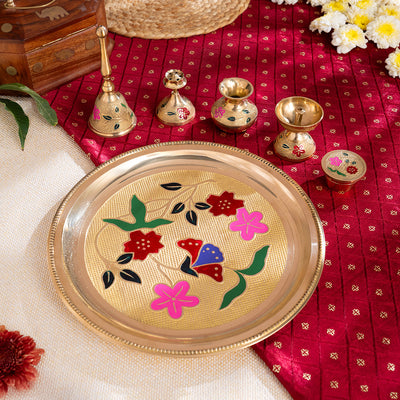
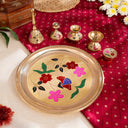
The Bhagavata's deity-worship chapter is startlingly relaxed once you read it as a whole. A valid image, in any of eight materials. A clean seat. The worshipper facing east or north, or facing the deity. The conch named among the honoured articles, at 11.27.27, which is real textual footing for keeping a shankh in the pooja room, even though the detailed placement lore around it is trade and regional custom rather than text.
There is one more distinction in that chapter that quietly resolves a lot of household anxiety. At 11.27.13 the text divides images into two classes: the moved and the not-moved. Only the formally installed deity is bound to stay put: "not taken away, or again brought forward." An image that has not been ritually installed is portable by design.
Almost every murti in almost every Indian home is in that second, portable category. Which is why home practice is legitimately more flexible than temple practice, why you can rearrange your shelf when you move house, and why a small idol travelling in a car (the subject of endless online argument about which idol suits a dashboard) sits comfortably inside the tradition rather than outside it.
If you want the fuller version of what genuinely belongs on a home shrine and what is family habit, we went through it item by item in things to keep in the pooja room. And once something is on that shelf, the practical job is upkeep: cleaning a marble idol properly is a more useful skill than any placement chart.
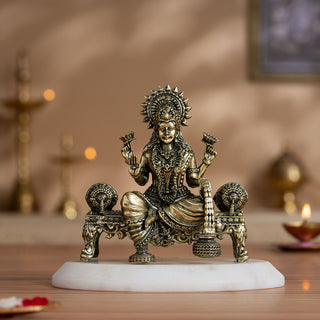
Light is the one decor principle I'd defend without hesitation
Everything in the tradition points at light. The building texts orient a house to the sun. The worship instructions revolve around a lamp. Diwali is an entire festival about the same idea.
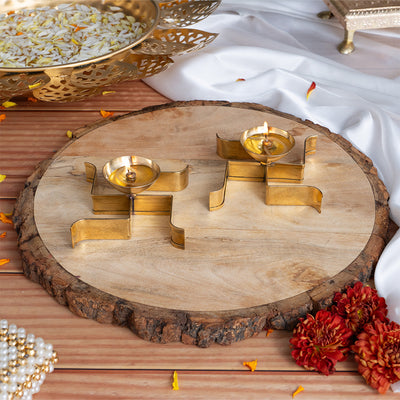
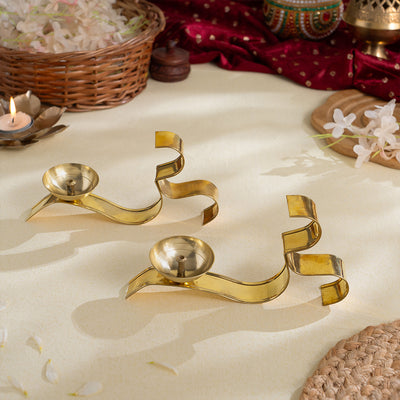
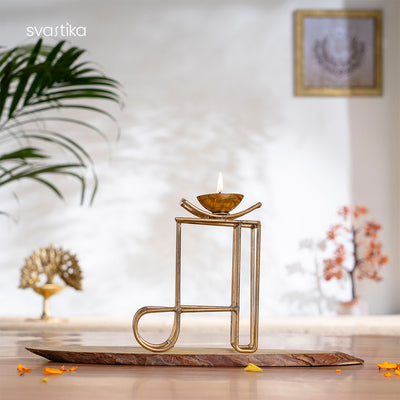
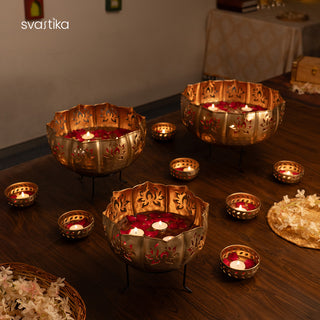
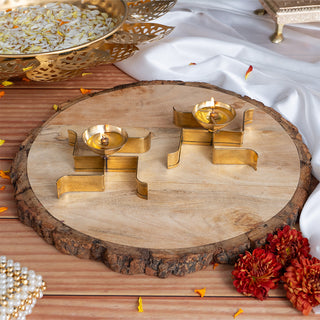
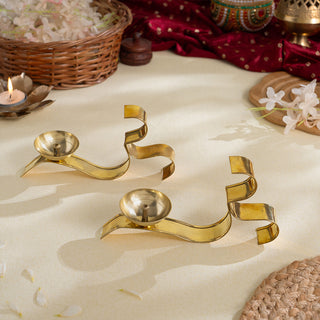
A lit diya in the evening changes a room in a way no ornament does, because it is the only decor object that requires you to do something daily. That daily return is the point. A brass diya with the swastika form does the same work as a plain clay one (the material list already told us that) but a lamp you like looking at is a lamp you'll actually light.
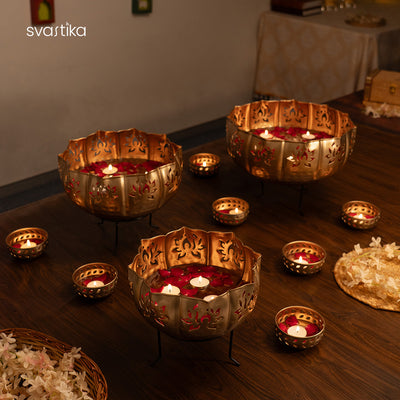
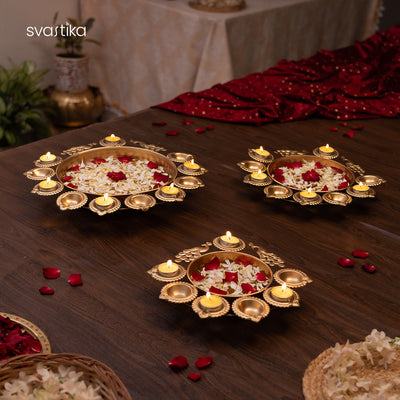
Whether you're planning Diwali decoration or just want the evenings to feel different, start there. Brass lamps last decades and improve with use, which is more than most decor can claim.
The rules I could not find in any classical text
In the interest of being useful rather than diplomatic, here are popular claims I went looking for and could not locate in the texts consulted:
- Seven running horses bring success. No Vastu or Puranic text prescribes horse figures in a dwelling. Scripture's significant horses are Uchchaihsravas, who rose from the churning of the ocean and belongs to Indra, and Devadatta, whom Kalki rides.6 Both are divine mounts in a narrative. We looked at this properly in can we keep horse statues at home.
- Crystal Shree Yantras are more powerful than metal ones. The Saundarya Lahari, the classic source for the Sri Chakra, describes the geometry at verse 11 and never names a material anywhere.8 More on that in which Shree Yantra is best for home.
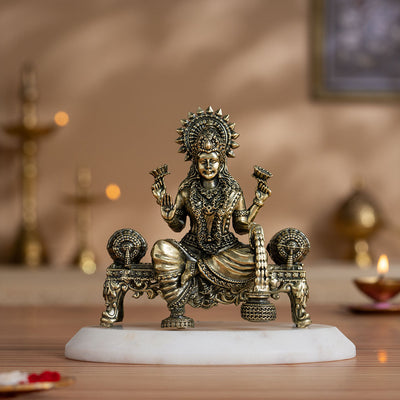
- Lakshmi's footprints must point inward or she leaves. Affectionate domestic custom, not text. The Bhagavata's own picture of her, at 8.8.24 to 25, places her residence on Vishnu's chest and describes her choosing.4 See where to place Laxmi charan paduka.
- A Kamdhenu statue brings wealth, as per scripture. The cow teaching in the Bhagavata is concrete and unglamorous: cow protection as a standing duty, grass given to cows as part of the worship itself.5 The statue is a fine reminder of that idea, and we've written about what Kamdhenu actually is and keeping a Kamdhenu cow at home.
- A Shiva or Ganesha murti at home requires special conditions. The moved/not-moved distinction covers this; see can we keep a Shiva statue at home and which Ganesha idol suits a home.
One caution about how I'm phrasing all of this. The Sanskrit corpus is enormous, and "we could not locate it in the classical texts consulted" is not the same claim as "it exists nowhere." I'm reporting an absence in a specific, named set of sources. That's a weaker statement than the confident ones you'll read elsewhere, and it's the only honest one available.
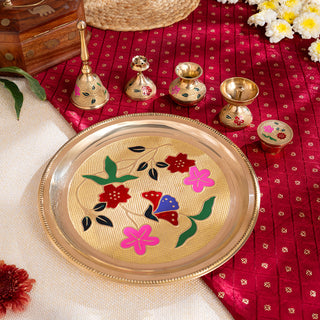
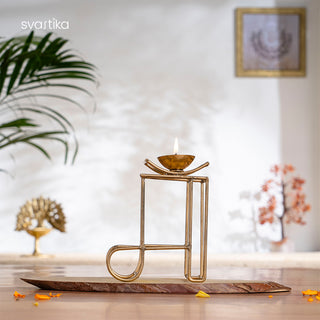
How I'd decorate a home, knowing all this
Choose objects because you like them and because they're well made. That is allowed. It was always allowed.
Give the light room to move. Give the middle of the room room to breathe. Keep the doorway clear and lit. Keep the worship space defined and clean. Buy fewer, better things and look after them: brass, stone and good wood all get better with age in a way that printed board does not, which is the real argument for traditional materials and it needs no scriptural cover at all.
If you're setting up a new home, a Vastu Shanti puja is a lovely way to mark the beginning, not because a house is dangerous until you do, but because thresholds deserve ceremonies. And if you want your surfaces to feel considered rather than crowded, our notes on table decoration stay firmly on the design side of the line, where they belong.
The tradition that built these ideas was practical. It thought about sunlight, drainage, wind, proportion and where you'd stand when the sun came up. Take that seriously and your home will feel better. Take the mirror charts seriously and you'll mostly feel watched.
Browse our Vastu and Feng Shui collection or the wider home decor range if you're looking for pieces, but choose them the way you'd choose anything you intend to keep for twenty years.
Also read: Things to Keep in the Pooja Room | Can We Keep Horse Statues at Home | Which Shree Yantra is Best for Home | Where to Place Laxmi Charan Paduka | Budget-Friendly Home Decor for a Living Room