Type this question into a search bar and you get ranked lists. Ganesha at number one for removing obstacles. Hanuman at number two for protection. Then a paragraph about which direction the idol must face, usually delivered with a lot of confidence and no source at all.
I went looking for that source. It isn't there. What is there is something better, and quieter, and it answers a question most people don't realise they're asking: is it even alright to carry a god around in a car?
Is it proper to keep an idol in a car at all?
This is the real anxiety. People phrase it as "which idol", but what they're often nervous about is the moving part: an idol that gets jolted at speed bumps, sits in a hot parked car, and travels to places nobody thought about when they bought it.
The Bhagavata Purana's chapter on deity worship handles this directly. In its instructions on how images are to be treated, it separates them into two kinds: images that are moved, and images that are not moved. And it is specific about which one is fixed: the installed deity, it says, is not taken away for worship and not brought forward again. It stays.
चलाचलेति द्विविधा प्रतिष्ठा जीवमन्दिरम् । उद्वासावाहने न स्तः स्थिरायाम् उद्धवार्चने ॥
In plain English: The seat of the living Lord is set up in two ways, movable and immovable. For the fixed one, Uddhava, there is no calling the deity in and no sending it away.
Bhagavata Purana 11.27.13 to 14
Read it the other way around and the answer arrives. If only the installed image is bound to stay, the not-installed image is meant to move. Portability is a recognised category, not a grudging compromise.
What would be out of order is the opposite: lifting a consecrated, formally installed murti out of its established seat (the kind that sits at the heart of a temple, or a home shrine where a proper pratishtha was done) and putting it on a dashboard. That is the situation the verse is actually guarding against. It has nothing to say against a two-inch gold-plated Ganesha bought last Tuesday.
Which deities people keep in the car, and why
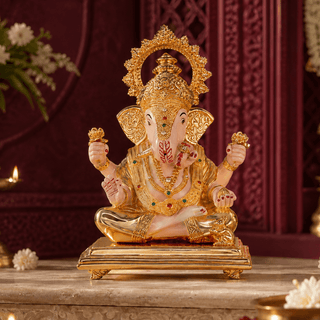
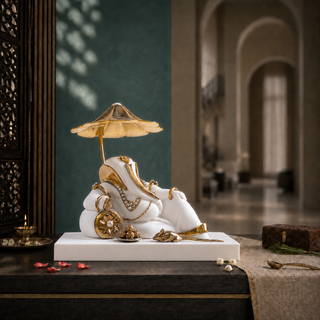
Ganesha, in most cars, and Hanuman after him. Every specific answer here is modern practice, because nobody wrote a verse ranking deities by vehicle. These are long-standing habits, worth respecting as long as we call them what they are.
Some of the most common choices among idols made for a dashboard, and the reasoning people actually give:
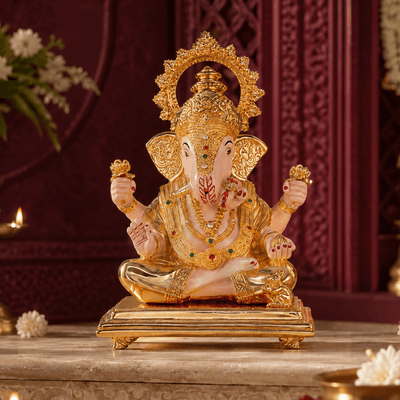
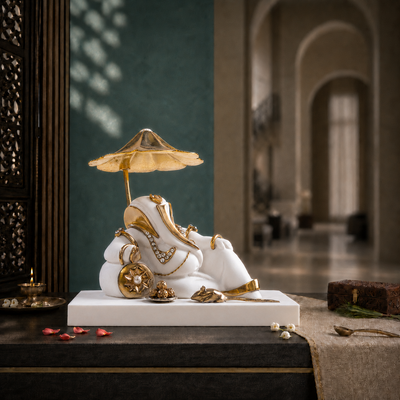
- Ganesha. Easily the most popular. He is Vighnaharta, the remover of obstacles, and a journey is a stretch of road full of small obstacles. If you're picking one for the first time, the same logic that governs choosing a Ganesha idol for the home applies here, including the trunk direction question, which, for the record, is iconographic convention rather than a rule with penalties attached.
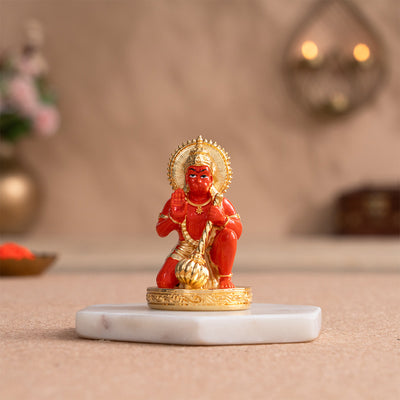
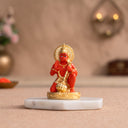
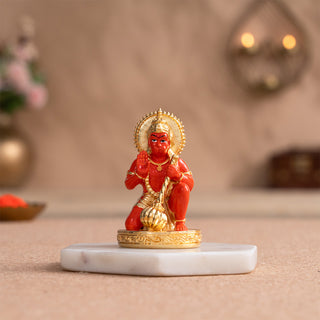
- Hanuman. Chosen for protection and for stamina on long drives. He is also the deity people most associate with being actively present rather than distantly worshipped: there's a reason the question of whether Hanuman is still alive is asked so often and so sincerely.
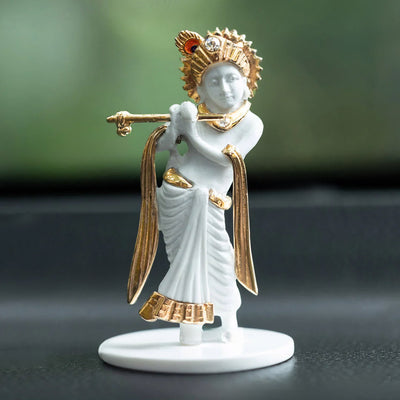
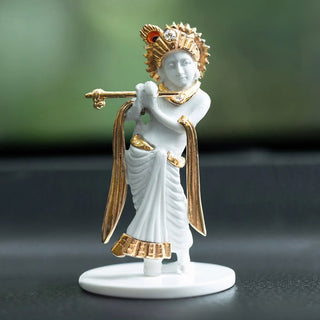
- Krishna. Frequently chosen by people who simply love him, which is as good a reason as any. Often it's the flute alone, or the hands holding the flute, rather than a full figure.
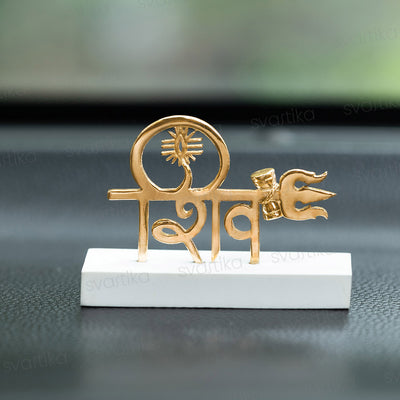
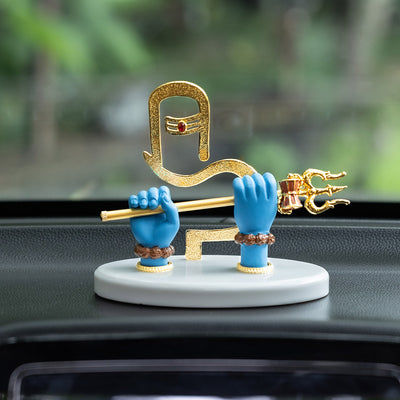
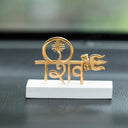
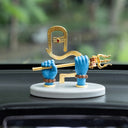
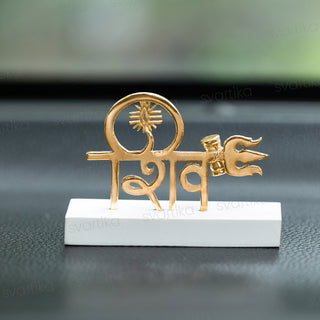
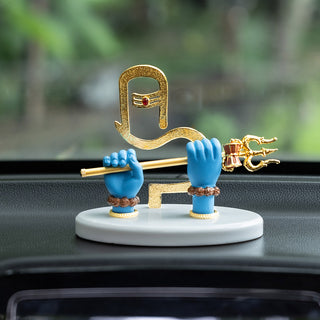
- Shiva. Usually as the trishul and damru rather than a seated form, or as the pair of hands emerging in blessing. Compact, and unmistakable at a glance.
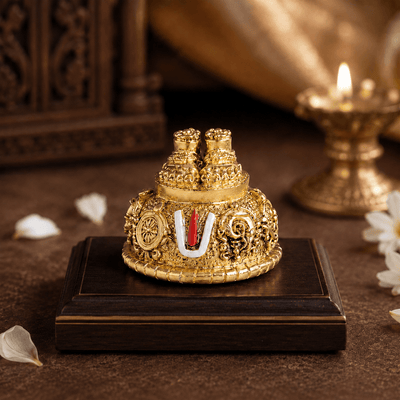
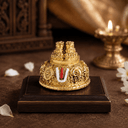
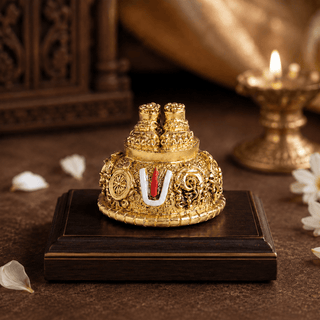
- Balaji's charan. Footprints instead of a figure: small, flat, and carrying the idea of walking under someone's protection. Related in feeling to Lakshmi's charan paduka at home and to the symbolism of lotus feet.
- Ek Onkar and the Khanda. For Sikh drivers, symbols rather than figures, and the whole "which deity" framing quietly dissolves.
Notice what's happening in that list. Every entry is about what the driver already loves or already fears. None of it comes from a text. That's not a failure of the tradition; it's just where devotional practice does its work, in the part of life scripture left open.
Three things people get wrong about car idols
1. "The idol must face a particular direction"
You'll read that a dashboard idol must face the driver, or must never face out through the windscreen, or must face east. I could not find any of that in the texts.
What the Bhagavata's worship chapter actually gives is a direction rule for the worshipper, not the image. The seat is laid with kusha grass pointing east, and the devotee sits facing east or north, or simply faces the deity, whichever way it happens to be placed (11.27.19). The direction belongs to the person. The elaborate idol-facing charts are later domestic convention, which is also true of the endlessly repeated rules about which way a Ganesh idol should face.
2. "Only brass or marble is proper; resin and clay are lesser"
This one costs people money. The same chapter lists eight materials that make a legitimate deity image: stone, wood, metal, a smearable substance such as clay, painted, sand, jewels, and an image held purely in the mind (11.27.12).
Sand is on that list. So is a mental image, which cannot be bought at all. A tradition that puts sand and imagination in the same sentence as gold and gemstone was clearly not building a price hierarchy. A well-made polyresin or gold-plated idol is not a downgrade from a brass one, and for a car it's often the more sensible choice.
3. "Once placed, an idol should never be moved"
This is the rule most often used to argue against car idols entirely, and it's the one the text most clearly contradicts. Moving is the defining feature of one of the two recognised classes of image.1 A murti that was never installed carries no obligation to sit still: you can take it out, clean it, move it between the car and the house, and put it back. Nothing has been broken.
It's the same permission that makes a home pooja shelf legitimately more relaxed than a temple sanctum.
What actually matters when choosing one
Once you stop looking for divine preferences, the real criteria show up. A loose object on a dashboard is a hazard. In a sudden stop it becomes a projectile, and in a collision an airbag deploying under it will fire it across the cabin. A murti that hurts someone is the opposite of auspicious.
So, practically:
- Small and light beats big and heavy. Two to four inches is the sweet spot. This is where the eight-materials verse earns its keep: a light polyresin or plated idol is textually just as valid as solid brass and far safer at speed.
- Nothing in the airbag zone. The passenger airbag lives in the upper dashboard. Keep the idol off that panel entirely, or use a recessed console spot.
- Nothing in your sightline. A tall figure right at the base of the windscreen sits exactly where a child stepping off a kerb would appear.
- Mount it properly. Adhesive pad, a weighted non-slip mat, or a dashboard holder. There's no ritual objection to any of them: we've written the practical version of this in how to stick an idol on a car dashboard.
- Think about heat. A parked car in an Indian summer gets brutal. Plated and resin pieces handle it well; anything with a delicate paint layer or an adhesive gem finish will age faster there than at home.
Because of all this, the flattest option is often the most sensible one. A two-inch piece like the Balaji charan with shankh, chakra and namam sits low, weighs almost nothing, blocks no part of the road, and carries the whole idea of travelling under protection. The car dashboard idols collection is built around exactly these constraints.

What about a shankh, or seven horses, in the car?
Two objects that show up on dashboards for reasons worth checking.
The shankh has genuine textual standing. The same worship chapter names the conch among the honoured articles of worship, alongside the Sudarshana chakra (11.27.27). It also tells a story most people don't know: the Panchajanya was once a demon. The Bhagavata says Panchajana was a Daitya who moved through the water in the form of a conch; Krishna killed him and took the shell, which had grown as part of the demon's body (10.45.40 to 42). The conch's sanctity came from whose hands it passed into, not from the shell being pure to begin with. That's a far more interesting idea than "it's auspicious", and we've unpacked it further in how to keep a shankh in the pooja room. In a car, though, a hollow shell rattling in a cup holder is neither safe nor respectful. This one belongs on a shelf.
Seven running horses are a different case. The claim that they bring success and speed is repeated everywhere as Vastu. We could not locate it in any classical text. Scripture's horses are Uchchaihsravas, called ageless and marked with every sign of good fortune when he rose from the churned ocean to become Indra's mount, and Devadatta, whom Kalki rides at the end of the age (Bhagavata 12.2.19 to 20).4 Both are divine mounts inside a story, not remedies for a wall or a dashboard. The full argument is in can we keep horse statues at home.
Where Vastu genuinely stops
Classical Vastu never covered vehicles at all, though almost every dashboard rule online is delivered in its name.
The Brihat Samhita is the great classical proto-Vastu authority. Its chapter list in the Subrahmanya Sastri translation shows the scope plainly. There is a chapter on house-building, one on finding water springs, one describing temples, then chapters on the description and installation of idols. The idol chapters sit inside the temple section. There is no chapter on ornaments inside a dwelling, and obviously none on vehicles.5
Even the core of the system is less settled than it sounds. A 1983 study by Apte and Supekar compared the Vastu-Purusha-Mandala in the Paushkara Samhita with the Brihat Samhita. The two texts handle that construction grid differently.6 Classical Vastu is a comparative architectural tradition, not one fixed rulebook: a point we take further in Vastu-friendly home decor ideas.
So when someone tells you Vastu forbids a south-facing dashboard idol, the honest response isn't "that's wrong". It's "that's a custom, and it may well be your family's custom, but it isn't in the building manual."
Looking after it
The one place where text and practice agree completely is cleanliness. An image kept in a place where it gathers grime, or handled with soiled hands, is being treated carelessly, and care is the whole substance of what worship is in the domestic setting.
A dashboard is a dust magnet. Wipe the idol when you clean the car, not once a year. Don't let it live under a stack of documents or a phone. If it's plated, a dry soft cloth is enough; for stone and marble-dust pieces, the method in how to clean a marble idol works just as well in a car as at home.
And if you're placing one in a brand-new vehicle, or gifting one, it usually sits alongside a small ceremony at home: the same instinct behind car-warming gifts. That instinct is sound. Marking a beginning with attention is exactly the kind of thing the tradition responds to, whether or not any verse instructed it.
The answer, in one line
The right murti for a car is a small, light, securely mounted, unconsecrated image of the deity you actually turn to: kept clean, kept out of the airbag's path, and kept out of your view of the road. Scripture supplies the permission and the material freedom. Everything past that is yours.
If you want to go further into how the same principles apply indoors, our guides on keeping a Shiva statue at home, choosing a Hanuman idol, standing Vishnu idols and Ganesh and Lakshmi placement all run on the same logic, and a Ganesh idol for the home is the usual first murti.
Also read: How to Stick an Idol on a Car Dashboard | Dashboard idols under ₹2,000 | Things to Keep in the Pooja Room | Can We Keep Horse Statues at Home | Who Is Balaji