The honest answer, before anything else
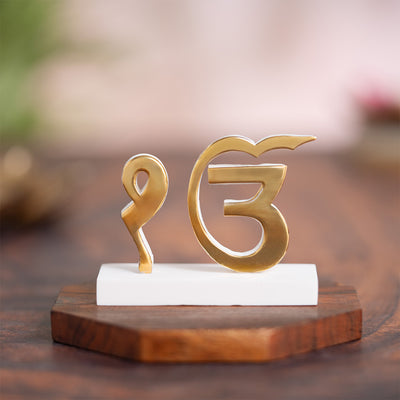
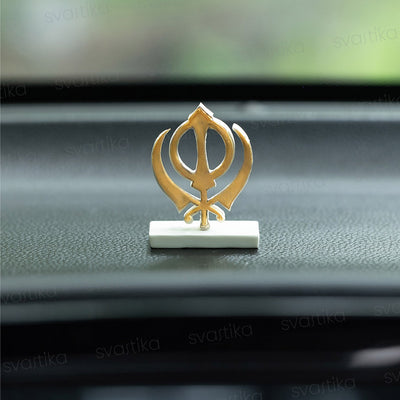
A small idol on a dashboard needs three things: a clean surface, an adhesive rated for a car interior, and a position that does not block your view or sit in front of the passenger airbag. Choose a dashboard idol that fits low and small; everything else is preference.
And one thing worth saying out loud: an unsecured object on a dashboard is a hazard. In a hard stop it travels. A brass murti that becomes a projectile is the exact opposite of auspicious. Fixing it properly is not fussiness, it is the respectful thing to do.
Does scripture actually allow an idol in a car?
Yes. There were no cars, obviously, but there is a rule that lands surprisingly close.
The Bhagavata Purana's chapter on deity worship divides images into two classes:
चलाचलेति द्विविधा प्रतिष्ठा जीवमन्दिरम् । उद्वासावाहने न स्तः स्थिरायाम् उद्धवार्चने ॥
In plain English: The seat of the living Lord is set up in two ways, movable and immovable. For the fixed one, Uddhava, there is no calling the deity in and no sending it away.
Bhagavata Purana 11.27.13
The consecrated image stays where it is. The implication is the whole point: the other kind, the non-installed one, is portable by design.
So a small murti in a car is not a compromise. It sits inside a category the tradition already had. What would be out of order is lifting a consecrated, installed deity out of its seat in a temple and carrying it around. A dashboard idol is not that.
The same chapter is relaxed about material. Verse 11.27.12 lists eight valid ones: stone, wood, metal, a smearable substance such as clay, painted, sand, jewels, and an image held purely in the mind.1 Sand sits in the same sentence as jewels. If you have been told only marble or brass is "proper," that hierarchy came from a shop. More on which forms suit a vehicle in what scripture says about a murti in the car.
How to stick an idol on a car dashboard so it actually holds
Dashboards are difficult surfaces. They are textured, they are usually treated with silicone-based cleaners, and they get hot enough to soften cheap glue. Most failed mounts fail for one of those three reasons, not because the adhesive was weak.
1. Pick the spot before you pick the glue
Sit in the driver's seat first. Look for a flat or near-flat patch on the passenger side, low on the dash, well outside the arc of your windscreen view. Put a piece of tape there and drive for a day. If it never once caught your eye while driving, it is the right spot.
2. Clean and degrease properly
Wipe the area, then wipe it again with isopropyl alcohol on a lint-free cloth. This is the step people skip and it is the one that decides everything. Dashboard polish leaves a silicone film that no adhesive can grip. Let it dry fully.
3. Use the right fixing
You have three sensible options:
- Double-sided automotive foam tape (VHB-type). The most reliable for a light idol on a flat surface. The foam layer bridges dashboard texture, which ordinary tape cannot. Best for anything under roughly 200 grams.
- A non-slip dashboard mat or a weighted silicone pad. No adhesive at all. The idol sits in it and grips. Good if you rent, lease, or simply do not want a permanent mark. This is what we would suggest for most people.
- A moulded holder or small stand fixed to the dash. Best for a taller murti, because it spreads the load and stops rocking on bad roads.
Skip superglue and epoxy. They go brittle in heat, they mark the vinyl permanently, and if the idol takes a knock, the dashboard tears before the glue does.
4. Press, then wait
Press firmly for thirty seconds, then leave it alone for a full day. Automotive adhesives reach their real strength over about 24 hours, not immediately. Fixing one on a cold morning also weakens the bond, so do it when the car has been in the sun a while.
Where it must not go
Not in front of the passenger airbag. Look for the "SRS" or "AIRBAG" moulding on the dash panel. That whole panel opens outward at enormous speed in a collision. Nothing goes on it, in front of it, or on the flap above it.
Not in your line of sight. A murti that sits in the gap between the bonnet edge and the base of the windscreen creates a real blind spot at junctions. Keep it low and to the passenger side.
Not where it can be knocked by a knee, a bag or the glovebox door. The most common way these come loose is not braking. It is somebody's elbow.
Not on a sun-baked black dash if the idol is resin or painted. A dashboard in an Indian summer can pass 70°C. Colour fades, adhesive creeps. A shaded spot near the A-pillar lasts far longer.
Three things people get wrong about car dashboard idols
1. "The idol must face the driver" (or must face outward, or must never face south). We could not find this in any of the texts we consulted. The one direction rule in the Bhagavata's deity-worship chapter governs the worshipper, not the image: verse 11.27.19 says to lay the seat with grass pointing east and then sit facing east or north, "or else directly facing the deity."1 That last clause is telling. The image can be wherever it is. You turn to face it. The elaborate idol-facing charts are later domestic convention, and we say the same thing in our piece on which direction a Ganesh idol should face.
2. "Vastu Shastra has rules about this." Classical Vastu is about building. Look at the actual chapter list of the Brihat Samhita, the great proto-Vastu authority: house-building, finding water springs, temples, description of idols, installation of idols.3 Its idol chapters follow its temple chapter, because they are about temple images and their consecration. There is no classical chapter on ornaments inside a room, let alone inside a vehicle. Scholarship reinforces this from another angle: Apte and Supekar's 1983 comparison of the Vastu-Purusha-Mandala across the Paushkara Samhita and the Brihat Samhita shows even the core grid is handled differently by different texts.4 Vastu is a disputed architectural tradition, not one settled rulebook. We go further into that in Vastu-friendly home decor ideas.
3. "Adhesive is disrespectful" or "you must mount it on a Tuesday." Neither appears in anything we could open. Verse 11.27.12's list of eight materials, which happily includes clay and sand, is a good reminder of how little the tradition fussed about substance. The same silence shows up elsewhere: the Saundarya Lahari, the classic source for the Sri Chakra, describes the yantra's triangles in detail at verse 11 and never once names a material, which is why we push back on the crystal-versus-copper ranking in which Shree Yantra is best for home.6 The market invents hierarchies. The texts mostly do not.
While we are here: the tradition's famous mounts belong to narrative, not to remedy. Uchchaihsravas, the horse the Mahabharata calls ageless and marked with every sign of good fortune, is Indra's mount in a story.5 He is not a travel charm. That is the reasoning behind our article on whether you can keep horse statues at home.
Choosing an idol that mounts well
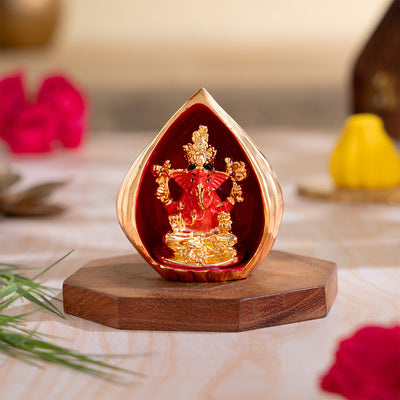
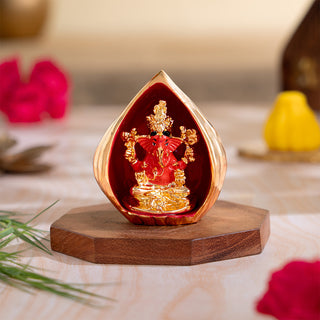
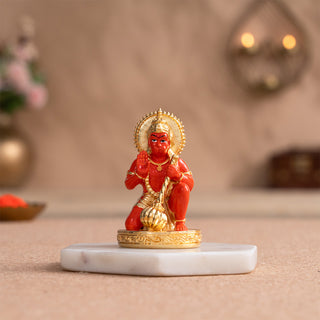
Weight. Lighter is safer and easier to fix. A solid brass murti is beautiful on a shelf and heavy for a dashboard. Gold-plated polyresin is a much better fit for a car, and by the Bhagavata's own list it is no less legitimate an image.
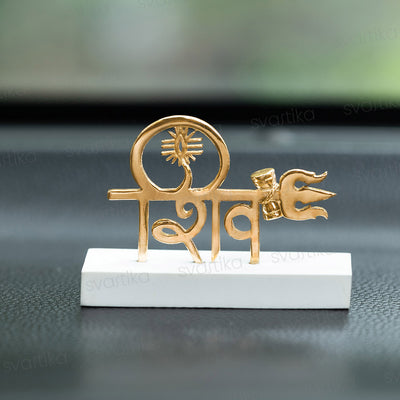
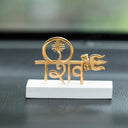
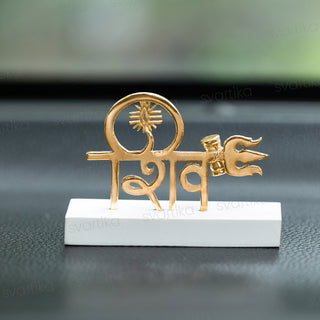
Height. Under three inches is the sweet spot. Something like a two-inch gold-plated Shiva with trishul and damroo sits below the sightline in almost every car, which a taller murti will not. Our dashboard idols under ₹2,000 list is built around exactly this constraint.
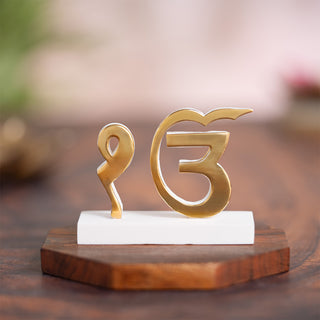
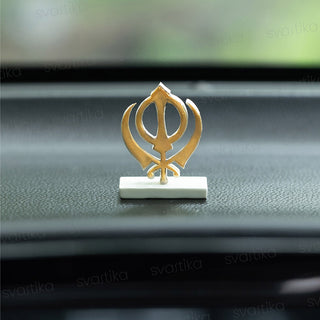
Base. A wide, flat base is worth more than any adhesive. A narrow or rounded base rocks, and rocking is what eventually peels tape off.
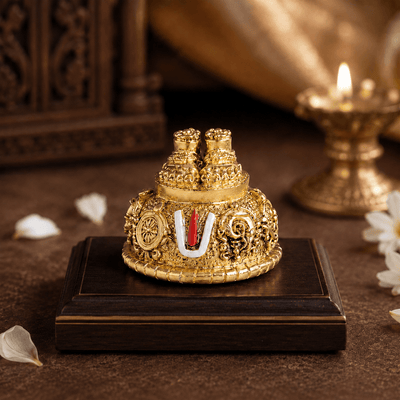
Finish. Dashboards get direct UV all day. A plated or sealed finish holds colour far better than raw paint. Browse the full car dashboard idols range or the gold and silver plated idols if you want something that survives a few summers.
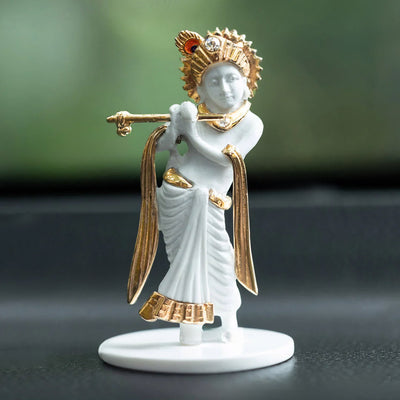
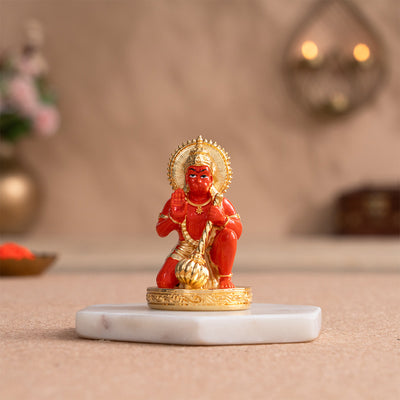
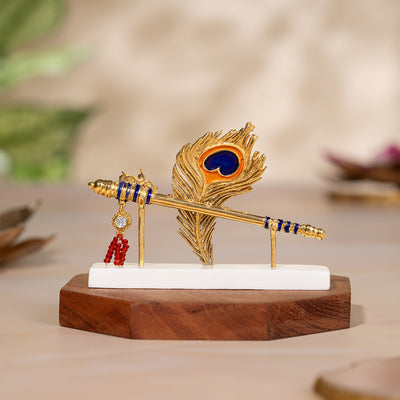
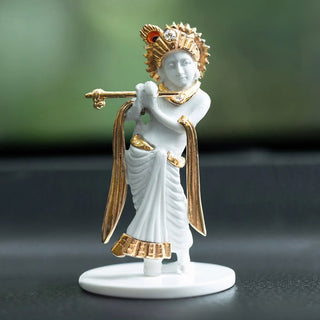
As for which deity, there is no scriptural answer and anyone who gives you one is inventing it. People choose Ganesha as the remover of obstacles, Hanuman for strength on the road, Krishna for company, Balaji for the vow-keeping association. Those are living devotional habits and they are perfectly good reasons. If you are drawn to Ganesha for a first car, our note on which Ganesha idol is good for home applies just as well to a vehicle.
Keeping it clean, which is the part tradition genuinely cares about
The Bhagavata does not tell you where to stick an image, but it does care about how it is kept. Verse 11.27.14 draws a distinction most people never hear: an image of a smearable substance, or painted, or wooden, is washed, while in all other cases it is cleansed without water.
That maps neatly onto a car. A plated or resin murti on a dashboard collects dust and a film of whatever the AC blows around. Wipe it dry with a soft cloth. Do not spray dashboard polish onto it, which will dull the plating and creep under the adhesive. If you keep a marble or marble-dust piece, our guide on how to clean a marble idol covers the water question properly.
Also: do not handle it with the hands you just used at a fuel pump. That instinct, that an image should not be touched carelessly or left to sit in grime, is the one bit of traditional feeling here that is genuinely well grounded.
Do you need a puja before mounting it?
No. A non-installed image requires no consecration ceremony to be kept, carried or fixed in a car. Many people do a small aarti and a coconut when they take delivery of a new vehicle, which is a warm custom and worth keeping, but it is custom rather than requirement. If you are marking a new car, our list of car warming gifts and the wider idea of Vastu Shanti return gifts come from the same instinct.
There is a lovely, slightly unnerving story in the Bhagavata. The Panchajanya conch was not always sacred. At 10.45.40 to 10.45.42 a demon named Panchajana moves through the water in the form of a conch; Krishna kills him and takes the shell that had grown out of his body.2 The conch's sanctity came from whose hands it passed into, not from what it was made of. That is a better theology of objects than any material ranking, and the same thread we pull in how to keep a shankh in the pooja room.
An idol becomes meaningful through attention. A dashboard murti you glance at every morning before a commute is getting more attention than a beautiful one gathering dust on a shelf.

What we could not find
To be straight with you: nothing in the texts we consulted addresses mounting method at all. Not adhesive, not direction, not day, not deity. Every practical recommendation on this page is ours, based on how dashboards and adhesives behave, and we would rather label it that way than borrow authority for it.
What scripture does give is permission and a sense of proportion. The moved image is a real category. The material does not rank you. The direction rule was always about the person, not the object. That leaves three questions you can actually check: is it fixed properly, does it block your view, is it clean.
If you want to think about placement inside the house next, our pieces on what to keep in a pooja room, the Ganesh Laxmi murti position guide and where to place Laxmi charan paduka apply the same honesty test. And if a charan paduka is what you would rather carry than a figure, the reasoning in the sacred lotus feet of Krishna is worth reading first.
Also read: Keeping a Murti in Your Car: What Scripture Actually Says | Car Dashboard Idols Under ₹2,000 | Can We Keep a Shiva Statue at Home | Which Hanuman Idol is Good for Home | How to Clean a Marble Idol