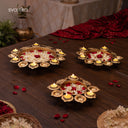
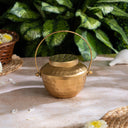
Budget friendly Navratri decoration at home is easier than it looks, because the traditional setup is already the cheap one. Clay, water, leaves, rice, a coconut, cotton, oil and a wick. That is the real list.
Below is the shopping list with prices, ten ideas that cost almost nothing, and the few things worth buying once.
The 2,000 rupee Navratri setup
Seven items. Most of them come from the kitchen, the street or the local kumhar.
- An earthen pot (ghata) and a lump of clay. 50 to 150 rupees. Set the pot on the clay, not straight on the shelf. That one move gives the whole arrangement a base.
- Leaves and a coconut. Mango, ashoka and betel leaves in the mouth of the pot, a small dish of rice on top, coconut above that. Under 100 rupees.
- Turmeric dyed cotton. Boil haldi in water, soak plain cotton, dry it in shade. A deep uneven yellow no polyester runner will match, for the price of a spoon of turmeric.
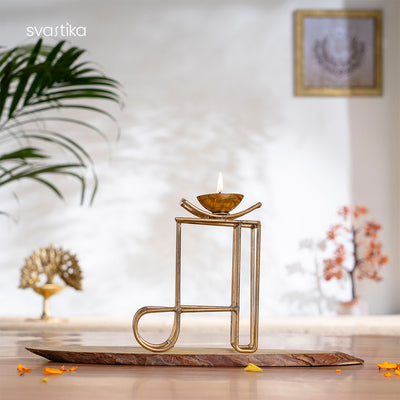
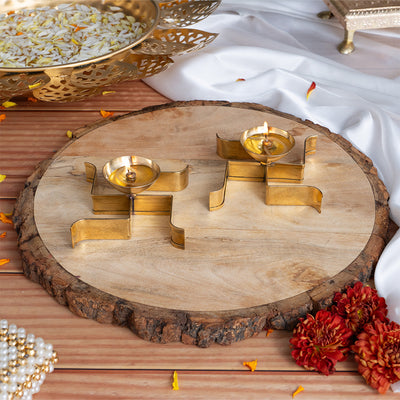
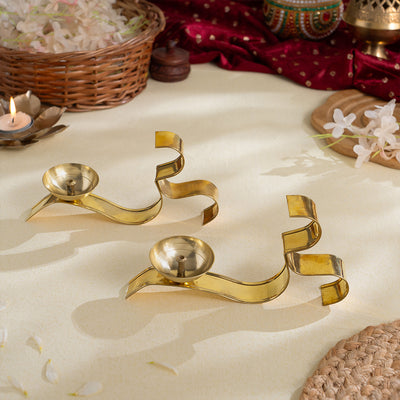
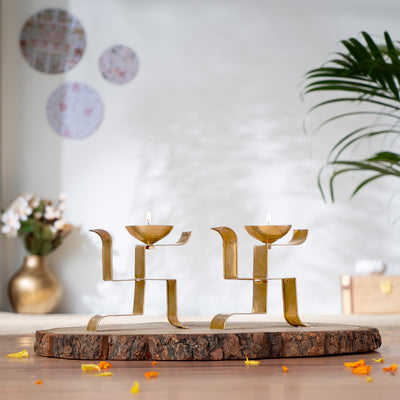
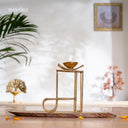
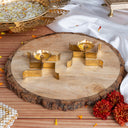
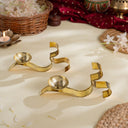
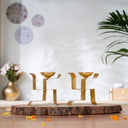
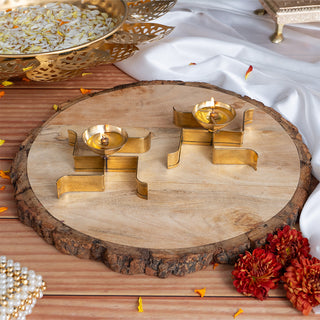
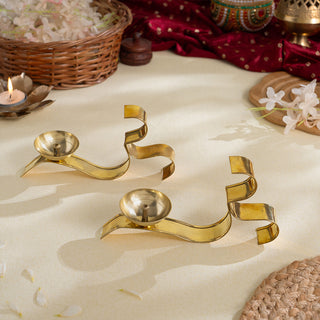
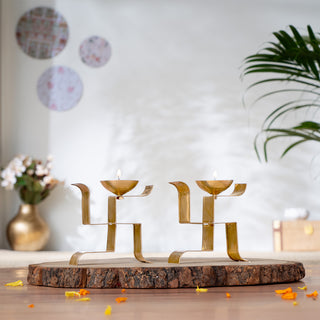
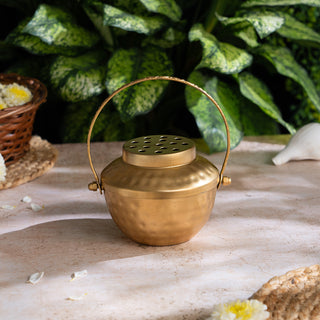
- One brass lamp. The only real spend. A Maa symbol brass diya is a good first buy. See the full brass diyas range. 400 to 1,500 rupees.
- Loose marigold. Buy by weight at the mandi instead of ready made garlands. Roughly a third of the price and it lasts just as long.
- Rice flour rangoli. Rice flour and turmeric at the doorway. No colour packets needed.
- Incense and a wick. Cotton wicks with til or sesame oil burn steadier and longer than ghee, and cost a fraction.
Traditionally Ganesha is honoured first, on the pot, before anything else. A small Ganesha idol beside it covers that in one object.
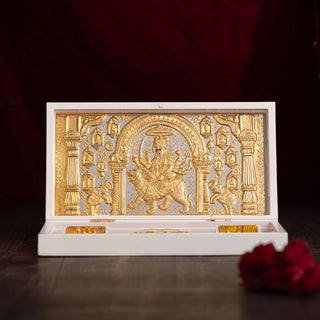
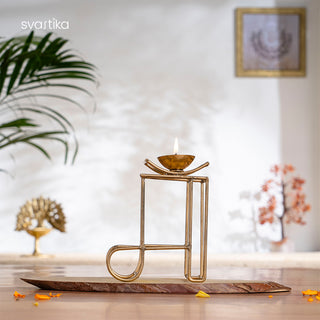
10 budget Navratri decoration ideas for home
- Use two colours and one metal. Red and white with brass, or yellow and deep green with brass. Repeat them on the cloth, the mat, the flowers and the thread. Four repeated colours look composed. Eleven look like a sale rack.
- Clean the brass you already own. A polished old lamp beats a new plastic one every time. This costs nothing.
- Two lamps with space around them, not eight in a row like a fence.
- Put a plate under the diya. Soot on a painted wall is the cheapest mistake to make and the most annoying to undo.
- Build height with what you have. A stack of books under the cloth works. A low chowki works better and lasts years.
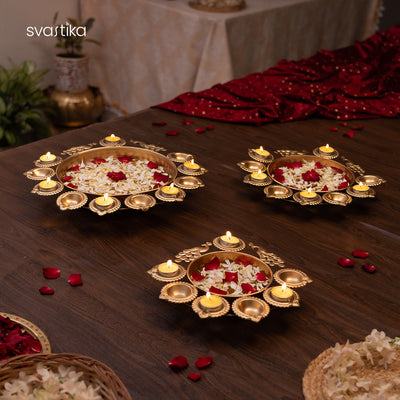
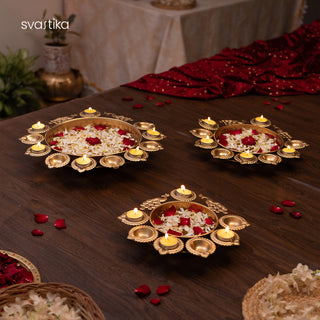
- Float flowers in water. A shallow bowl or an urli with marigold fills empty floor space for almost nothing.
- Make a toran from real mango leaves and marigold, not plastic. Under 100 rupees and it smells right.
- Skip the backdrop fabric. A clean plain wall behind a lit lamp photographs better than nine metres of net cloth.
- Change flowers each morning instead of buying more objects. Freshness reads as effort. Clutter does not.
- Keep the shelf half empty. Space around the idol is free and it is the thing expensive setups usually get wrong.

Where to spend and where to save
Spend on metal. Save on everything temporary.
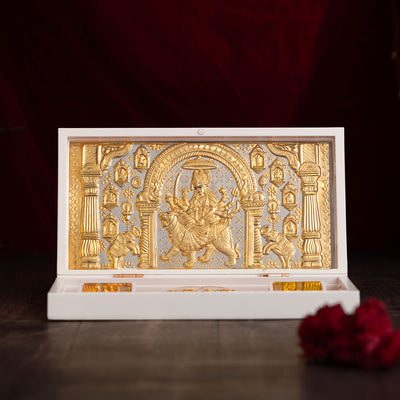
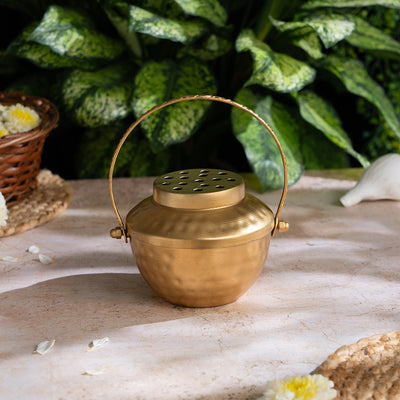
- Worth buying once: a brass lamp, an incense burner, a chowki, a Durga idol, a pooja thali and the basics in pooja essentials. Brass gets better with age and comes out every year.
- Buy fresh each year: clay, leaves, flowers, rice, cotton. Cheap, traditional, and meant to be temporary.
- Do not buy at all: thermocol cut outs and plastic garlands. They have no tradition behind them and no afterlife either. They just fade in a cupboard.
The same rule runs through Diwali decoration buying and ordinary living room decor on a budget: fewer objects, better material, repeated colours. Browse brass idols and table decor if you are adding one keeper piece a year.
A nine day build, so you are not spending it all on day one
Add something small each day. It spreads the cost and it matches the shape of the festival.
- Day 1: the ghata on its bed of clay, turmeric cloth, one lamp. Nothing else.
- Day 2: fresh leaves and the coconut settled properly. A second lamp.
- Day 3: cloth for the idol's seat and a rice flour rangoli at the door.
- Days 4 and 5: loose marigold, bought by weight.
- Days 6 and 7: incense, a small water vessel, and the brass you already own, cleaned.
- Days 8 and 9: Ashtami and Navami. If you are going to spend, spend here rather than on a backdrop.
For dates and tithi see the Navratri date and fasting guide. The spring Navratri works the same way, explained in why we celebrate Chaitra Navratri, and it closes on Ram Navami.
Kanya pujan gifts on a budget
On Ashtami or Navami, the girls are honoured with sandal, a small gift and a proper meal. This is the one place where spending a little more is traditional rather than decorative.

Keep it to 100 to 500 rupees a head: a small brass coin, a keepsake idol or a diya. See kanya pujan return gift ideas, Navratri return gifts, and the keepsake Navratri gifts and Durga Puja gifts. For larger groups, bulk gift items bring the per head cost down.
What a home Navratri setup costs
| Item | Price band | Buy again? |
|---|---|---|
| Earthen pot and clay | 50 to 150 | Every year |
| Leaves, coconut, rice | under 100 | Every year |
| Loose marigold, nine days | 300 to 700 | Every year |
| Turmeric dyed cotton | under 150 | Reusable |
| Brass diya | 400 to 1,500 | Buy once |
| Chowki or seat | 400 to 1,500 | Buy once |
| Durga idol, 5 to 8 inches | 1,500 to 5,000 | Buy once |
A first year with the idol lands around 3,000 to 6,000 rupees. Every year after that is under 1,200, because the metal comes back out of the cupboard.
What to skip, and why you are not failing anything
Most of what people now treat as compulsory has no old source behind it. The nine colours for nine days are a recent media convention, not scripture. Garba and dandiya are living folk culture rather than ritual instruction. And the familiar Durga family grouping is a regional style, so one idol is not an incomplete set.
So do not spend money on nine sets of anything out of guilt. If you want the detail behind that last point, see how many hands Goddess Durga has.
The short version
An earthen pot on clay. Turmeric dyed cotton. One good brass lamp, lit every evening. Loose marigold. A rice flour rangoli. Incense and a coconut.
That is under 2,000 rupees and it photographs better than most setups costing ten times more. Scale the same idea to a shelf with our home temple decoration guide, to a desk with office Navratri decoration, or into a fuller setup with brass idols and diyas. For lighting ideas that carry into the next festival, see Diwali diya decoration, and for the corner itself, what to keep in a pooja room. More pieces sit in home decor.
Also read: Navratri 2026: Dates, Tithi and Fasting Rules | How Many Hands Does Goddess Durga Have | Durga Puja Decoration at Home With Brass Idols and Diyas | Why We Celebrate Chaitra Navratri | Things to Keep in the Pooja Room