The one festival where the setting sun comes first
Nearly every Sun ritual in India greets the sunrise. Chhath Puja does the opposite. The first big offering goes to the sun that is leaving.

On the evening of shashthi, the sixth day, thousands of people wade waist deep into a river or a pond. They stand facing west. They lift water and milk in cupped hands and pour it towards a sun that is already halfway gone. Only next morning do they come back and greet the sunrise.
That reversal tells you what kind of festival this is. Chhath thanks the light on its way out before asking anything of the light coming in. It is also the most democratic vrat, or ritual fast, in Hindu practice. No priest recites on your behalf, no idol to bathe, no temple to enter. You stand in the water yourself.
The four days of Chhath Puja, in order
In 2026 those four days run from Friday, 13 November to Monday, 16 November, with the sandhya arghya on Sunday, 15 November. Chhath falls in the bright half of Kartika, a few days after Diwali Lakshmi Puja. The four days are fixed by tithi, the lunar day, not by the clock.

- Nahay Khay (Kartika shukla chaturthi). The vratti, the person keeping the fast, bathes in a river and eats one simple sattvik meal. Usually chana dal, lauki and rice cooked without onion or garlic.
- Kharna, also called Lohanda (panchami). A full day fast without water, broken after sunset with kheer made of jaggery, along with roti and fruit. After that meal the long fast starts.
- Sandhya Arghya (shashthi). The evening offering to the setting sun, made standing in water. This is the day people mean when they say Chhath.
- Usha Arghya and Paran (saptami). The offering to the rising sun, after which the vratti finally drinks water and eats.
Between Kharna and Paran the fast runs roughly thirty six hours with no food and no water at all. The offerings are carried to the ghat in a soop, a flat bamboo winnowing fan, and a daura, a large bamboo basket. Inside go thekua, a hard wheat and jaggery biscuit fried in ghee, along with sugarcane, coconut, banana, turmeric root and radish. Nothing in the basket needs a shop. That is part of the point.
The exact minute of sunset and sunrise changes with your town and your almanac. Take those from a local panchanga, as you would for the Karwa Chauth moonrise or a Navratri ghatasthapana. A printed time from a website you cannot check is worth nothing.
Who is Chhathi Maiya?
Chhathi Maiya is the Puranic goddess Shashthi, a guardian of children, worshipped on the sixth day. Ask at a ghat and you will usually hear she is Surya's sister. That is folk belief, not text.
Shashthi appears in the Brahmavaivarta Purana, in its Prakriti Khanda. She is described as "the sixth digit of nature that represents the illusion of Vishnu; hence she is called Sasthi."2 The same passage makes her "the favourite spouse of Kartika", that is Kartikeya, son of Shiva, and gives her another name, Devasena. She is one of the sixteen mothers.
What she does is guard children. The text calls her worship "on the sixth day of the child-birth" essential and permanent, and says a woman who wants a son worships her "on the sixth day of the bright half of the month". That line lands exactly on Chhath's tithi.
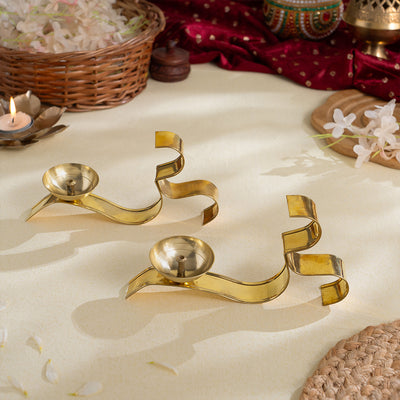
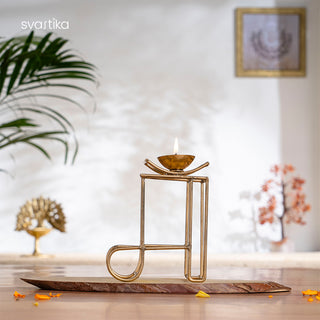
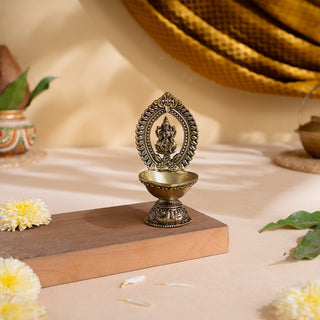
Grierson recorded the same sixth day naming ceremony in Bihar villages under the name chhathi. So the goddess of Chhath is a mother who protects children, worshipped on the sixth day, and the festival's name is the ordinary Bihari word for that sixth day rite. Nothing in the Purana makes her the Sun's sister. You can see the same maternal idea in a Maa symbol brass diya, where the lamp itself is shaped as the word for mother.
What scripture actually says about worshipping the Sun on the sixth day
Chhath has no verse that commands it. It has something more interesting: an epic that already knew about Sun worship on this exact tithi.
In the Vana Parva of the Mahabharata, the priest Dhaumya teaches Yudhishthira the hundred and eight names of Surya. The hymn contains this line:
सप्तम्यामथ वा षष्ठ्यां भक्त्या पूजां करोति यः।
अनिर्विण्णोऽनहंकारी तं लक्ष्मीर्भजते नरम् ।।In plain English: Whoever worships with devotion on the seventh day or the sixth, without gloom and without pride: Lakshmi comes to that man.
Mahabharata, Vana Parva 3.3.45; Kisari Mohan Ganguli's translation
The sixth and the seventh lunar day. Chhath's two arghyas fall on shashthi and saptami. That is a real resonance, worth far more than a made up verse. But read it honestly: the epic recommends Sun worship on those days. It does not describe Chhath.
The same passage corrects a story you will hear every year. People say Draupadi kept Chhath and received the Akshaya Patra from Surya. In the text it is Yudhishthira who performs the worship. He does it standing in water, and "rising from the water" he bows to Dhaumya. Surya gives the copper vessel to him. Draupadi's part is that she eats last, and once she has eaten, the day's food is finished. She keeps no vrat in that passage.1
The detail worth carrying home is the posture. He worshipped standing in the water. Chhath still does.
Karna is the other name people attach to Chhath. The epic does show him worshipping the Sun, in the Kundalaharana section: "when Karna after rising from the water, used at mid-day to worship the effulgent Surya with joined hands, the Brahmanas used to solicit him for wealth." That is midday worship, not a sunset arghya, and the text never calls it Chhath.
Three things people get wrong about Chhath Puja
1. That the Rigveda prescribes it. The Rigveda has magnificent hymns to Surya. Hymn I.50 calls him "the God who knoweth all that lives".3 But it prescribes no four day riverbank vrat and never uses the word Chhath. The honest position is that the Vedic Sun and the Puranic goddess were both layered onto an older folk observance.
2. That Sita or Karna started it. The stories that Sita kept Chhath at Munger, or that Karna founded it in Anga, are local tradition. They are lovely and worth telling as tradition. No text I could open attaches a chapter or verse to either.
3. That it is only a Bihari festival. William Crooke recorded sun worship spread widely through the Vindhyan and Kaimur belt among Kharwar, Oraon, Korwa, Kharia and Bhuiya communities, under names like Boram, Bero and Sing Bonga, often with an anthill for an altar. He wrote that "any open place on which he shines may be his altar."6 Chhath sits on that very old solar ground. It did not descend from a book.
The oldest written record of Chhath
The earliest dated mention of Chhath under its own name is not scripture at all. It is a colonial administrator's field notebook.
George Grierson's Bihar Peasant Life, published in 1885, records in section 1442: "The chhath bart is a Hindu festival in honour of the sun held on the 6th of the light half of Katik (early in November)."4 Bart is the local form of vrat. Katik is Kartika. Every element of the modern festival's date is already there, in a book about ploughs and grain measures, by a man cataloguing village life rather than defending a tradition.
M. M. Underhill's survey The Hindu Religious Year, published in 1921, lists "Chhat puja (Bihar)" at Kartika shukla shashthi in her festival calendar.5 Two independent records, thirty six years apart, agreeing on the region and the tithi.
That is a stronger foundation than a fake citation. It means Chhath was already a settled, named, dated observance in Bihar's villages well before anyone was writing devotional blogs about it.
Why the date moves, and why almanacs disagree
Chhath is a lunar festival, so it slides against the English calendar the way Ganesh Chaturthi and Krishna Janmashtami do. It usually falls in late October or November.
Sometimes two panchangas give two different English dates, and neither is wrong. Sewell and Dikshit explained the mechanism in The Indian Calendar in 1896. A tithi does not match a day. "A tithi on which the sun does not rise is expunged," they wrote, and "a tithi on which the sun rises twice is repeated."7 That happens about thirteen times and seven times respectively in a year. When shashthi is squeezed or doubled, almanacs make different calls about which sunrise it belongs to.
The same book explains a second confusion that shows up around Kajari Teej and Hariyali Teej. Northern India ends a month at the full moon, the south ends it at the new moon, so the same day can carry two month names. Chhath escapes that one, because a bright half tithi sits inside the same month either way. Compare it with Onam, which is not lunar at all and barely moves.

Why a festival with no priest has lasted this long
Chhath has lasted because nobody stands between you and the deity. It also asks a lot: thirty six hours without water, cold river mud before dawn in November, a basket you filled yourself with fruit you bought yourself.
It gives back something most rituals cannot. The deity is not a stone form in a locked sanctum. It is the sun, visible to everyone at the ghat at the same moment, on time. A cleaner, a clerk and a landlord stand in the same water and see the same thing.
The oldest Sanskrit prayer to that sun asks for something very ordinary:
उद्यन्नद्य मित्रमह आरोहन्नुत्तरां दिवम् ।
हृद्रोगं मम सूर्य हरिमाणं च नाशय॥In plain English: Rising today, friend of all, climbing the high sky: Surya, take away the sickness in my heart, and this yellow in my skin.
Rigveda 1.50.11
A plea for health, thousands of years old.
Chhath is mostly a fast for the health of a family. A child recovering, a husband's work, a house that stays whole through the year. The prayer has not changed much. What changed is that a whole region built four days, a river bank and a bamboo basket around it, and kept it going without a single line of scripture telling them to.
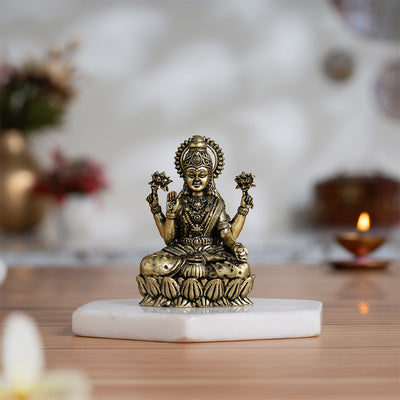
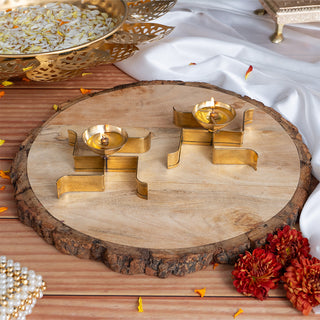
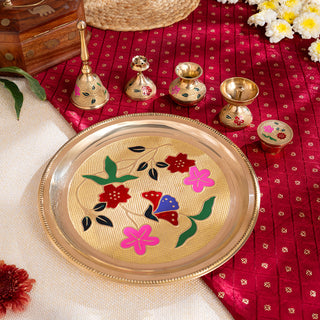
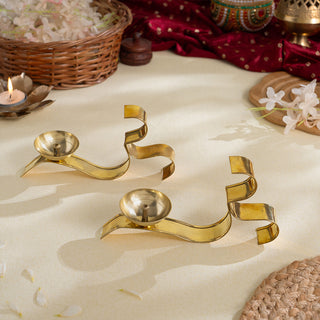
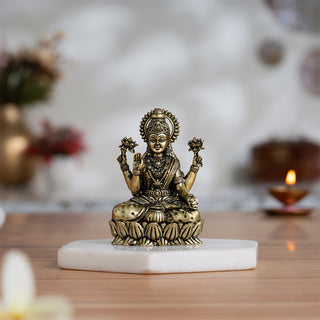
If you keep the fast at home, the lamps matter more than anything decorative. A row of brass diyas at the ghat or the doorway, a plain pooja thali for the arghya, and the Lakshmi idols of the Kartika season are all this festival ever needed. For placing them well, see our notes on things to keep in your pooja room and on diya decoration.
Also read: Diwali Lakshmi Puja 2026 | Kajari Teej 2027 | Onam 2027 | Why We Celebrate Chaitra Navratri | Jagannath Rath Yatra 2027
Cover photo: Susovan Chakraborty, CC BY-SA 4.0, via Wikimedia Commons.