Ask most people why we celebrate Chaitra Navratri and you get a shrug, then a guess. "It's the smaller one." "It's the same as Durga Puja but in summer." "It's for people who couldn't do the October one properly."
None of that is right, and the correction is more interesting than the mistake. Chaitra Navratri is not a copy of the autumn festival. It has its own instruction in the Puranas, its own dates, and its own reason to exist. It is also the only Navratri that ends on the birthday of a god.
Where something is scripture, I'll say which book. Where it's custom with no verse behind it, I'll say that too.
So why do we celebrate Chaitra Navratri?
Because the goddess asks for it by name.
In Swami Vijnanananda's translation of the Srimad Devi Bhagavatam, the Devi says: "In the month of Chaitra, Magh, As'vin, and Asadha, My grand festival should be done on the four Navaratris respectively" (p. 172). Chaitra is first on that list. It isn't an afterthought and it isn't a regional habit that grew into a festival. It is prescribed.
The same text is specific about the dates. Worship falls on "the first nine days of the bright half in the months of As'vin and Chaitra" (p. 176), and the fast is set for "the bright fortnight of the month of Asvin or Chaitra" (p. 371). That is exactly the window Indian households still keep, roughly two thousand years later, without most of us knowing where the instruction came from.
So the honest one-line answer is this. We celebrate Chaitra Navratri because it is one of the four Navratris the Devi Bhagavata names, one of the two it says must be observed, and because its ninth day carries two separate births: one of Rama, one of the goddess herself.
Four Navratris, not two
Almost every popular explainer says there are two Navratris a year, sometimes adding a vague mention of "secret" ones. The text is cleaner than that. It names four: Chaitra, Magha, Ashvin and Ashadha.
Then it narrows: "The two nine nights vow called Navaratra are to be observed, one in the autumn and the other in the spring season" (p. 551). Two to be kept, four that exist. The two quieter ones, Magha and Ashadha, are what later tradition calls the Gupta Navratris, though the label is tradition, not the Purana's word. The text just names the months.
That framing matters, because it kills the ranking. Chaitra is not the junior partner of Ashvin. They are the paired halves of the year, spring and autumn, and the text treats them as equals. If you have ever felt that the spring one gets less attention than it deserves, the Devi Bhagavata agrees with you.
Worth adding here: the popular idea that each of the nine days belongs to one of the nine Navadurga forms is later devotional convention. The nine names sit in the Devi Kavacham, which the Ramakrishna Math edition itself prints as material added at the beginning of the Saptashati rather than as the Purana's own narrative.5 Nothing I could reach assigns one form to one day. It is a lovely way to keep the nine nights. It is not a Puranic instruction, and the same goes for the nine-colour scheme that circulates every year.
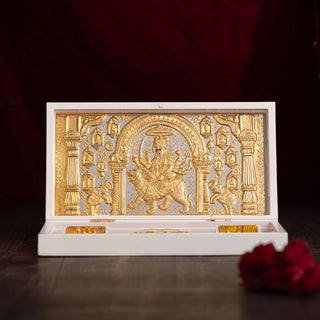
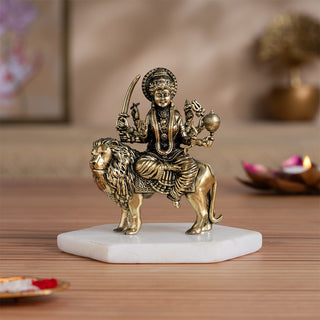
Chaitra's ninth day: two births in one month
Chaitra Navratri closes on Ram Navami. Not by coincidence, and not by a later temple decision. Valmiki says so. The Bala Kanda dates the birth of the princes plainly:
ततश्च द्वादशे मासे चैत्रे नावमिके तिथौ॥
In plain English: Then, in the twelfth month, in Chaitra, on the ninth day of the moon.
Valmiki Ramayana, Bala Kanda 1.18.8; Ralph Griffith's verse translation numbers it Canto XIX
That is the oldest Ramayana we have, giving Rama's birth to the ninth day of Chaitra.2 The same canto dates Bharata, Lakshmana and Shatrughna by their nakshatras. So the ninth night of the spring Navratri is also the birthday of Vishnu's Rama avatar, and the festival's last day is a birthday celebration. If you have ever wondered why Ram Navami and Navratri seem to overlap, that is why. They don't overlap. One ends in the other.

And then there's the second birth. The Devi Bhagavata records that "when the ninth Tithi came in the month of Chaitra on Friday, the Highest Light of the Supreme Force suddenly appeared" (p. 530).1 The Devi's own manifestation, on a Chaitra ninth.
Two manifestations, same tithi, same month, in two texts that were not trying to agree. That convergence is why Chaitra's ninth day carries the weight it does, far more than anything to do with buffalo demons.
What the texts actually ask you to do
Strip away the decoration and the prescribed core is small, physical and repeatable.

Install the ghata. The Devi Bhagavata says to "install the jar (Ghata) with devotion and according to the Mantras" and then adds a detail people skip: "He is to worship first on that Ghata (jar) Ganapati" (p. 612). Ganesha before the mother, on the pot itself. That single line is the textual root of Ghatasthapana, the act that opens the nine nights in most homes.
Pratap Chandra Ghosha's 1871 monograph on Durga Puja gives the full Bengali build, and it reads like a shopping list. A large earthen jar of Ganga water holds twigs of mango, ashvattha, bata, ashoka and jackfruit. On top go betel leaves, an earthen dish of rice and a coconut. A turmeric-dyed new cloth is tied round the neck, and a small two-armed figure is drawn on the pot in vermilion and ghee paste. This is Bengali practice recorded by an eyewitness, not a pan-Indian rule. It is also cheap enough to make the case for simple, natural materials on its own.
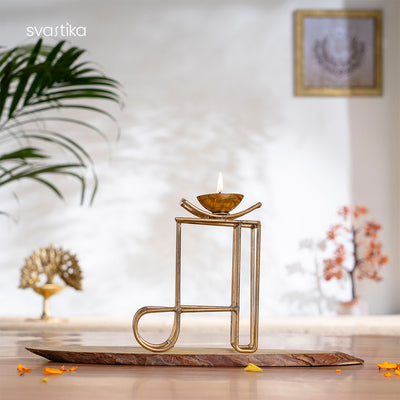
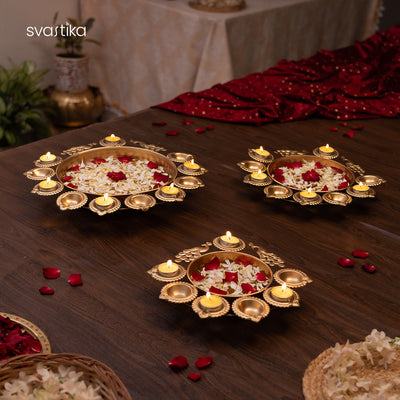
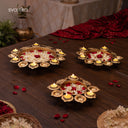
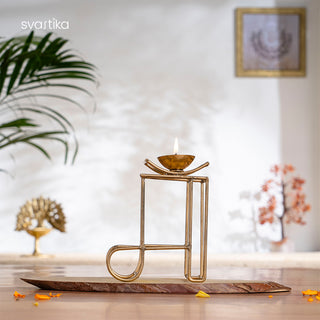
Light lamps. Dipa sits in the prescribed offering set alongside sandal paste, aguru and incense (p. 178), and the text separately attaches merit to "placing lamps and lights on the surface of the earth" (p. 627). So a brass diya lit each evening of the nine nights is not atmosphere. It is one of the few decorative objects that scripture actually asks for, which is why it deserves better than a corner of the shelf. If you're setting up a home mandir for the nine nights, start with the pot and the lamp and add nothing until those two are right.
Fast, and offer. Nine nights of fasting, homa, incense, flowers. Plain, and consistent across the passages.
Kanya pujan. Young girls are worshipped "with saffron, sandalpaste and ornaments" and fed (pp. 180–181, 863). This is genuinely textual, and it is where the tradition of Navratri giving actually comes from, not from guest favours, which is what most Navratri gifts are bought for today. One uncomfortable note, reported rather than recommended: the text excludes girls who are ill or have bodily defects. Contemporary practice has quietly dropped that, and rightly so.
Five things people get wrong about Chaitra Navratri
1. "It celebrates Durga's victory over Mahishasura." That belongs to autumn. The Devi Mahatmya's own closing section ties its great annual worship to the autumn season: Pargiter's 1904 translation of the Markandeya Purana has "the great annual worship that is performed in autumn time" (p. 561). Ghosha quotes the same injunction in 1871. Chaitra's anchors are Rama's birth and the Devi's appearance, which are better anchors anyway.
2. "There are two Navratris." Four are named, two are singled out for observance. Say "two main, four named" and you're accurate.
3. "Rama started Navratri by waking the goddess out of season." The Akal Bodhan story is not in Valmiki. The Bala Kanda cantos around the birth of the princes contain no such episode: I checked Canto XVIII as well as XIX.3 A search of the whole of Vijnanananda's Devi Bhagavatam returns zero matches for "Bodhana." Ghosha describes Bodhana at length in 1871 and attributes it to the Devi Purana, the Kalika Purana and the Vrhannandikesvara Purana, with no Rama attached. Akal Bodhan is a later Bengali retelling, most associated with Krittivasa. It is meaningful and it is loved. It is just not Valmiki, and it has nothing to do with Chaitra.
4. "Garba and dandiya are ancient Navratri rituals." No text consulted here prescribes them. They are living Gujarati folk traditions, and they are wonderful. The scripturally described core is different: the ghata, Ganapati first, fasting, homa, lamps, kanya pujan.
5. "Durga has always been the one who kills Mahishasura." The texts disagree with each other. Dowson's Classical Dictionary records that in the Mahabharata the asura Mahisha is killed by Skanda, and only secondarily by Chanda or Durga (pp. 205, 240). The Mahishasuramardini identity is a Puranic development, crystallised by the Devi Mahatmya. While we're here, the same text never fixes her arms at ten, which is a longer and stranger story.
Why spring, and why a new year
Chaitra Navratri opens the Hindu lunar year. That placement is calendar, not scripture, and the two get blended constantly.
Textual: the bright fortnight of Chaitra, nine days, ghata, fast, lamps, Kumari puja, ninth-day birth.
Calendrical: Chaitra is the first month of the year. Its first day is the new year in much of the country, which is why Gudi Padwa in Maharashtra and Ugadi in the Deccan land on the same tithi that Chaitra Navratri begins. The nine nights are, quite literally, the first nine days of the year.
The texts don't say "observe this because it is spring." But it is hard to miss what the placement does. The year opens, the harvest is in, the weather turns, and the first thing on the calendar is nine nights of restraint and lamps, closing on the birth of Rama. Autumn's Navratri ends in a victory over a demon and rolls into Dussehra. Spring's ends in a birth. That is a different emotional register, and it is worth keeping the two apart in your head.
How this changes the way you keep the nine nights
Not by much, honestly, and that's the point. Most families are already doing the prescribed things without knowing they're prescribed.
What it does change is the order of importance. The pot with Ganapati honoured on it first, and a lamp lit every evening, outrank everything else you could buy or hang. If the shelf is crowded, thin it out rather than adding.
It also frees you to enjoy the customs as customs. Colours by day, garba nights, an office setup, a gift for someone who came over, do all of it. Just don't let anyone tell you the Puranas asked for it, because they didn't, and a tradition doesn't need a fake certificate to be worth keeping.
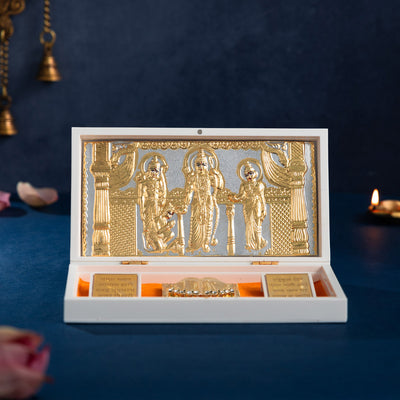
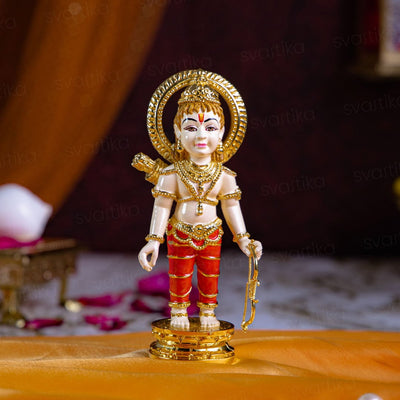
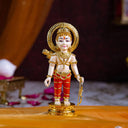
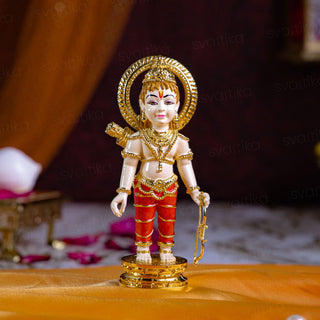
And on the ninth day, remember what you're actually marking. A birth in Ayodhya, recorded by Valmiki, on Chaitra's ninth returning day. Whatever form of Rama sits in your home, that is the day it belongs to.
Also read: How Many Hands Does Goddess Durga Have | Ram Navami: Date, Tithi and Rituals | Navratri: Tithi, Colours and Fasting Rules | Durga Puja Decoration at Home | How Did Ram Die