Why is Gudi Padwa celebrated, really?
Gudi Padwa is celebrated because it is the first day of the year. Ask ten people in Pune why is Gudi Padwa celebrated and you will get four answers. Rama came home to Ayodhya. Shalivahana defeated his enemies. Brahma started making the world. And, from somebody's grandmother, the flat and correct one: the new year.
That last answer is the one the whole day actually rests on. Chaitra Shukla Pratipada is the opening tithi of the lunisolar year across a large part of the Deccan. The same day is kept as Ugadi in Karnataka, Andhra Pradesh and Telangana, and the nine nights of Chaitra Navratri begin on it too. It is a busy tithi. It is busy because a year is starting, not because one particular king was crowned.
Robert Sewell and S.B. Dikshit's The Indian Calendar (1896) lays out the machinery plainly. The lunar month can be counted two ways (amanta, ending at the new moon, and purnimanta, ending at the full moon) and the amanta scheme is the southern one (Art. 13). Chaitra is fixed as the month in which the sun enters Mesha (Art. 14). So the year opens on the first bright day after that new moon. It is a piece of astronomy, quietly, and it has been for a very long time.
What exactly is a gudi?
The gudi is the object the day is named for, and it is oddly specific. A bamboo pole. A bright cloth tied near the top: usually silk, often green or yellow or a red khan. Fresh neem leaves and mango leaves. A garland of red flowers, and a gathi, the string of hard white sugar crystals children eat off the pole afterwards. And crowning all of it, upside down, a small brass or copper pot.

The whole thing goes up at sunrise, tied at a window or beside the front door, so that it is visible from the street. Rangoli goes on the threshold below it. Households that keep a formal puja space will also do a small pooja room ritual, but the gudi itself is a doorway thing, meant to be seen from outside.
Nobody agrees on what the inverted pot means. The common readings are that it is a kalash of abundance turned to pour blessings down over the house, or simply the head of the standard. What is not in dispute is the material. It is metal, it catches the first light of the year, and it is the one part of the gudi that gets kept, cleaned and used again next Chaitra. In a lot of families it is the same pot their grandmother tied up.
The honest version: the gudi is a flag. Households raise a bright marker at the door on the day the year turns. Cultures all over the world do some version of this. Maharashtra's happens to be beautiful.
Why the bitter neem comes first
Before anything sweet is eaten on Gudi Padwa, people eat neem: usually the tender leaves and flowers ground with jaggery, sometimes with tamarind, ajwain and a little salt. It is genuinely bitter. Children hate it. It is eaten anyway, first, before the shrikhand and puran poli.

This is not a modern wellness idea retrofitted onto a festival. B.A. Gupte's Hindu Holidays and Ceremonials (1919), in its section on plants in folklore, records the custom in one flat line: neem "leaves are eaten on the New Year's day." No explanation, no marketing. Just a thing people did, written down by an observer over a century ago. Gupte's book also lists Gudhipadva among the year's holidays, which tells you the festival was already established and ordinary enough to catalogue.
The same idea shows up next door on the same date. The Ugadi pachadi is built out of six tastes at once (neem flower, jaggery, raw mango, tamarind, chilli, salt) and eaten in a single spoon. Two different states, same tithi, same argument: the year will have all of it in it, so taste all of it on the first morning.
That is the philosophy of the day, and it is a better one than any of the origin stories. A new year that begins by handing you something bitter is not promising you a good year. It is preparing you for a real one.
Three things people get wrong about Gudi Padwa
1. "Gudi Padwa is the day Rama was crowned in Ayodhya, and the gudi is his victory flag."
This is the most repeated claim about the festival, and it does not survive a look at the text. Valmiki's Ramayana narrates Rama's return to Ayodhya and the abhisheka at enormous length: the coronation sarga of the Yuddha Kanda runs to seventy-odd verses of ceremony, water from the four seas, priests, ministers, gifts, the whole thing. And in all of it there is no month, no season, no tithi.1 The only time reference anywhere near it is that he then reigned ten thousand years. The Chaitra Shukla Pratipada association is regional tradition, and it is a lovely one, but it is not scripture. If you want what the epic does say about Rama's story, his brothers and how his life ended, the text is generous. On dates, it is silent.
2. "Well, the epic must date the war at least."
It does not do that either. The sarga in which Ravana dies takes him from Matali's counsel to the Brahmastra, to the arrow striking like a thunderbolt and tearing his heart, to the gods raining flowers, and names no lunar day, no month, no season.2 This is exactly why the same problem turns up around Dasara: "Rama killed Ravana on Vijayadashami" is calendrical tradition layered on afterwards, not something Valmiki supplies. Two of India's biggest festivals hang their dates on an epic that never gave any.
3. "The Shalivahana story is history."
Here it is worth splitting the claim in two. The calendrical half is solid: the Shaka reckoning is a real, ancient, widely used era, Sewell and Dikshit catalogue it among the standard Indian eras (Art. 71), and in the southern lunisolar system its year does begin at Chaitra Shukla Pratipada. That part is true and checkable. The folk half, the potter's boy who made an army of clay soldiers and rode out to victory on this exact morning, is story. No Purana supplies it. Enjoy it as story; do not cite it as history.
Why do festivals collect origin stories they do not need?
Because a date on its own feels thin, and people want a reason with a face on it.
Gudi Padwa is not unusual in this. Onam is a harvest festival that carries the memory of King Mahabali's yearly homecoming, a homecoming the Bhagavata Purana's Bali chapters never mention, because they never mention Kerala or a festival at all.7 And the Vamana episode itself is told two ways: Valmiki's Bala Kanda has a Bali who conquered the gods and is restrained before the earth goes back to Indra, with no devotion and no reward; the Bhagavata's Bali is praised as the greatest devotee among the Daityas.3 Even inside the ten avatars, the texts argue with each other.
So the honest position on Gudi Padwa's origin stories is not "they are fake." It is that they are folk memory and regional pride, sitting on top of an older, plainer thing: the year turned today, so we marked it. Both layers are real. Only one of them is scripture, and it is worth knowing which is which.
How the day actually runs in a Maharashtrian home
The practical shape of Gudi Padwa is fairly consistent, and most of it happens before ten in the morning.
- Abhyanga snan. An oil bath before sunrise. The day starts clean, literally.
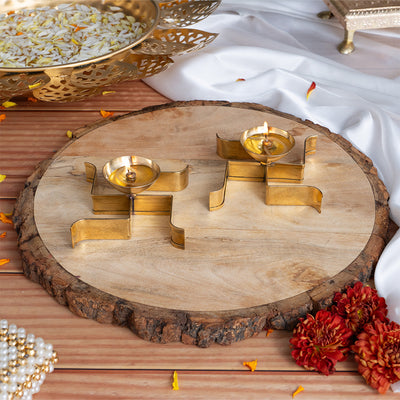
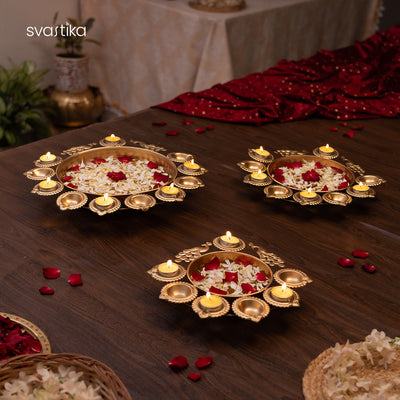
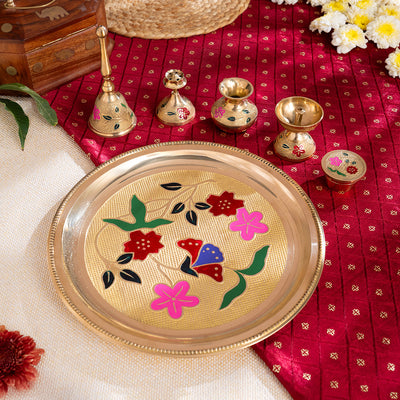
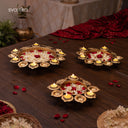
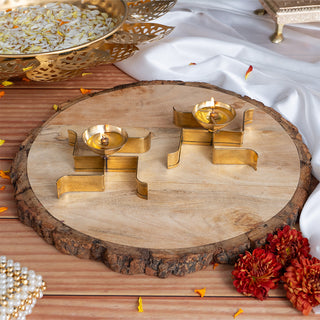
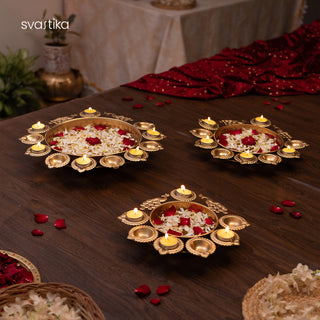
- The threshold. The doorway is washed, rangoli is drawn, torans of mango leaves go up. Many homes float flowers and a floating diya in a brass urli by the door, which is a very old way of saying you are welcome here to whoever crosses it.
- Raising the gudi. Pole, cloth, neem and mango leaves, garland, gathi, inverted pot. Haldi-kumkum, flowers and a lamp at its base, and an aarti.
- The neem. Neem and jaggery, eaten first. Then the sweets.
- Panchang. The new almanac is opened and the year's reckoning read out, the same practice that anchors Ugadi's panchanga sravanam further south.
- Muhurat. Gudi Padwa is one of the saade teen muhurat, the three and a half most auspicious days of the Marathi year. New shops open, vehicles are bought, gold is bought, new ventures start. This is why it is such a heavy day for housewarmings and first purchases.
- Sundown. The gudi comes down before dusk, with a namaskar. It is not left up overnight.
The lamps matter more than the decoration budget. A row of brass diyas at the threshold at dawn is doing the same work as the gudi above it: marking the house as awake and ready on the first morning of the year. If you keep a permanent mandir, this is also the traditional day to clean and re-dress it, in the same spirit as the refresh people do for other festivals.
Gudi Padwa and Ugadi: the same day, two plates
These are not similar festivals. They are the same festival with different food and a different name.
Both fall on Chaitra Shukla Pratipada, open with an oil bath, read the panchang and put bitterness in the mouth before sweetness. Maharashtra raises a gudi and eats neem with jaggery and puran poli; Karnataka and the Telugu states make the six-taste pachadi and bevu-bella, and give the day the older name: yuga plus adi, the beginning of an age.
The word choice is telling. Ugadi calls the day the start of a cycle of time, not the start of a calendar. That is a bigger claim than "January 1st", and it explains why the day carries so much weight in both regions.
South Indian new-year observance was surveyed a long time ago. S.M. Natesa Sastri gave "The Hindu New Year's Day" a full chapter of its own (Chapter XIX, page 115) in Hindu Feasts, Fasts and Ceremonies, published in 1903. He also gave the Varalakshmi vratam its own chapter. These were not obscure customs being rescued. They were the ordinary religious calendar of a household, written down by someone who lived inside it.
What people actually bring home on Gudi Padwa
Because the day is a muhurat, buying is part of it, and it skews toward things you begin something with rather than things you consume, the same instinct that drives Ugadi gifts on the same tithi further south.
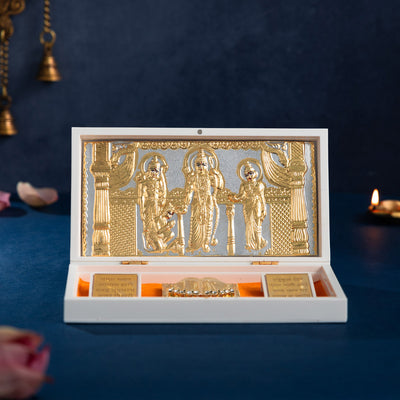
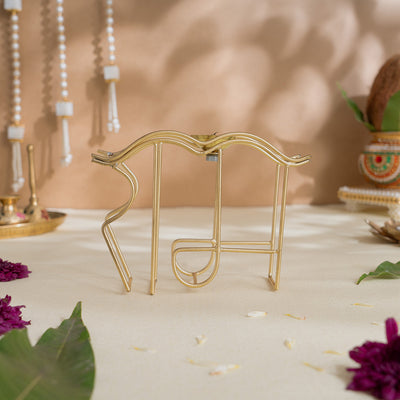
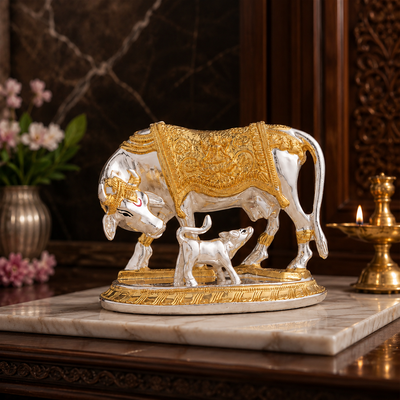
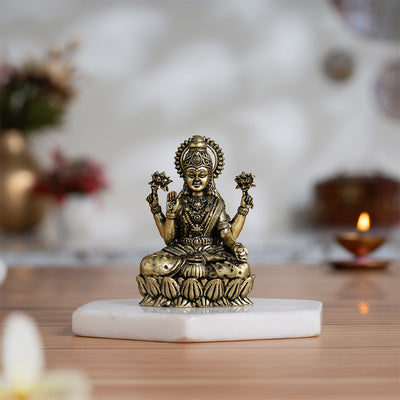
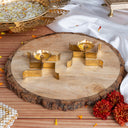
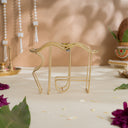
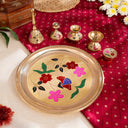
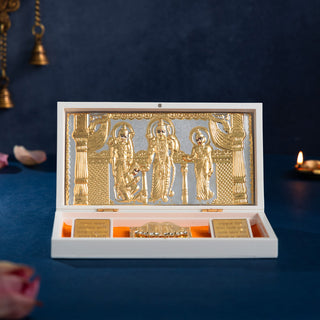
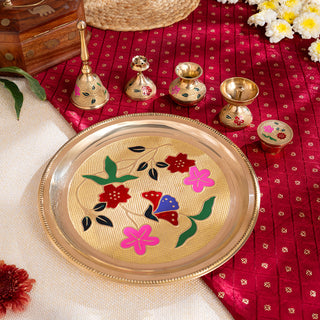
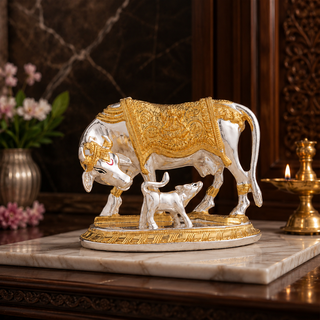
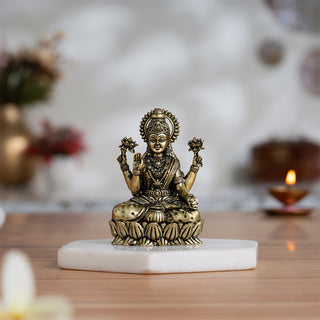
Metal is the constant. Brass and copper vessels, a lamp for the doorway, a new pot for the gudi, a first idol for a new home or shop counter. Households often bring in a piece for the year: Lakshmi for a business, Ganesha for a threshold, or a Ram Darbar for a family shrine, since Ram Navami falls only eight days later in the same bright half of Chaitra. Families who keep Rama as their kuladaivat often start the Chaitra rituals on Padwa and carry them through to Navami.
None of this is required. A gudi, some neem and a clean doorstep is the whole festival. But if a household marks the year with an object, Gudi Padwa is the day, the same instinct that puts Lakshmi in the house at Diwali and the ghat in place on the first day of Navratri.
The day does not need a borrowed reason
The origin stories that everybody repeats turn out to be unverifiable. Strip all of it away and you are left with a bamboo pole, a neem leaf and a metal pot, on the morning a year begins.
And that is enough. The gudi says the year has turned and this house is standing. The neem says it will not all be sweet. The sugar garland tied next to the bitter leaves says that is fine. That is a more grown-up idea about time than any victory legend, and it has been kept in Maharashtrian doorways for centuries without anyone needing to prove a date for it.
Ask why is Gudi Padwa celebrated, and the truest answer is also the simplest: because the year starts, and people have decided that is worth standing at the door for.
Also read: Ugadi: Festival of New Beginnings | Why We Celebrate Chaitra Navratri | Ram Navami: Date, Tithi and Rituals | Best Gifts for Dasara | Things to Keep in Your Pooja Room