Most Navratri decoration advice is written for a hall. Then you go home and your mandir is a shelf in the passage, or a wall niche you reach past every morning for the sugar.
So the useful question is not how to fill the space. It is what has to be there. Here is that list, plus prices, sizes and the mistakes small mandirs make.
What a home temple needs during Navratri
- A ghata. A small earthen pot of water with mango, ashoka and betel leaves in the mouth, a dish of rice and a coconut on top, tied with turmeric dyed cotton. Under 250 rupees, and it fits on a saucer.
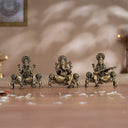
- A Ganesha idol. Ganesha is honoured first, on the pot, before anything else. A 3 to 4 inch piece from the Ganesha idols range is enough.
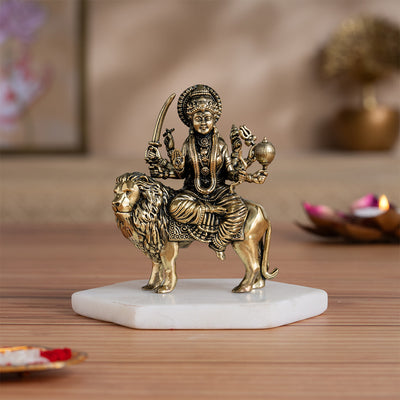
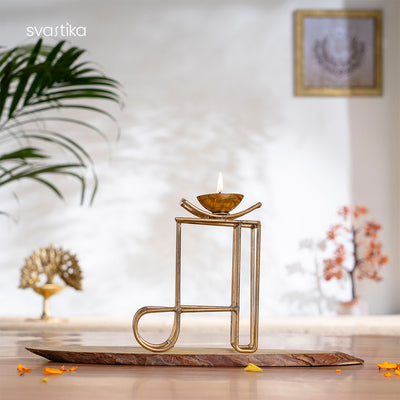
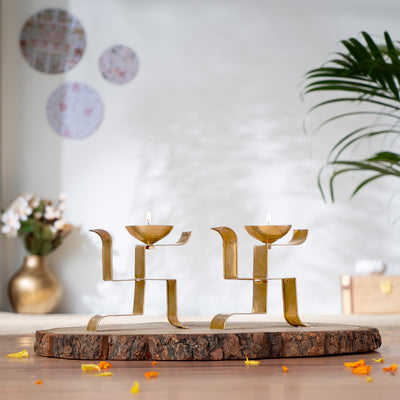
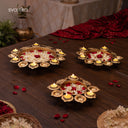
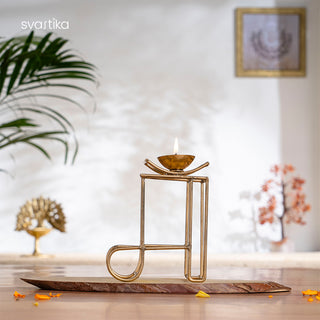
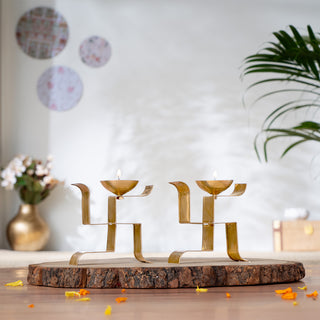
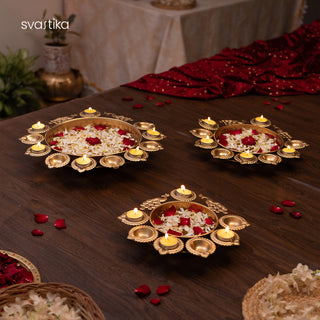
- One brass lamp. The single most worthwhile buy. A brass Maa diya fits a shallow niche. More in brass diyas. 400 to 1,500 rupees.
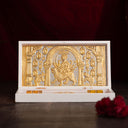
- A raised seat. A small chowki under the idol. If the niche is tiny, a pocket temple gives you the shrine and the seat in one object.
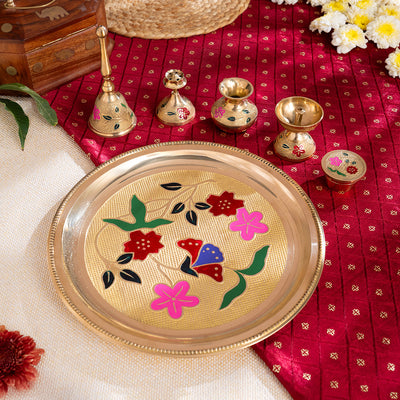
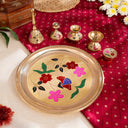
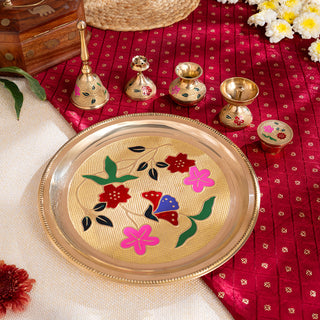
- Incense, sandal and a thali. A pooja thali keeps it in one place. The rest sits in pooja essentials.
- Fresh flowers and leaves, replaced daily rather than left to dry.
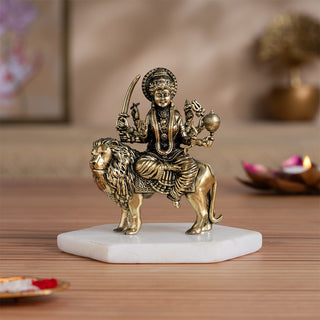
That is the whole core. The goddess is invoked into the pot itself, so a small brass Durga idol beside it is welcome but not required. Drapes, fairy lights, backdrops and marigold curtains are optional, and in a small mandir they usually crowd out the six things above by day three.
9 Navratri decoration ideas for a small mandir or wall niche
- Set the pot on clay, not on the shelf. A lump of clay under the ghata gives the whole arrangement a base. It costs nothing and it is the detail most people miss.
- Two lamps flanking the idol, not five scattered. Symmetry does the work in a narrow space.
- Use turmeric dyed cotton. Boil haldi, soak plain cotton, dry in shade. The colour beats any polyester runner.
- Pick two colours and let brass be the third. Gold and deep red, or white and marigold orange. Then stop. Three colours done well beat nine done anyhow, and a small mandir shows every mistake.
- Keep the shelf half empty. Space around the idol is free and it is what expensive setups get wrong.
- Hang a small toran of real mango leaves across the top of the niche. Under 100 rupees.
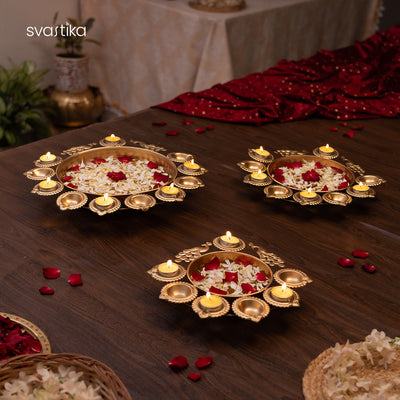
- Float flowers in a shallow bowl or an urli on the floor below the mandir if the shelf is full.
- Light the niche from the side, not from behind. A backlit idol goes dark in every photo.
- Change the flowers every morning. Freshness reads as care. More objects do not.

The same restraint works elsewhere. See Ganesh Chaturthi decoration ideas, Navratri decoration for an office and budget friendly Navratri decoration.
Lamp safety in a closed niche
Open flame in a wooden mandir is a real risk. Four rules keep it safe.

- Keep the flame a hand's width below any shelf above it. Wood chars slowly and you will not notice for weeks.
- Always use a metal tray under the lamp. Oil creeps, and it stains marble permanently. Read how to clean a marble idol before it happens.
- Ghee burns cleaner than oil in a closed space. Many families use oil on ordinary days and ghee on Ashtami and Navami.
- Cotton wicks with til oil burn steadier and longer than ghee if you are lighting daily for nine days.
The lamp is the piece you buy once and keep for decades. The same logic runs through Diwali diya decoration: the lamp is the constant, everything else changes.
Nine days, nine small changes
The most common home temple mistake is building everything on day one. By day four it has stopped being interesting and by day seven the flowers are brown.
Set the ghata and one lamp on day one. Then add one small thing daily: fresh flowers on day two, a second lamp on day three, a cloth change midway, fresh leaves around the pot on day five. On Ashtami and Navami, everything you own that is clean and lit.
It costs the same as doing it all at once, it keeps the mandir alive, and it gives children something to do each morning. For dates and tithi see the Navratri tithi and fasting rules. The spring Navratri runs the same way, see why we celebrate Chaitra Navratri and the Ram Navami tithi and rituals.
Setting up for kanya pujan
On Ashtami or Navami most households do kanya pujan. This changes the space, not the shelf.
What you need is floor space in front of the mandir, not more objects on it. Somewhere to seat the girls, room for feet to be washed, a clear path for plates. Plan it on day one instead of discovering it on day eight.
Gifts are traditionally clothing, ornaments, something fragrant and sweets. Keep it to 100 to 500 rupees a head. See return gifts for Navratri and kanya pujan, Navratri return gifts and Navratri gifts for guests.
If you want the full Durga family group
Many households want the whole tableau. It has a settled arrangement, which is useful when you are placing five pieces on one shelf.
- Durga in the centre, raised highest, right foot on the lion.
- Lakshmi on the right, on a lotus.
- Saraswati on the left, in white, with the vina.
- Ganesha at the lower right, Kartikeya at the lower left.
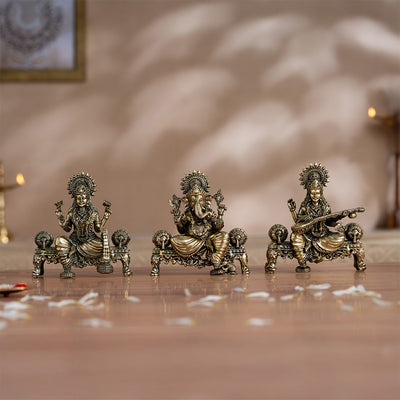
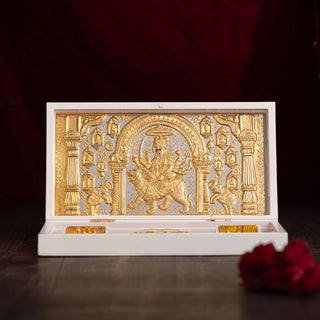
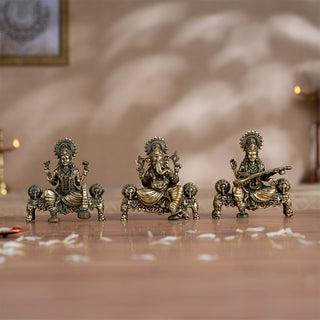
Buy them in matching material and finish, or the shelf looks assembled from three shops. A Lakshmi Ganesh pair is the usual starting point. One good Durga idol on its own is a complete setup too, so do not feel you are missing a required set.
One buying note: Durga is shown on a lion in the older imagery and on a tiger in later regional art. Both are sold, so check which you want. For placing several deities on one shelf, the Ganesh Lakshmi murti position guide and things to keep in a pooja room both transfer directly.
What a home temple Navratri setup costs
| Item | Price band | Buy again? |
|---|---|---|
| Ghata, leaves, coconut, rice | under 250 | Every year |
| Flowers for nine days | 300 to 700 | Every year |
| Brass diya | 400 to 1,500 | Buy once |
| Chowki or pocket temple | 400 to 3,000 | Buy once |
| Durga idol, 5 to 8 inches | 1,500 to 5,000 | Buy once |
| Pooja thali set | 800 to 2,500 | Buy once |
First year with an idol: roughly 3,000 to 8,000 rupees. After that, under 1,200 a year, because the metal comes back out of the cupboard.
What to avoid
- Thermocol backdrops and plastic garlands. They live in a cupboard for a decade and come out faded.
- Fairy lights wrapped around the idol. Light the niche, not the murti.
- A shelf so full you cannot wipe it in 30 seconds.
- Dry flowers left on past day three.
- Nine sets of anything bought because you think you are failing a tradition. The nine colours for nine days are a recent convention, not scripture.
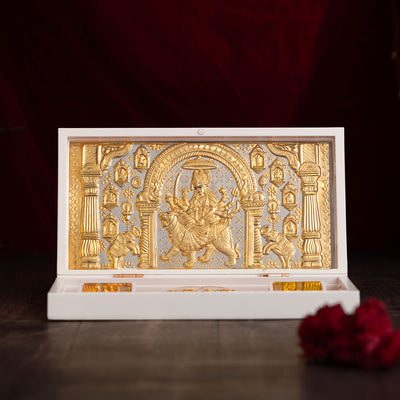
Keep the changing parts organic, since clay, leaves, flowers and cloth are meant to be returned, the same instinct behind immersing a Ganesh idol at home responsibly. Keep the permanent parts few and good: brass idols, gold and silver plated idols and the pieces in home decor that stay on the shelf for twenty years. That is the reasoning behind a full Durga Puja setup with brass idols and diyas as well. If you are curious about the older imagery behind the murti you pick, see how many hands Durga has.
A shelf holding one clay pot, one lit lamp and fresh flowers is not a small Navratri. It is the whole thing, done properly.
Also read: How Many Hands Does Goddess Durga Have | Budget-Friendly Navratri Decoration Ideas at Home | Durga Puja Decoration at Home With Brass Idols and Diyas | Navratri Date, Tithi, Colours and Fasting Rules | Why Do We Celebrate Chaitra Navratri