Every year the same question goes around: is it alright to do the visarjan at home? In a bucket? On a balcony? It feels like cutting a corner. Ten days of aarti and modaks and neighbours dropping in, and then the send-off happens in a plastic tub next to the washing machine.
The bucket is not the compromise. It is the ritual working exactly as designed.
Why a tub at home is not a compromise
A clay Ganesh idol is a temporary image by design.1 You call the deity in for a few days, then see the presence off. Other images are permanent: consecrated once, and they stay.
The invitation is avahana. The leave-taking is visarjana. The word we use for the whole tenth-day event is just the second half of that pair.
Once you see it that way, the clay makes sense. The idol is made of something that dissolves because the presence in it was always going to be given back. It was never meant to sit permanently on the shelf beside the Ganesh-Lakshmi pair. A river was one place to do this. A lake was another. A tub of clean water on your own floor is a third, and the logic does not weaken because the container got smaller.
I should be straight about the limits of this. I could not find a Purana that prescribes a home immersion procedure, and I looked.2 The avahana-visarjana principle is genuinely old ritual grammar. But the step-by-step every household follows, this order of offerings, this many rounds of the aarti, comes from puja-paddhati custom passed down in families and regions. It is not a scriptural checklist. That is not a weakness. It just means nobody is grading you.
First, check what your idol is actually made of
Only unpainted natural clay can be immersed at home. The material changes what you do.

Unpainted natural clay (shadu mati). This is the one that works. It softens in minutes and breaks down completely. If you can scratch the surface and see the same colour underneath, you are probably fine.
Plaster of Paris. It does not dissolve. It softens on the outside, holds its shape for weeks, and in a lake it simply sinks and sits there. At home you will be left with a heavy half-melted lump and no dignified way to deal with it. If your idol is PoP, the honest options are a collection drive run by your municipality or housing society, or one of the artificial immersion tanks most cities now set up.
Chemical paint. This is the actual problem, more than the material underneath. The bright enamel colours carry heavy metals. That matters in a lake, and it matters in your bucket too, because you are going to want to pour that water somewhere. A natural-clay idol finished in mud colours or plain vegetable dye is the one you can immerse without a second thought, and it is worth buying with this in mind next year when you are planning the decoration.
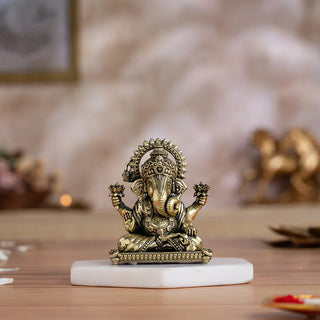
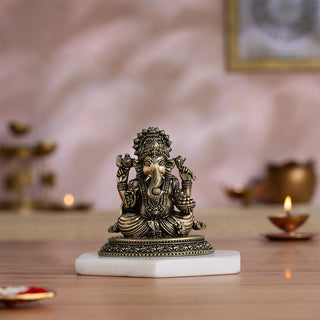
Brass, marble, panchaloha, resin. These are not immersed at all. More on that below, because it is the single most common confusion I hear.
How to immerse a Ganesh idol at home, step by step
Nothing here is mandatory in a scriptural sense. It is what most households do, and it holds together well.

- Set aside a proper hour. Traditionally the visarjan happens on the last day of your observance, whether that is the same evening, the third day, the fifth, the seventh or the tenth. Households genuinely differ, and none of them is wrong. If you follow a muhurat, the Ganesh Chaturthi tithi and timings are worth checking.
- Do the uttarapuja. The final worship. Bathe the idol if that has been your practice, apply haldi-kumkum, offer flowers and durva grass. Durva is worth taking seriously here: the Ganesa Purana gives it a whole cluster of chapters, far more attention than it gives any flower, which is why the "favourite flower" question has a slightly surprising answer.3 And keep the tulsi off the tray, for reasons that turn out to be genuinely scriptural.
- Offer the last naivedya. Modak, laddoo, whatever your house makes. Some families pack a small potli of rice, coins and sweets to send along with him for the journey.
- Aarti, then the apology. This is the emotional centre of the whole thing and it gets skipped a lot. You ask forgiveness for anything done wrong or left undone during the ten days: wrong mantra, wrong order, a day the lamp did not get lit. Then you invite him back next year. In Maharashtra people say it out loud together: Ganpati Bappa Morya, pudhchya varshi lavkar ya. Come back soon next year. It is a goodbye, and it is allowed to feel like one.
- Prepare the water. A large tub, drum or bucket, deep enough that the idol goes fully under. Clean water. Some families add a little Ganga jal, milk, or flower petals, and a pooja thali kept ready beside it saves a lot of running about. Do this before you pick the idol up, not after.
- Lift and lower gently. Carry the idol with both hands, take a couple of rounds of the house if that is your custom, and lower it in slowly. Do not drop it. Do not push it under to speed things up. Let it go at its own pace.
- Let it dissolve fully. A small clay murti may take a few hours. A larger one can take a day or two. Leave it. Breaking it up with your hands to finish it faster is exactly the kind of impatience the ritual is asking you to sit with.
- Remove the non-clay bits first. Cloth, jewellery, thermocol backdrops, plastic decorations, the little umbrella. None of that dissolves. Take it off before immersion, not out of the water afterwards.
What to do with the water afterwards
Pour the leftover muddy water into the garden, into pots, or at the base of a tree. Do not send it down the drain if you can help it. The sediment can be dug into the soil. Some people keep a little of the clay for the base of next year's idol, which is a lovely piece of continuity if you have the patience for it.
This is not a modern environmental add-on bolted onto the end of a religious article. Returning the material of the image to the earth is the same gesture as returning it to a river. The eco-friendly version is the older logic, not the newer one.
Three things people get wrong about visarjan
1. "There is a scripturally correct procedure and I might do it wrong."
There isn't, and you can't. I went looking for a Puranic passage laying down home visarjan and found nothing of the kind. What the tradition gives you is the principle (invite, honour, take leave) and the freedom to carry it out in the way your family always has. If your grandmother did it with five rounds of the aarti and your neighbour does three, both are complete.
This matters because visarjan is one of a whole set of Ganesha beliefs that people carry a lot of anxiety about. Whether the trunk curves right or left is temple and Vastu lore, not scripture: the classical iconographic texts sort Ganapati by named forms like Heramba and Nritta Ganapati and never once by trunk direction.6 Which direction the idol faces at home is Vastu reasoning about the ishana corner, not a Puranic command.5 And what a dream of Ganesha means has no shastric answer at all, however confidently the internet supplies one.
2. "The ten-day public festival is an unbroken ancient tradition."
The household worship is old. The big public Ganeshotsav with its street pandals, its processions and its ten-day civic scale is not. In its modern form it dates to 1890s Pune. It is linked to Bal Gangadhar Tilak, who turned a private family observance into a public, civic one.2 That is documented modern history, not scripture, and it is a little over a century old.
Knowing this does not diminish the festival. It makes the home version look less like a scaled-down copy of the pandal and more like the original thing, which is what it is.
3. "Any Ganesha idol can be immersed."
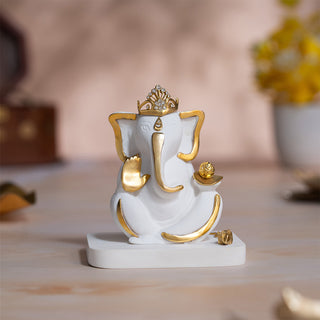
No. A brass, marble, stone or panchaloha murti is a permanent image with a completely different ritual logic. You do not immerse it, ever. It stays, it gets cleaned, it gets worshipped year after year. Putting a metal murti in water at the end of Ganesh Chaturthi is not a devotional act. It is just losing an idol.
Which Ganesha idols never go into water
Clay idols are immersed. Everything else stays. People buy for one purpose and use for the other, so it is worth saying plainly.
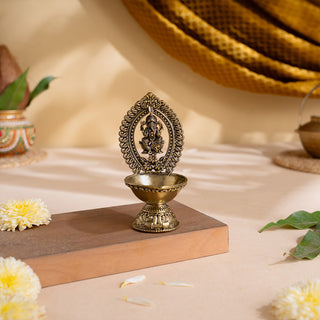
For the festival: unpainted or naturally-coloured clay, bought fresh each year, made to dissolve. Everything else on the tray (the diyas, the loban, the aarti items you will hand around at the end) comes from the pooja essentials shelf and stays with you.
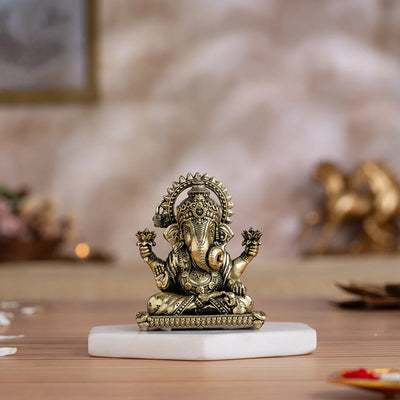
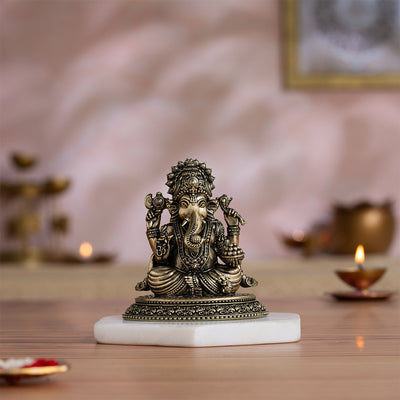
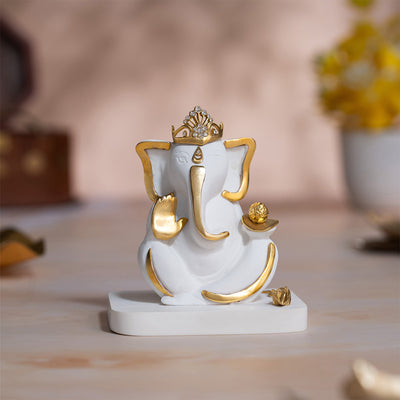
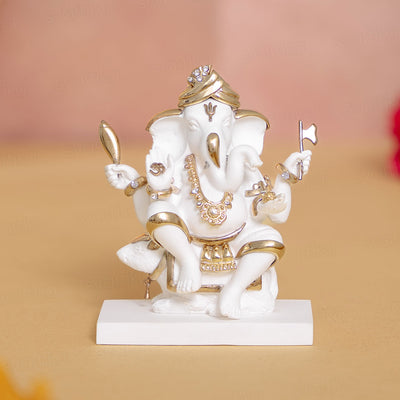
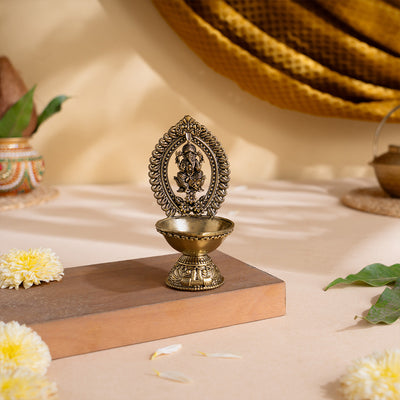
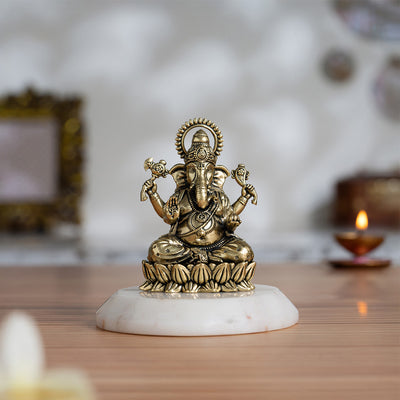
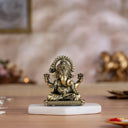
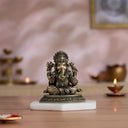
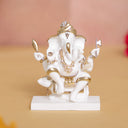
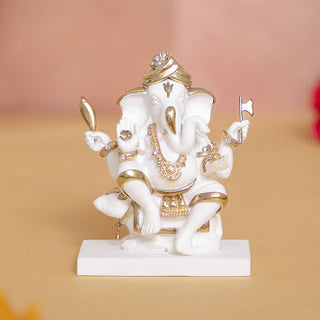
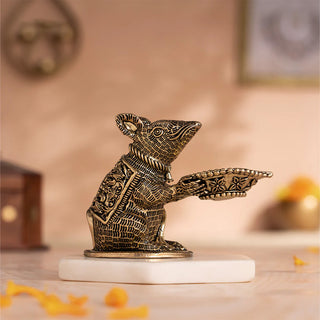
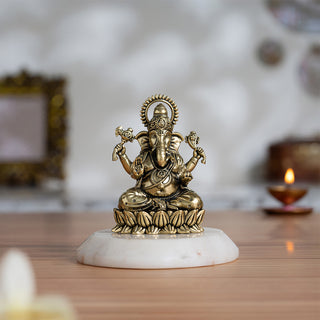
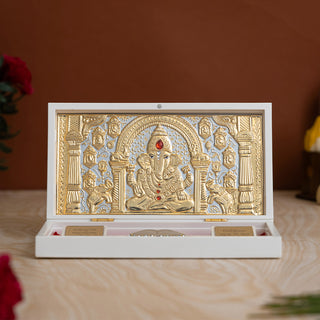
For the house, permanently: everything else. A brass Dagdusheth Ganpati murti of the kind that sits in a home mandir is meant to stay put for decades and be handed down, which is precisely why it is cast in metal and not moulded in mud. The same goes for marble-dust and gold-plated pieces from our Ganesh idol range, and for the brass idols that get darker and better-looking with age.
If you are choosing a permanent murti for the first time, which type of Ganesha idol suits a home is worth a proper read, and a metal or stone image only needs occasional careful cleaning rather than an annual farewell.
Why the idol is built to fall apart
Ganesha's own stories are full of things that break and come back. In the Siva Purana's Kumarakhanda his head is cut off and replaced: the chapters run in order, birth, beheading, resuscitation, and then his crowning as chief of the ganas.4 He is Ekadanta, the one-tusked, and the question of who broke that tusk has at least three competing answers, of which the most famous one turns out to be the least supported. Even the moon-on-Chaturthi belief stitches together two real stories from two different texts that were never joined in either of them.
Loss and restoration is the pattern. The idol that dissolves is not an exception to the theology of this deity. It is the theology, made out of mud so you can watch it happen.
There is something practical in it too. A clay Ganesha lasts ten days, which is short enough that you actually pay attention. You notice the flowers. You notice whether the lamp got lit. You notice on the last morning that this is the last morning. A permanent murti in a well-kept pooja room gives you steadiness over years. The festival idol gives you attention, because it is leaving.
One last thing about the goodbye
The Ganesh Chaturthi story is bound up with his mother: Parvati, who is also Gauri, and who in the Siva Purana's account makes him entirely by herself before Shiva ever sees him. That relationship, which is the subject of the whole Ganpati and Gauri question, is why the Maharashtrian household festival has the texture of a family visit rather than a temple ceremony. Somebody arrives. He is fed. He is fussed over. Then he goes home.
Which is why the last line of the aarti asks him to come back soon. Not to stay. To come back.
If you have a clay idol, a large tub and half an hour, you have everything the ritual needs. A river was never the requirement. The taking of leave was.
Also read: Ganesh Chaturthi 2026: Puja Muhurat, Tithi & Visarjan Date | What Is Ganesha's Favourite Flower? | Ganesha's Trunk: Right or Left? | Which Ganesha Idol Is Good for Home | Who Broke Ganesha's Tusk?