Almost every Hariyali Teej article you will read opens with the same line. Parvati took 108 births to win Shiva, and on the last one she succeeded. It is a lovely sentence. It is also not in any scripture I could open.
What the Shiva Purana gives instead is stranger and, honestly, better. One girl. One lifetime. Three thousand years of standing still in a forest. And a mother in the background begging her to stop.
When is Hariyali Teej, and why the date shifts
In 2027 Hariyali Teej falls on Wednesday, 4 August; the tritiya runs from 8:19 am on 4 August to 5:08 am on 5 August (New Delhi). Hariyali Teej is Shravana shukla tritiya. That means the third day (tritiya) of the bright half of the month of Shravana, when the moon is growing. In the Gregorian calendar this lands in late July or August.
Your panchanga, the traditional almanac, may put it a day apart from your neighbour's. That is normal, and there is a clean reason for it. Robert Sewell and S. B. Dikshit explain it in The Indian Calendar (1896). A tithi is a lunar day, and it does not match a sunrise to sunrise day. So "a tithi on which the sun does not rise is expunged" and "a tithi on which the sun rises twice is repeated". They count roughly thirteen expunctions and seven repetitions in a year.4 Two almanacs can therefore name two different English dates without either being wrong.
One honest note before we go further. I found no pre-modern text that names "Hariyali Teej" or fixes it to Shravana shukla tritiya. Every current panchanga follows that date and it is safe to use. But it is calendar custom, not a scriptural rule, and this article will not pretend otherwise. The same care applies to timings: use your own local almanac for the muhurat, since it changes with your town.
The name explains the mood. Hariyali is greenness. This is the monsoon festival, when the dry plains turn green in a fortnight and everything smells of wet earth.
Where the 108 lives story comes from
It comes from the vrat katha, not from scripture. 108 is a sacred count all over Hindu practice. There are 108 beads on a mala. Deities are praised with 108 names. The Sun is bathed at Puri with 108 pitchers of water before the chariot festival.

Numbers like that drift. They attach to stories the way a tune attaches to new words. Somewhere in the long life of the vrat katha, the pamphlet literature read aloud at fasts, Parvati's one enormous penance became 108 lifetimes of trying.
It is a devotional exaggeration, and it comes from love. But it is not a count found in any chapter, so no verse number can be given for it.
What the Shiva Purana says about Parvati's penance
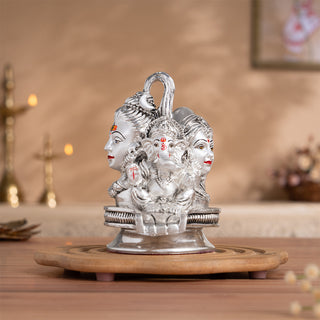
The account lives in the Shiva Purana, Rudra Samhita, Parvati Khanda, chapter 22. The chapter is titled "Description of Parvati's penance". It is short and very physical.
She goes to the forest. She stands on one leg and holds Shiva in her mind. She wears bark. Her hair mats. Verse 51 says she "surpassed even sages by her penance", and she repeats the five syllabled mantra, Om Namah Shivaya, through all of it.
"Parvati thus spent three thousand years in the penance-grove performing penance and meditating on lord Siva." (Shiva Purana, Rudra Samhita, Parvati Khanda 22.52)
Then comes the detail I like best. Verse 53 adds that Shiva himself had once performed penance in that same place, for sixty thousand years. She did not pick a random forest. She went and stood exactly where he had stood.
The Purana also gives the frame that people forget. Parvati is Sati reborn. Sati was Shiva's first wife, who gave up her body at her father Daksha's sacrifice. So the tradition does claim a rebirth, but one, chosen and remembered, not a hundred and eight anonymous ones.1 If you want the family tree behind all this, we have covered who Shiva's own parents are and the five daughters of Shiva separately.
Kalidasa tells the same austerity as poetry in the Kumarasambhava. Parvati's other name is born from her mother's panic:
तां पार्वतीत्याभिजनेन नाम्ना बन्धुप्रियां बन्धुजनो जुहाव । उमेति मात्रा तपसो निषिद्धा पश्चादुमाख्यां सुमुखी जगाम ।।
In plain English: Her family, who loved her, called her Parvati after her mountain father. But her mother, trying to stop the penance, cried "u ma", which means "oh, don't". After that the lovely girl was known as Uma.
Kalidasa, Kumarasambhava 1.26; Ralph Griffith's verse translation
A mother shouting at her daughter to stop, and the shout becoming the goddess's name. That is a household detail, and it is a thousand years older than any of our blog posts.
The sand linga story belongs to a different Teej
It belongs to Haritalika Teej. The katha told in most Hariyali Teej articles goes like this. Parvati runs away to the forest with a friend, makes three lingas out of sand, keeps a night vigil, and her worried father finally agrees to the marriage she wants.
M. M. Underhill records that story in The Hindu Religious Year (1921), and she files it under Haritalika Teej, on Bhadrapada shukla tritiya, attributing it to the Bhavishyottara Purana. That is a different day, about a month after Hariyali Teej.
Underhill also wrote a line about why the story spread so far: "This very human story makes a great appeal to Indian women, most of whom are married in childhood, some against their inclination." A girl choosing her own husband, against her family, and winning. You can see why it travelled.
So there are three Teejs, not one:
- Hariyali Teej: Shravana shukla tritiya. The monsoon Teej, green and festive.
- Kajari Teej: Bhadrapada krishna tritiya. Named after kajri, the monsoon songs. The fast breaks after moonrise, with sattu.
- Haritalika Teej: Bhadrapada shukla tritiya. This is the one with the sand lingas.
How Hariyali Teej is celebrated
Green runs through everything. Green sarees, green glass bangles, green in the mehndi that women apply the night before. Swings are hung from trees, which is why old accounts call it the swing festival in some districts.6

Married women keep a fast for their husband's long life, often nirjala, meaning without water. Unmarried girls keep it hoping for a good marriage. It is the same intention that runs through Karwa Chauth later in the year, and the same fasting discipline you see in Navratri and Chhath Puja.
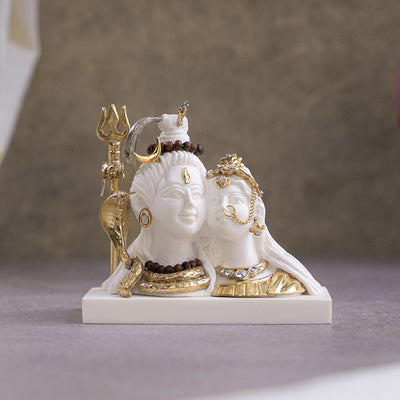
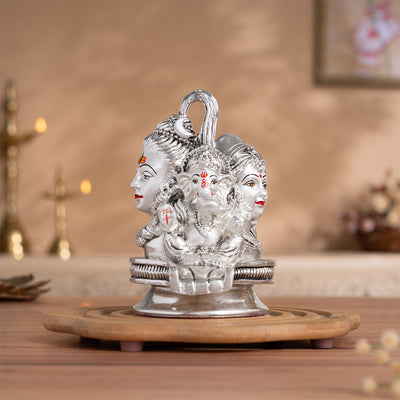
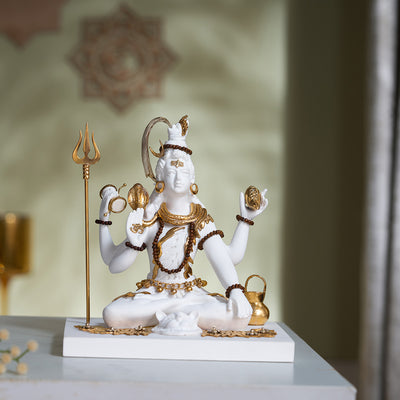
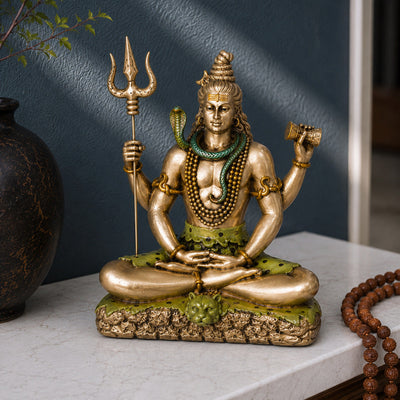
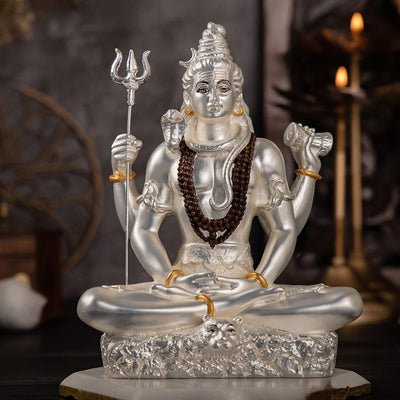
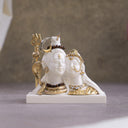
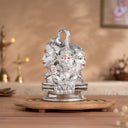
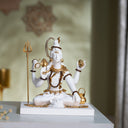
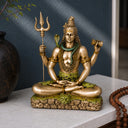
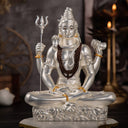
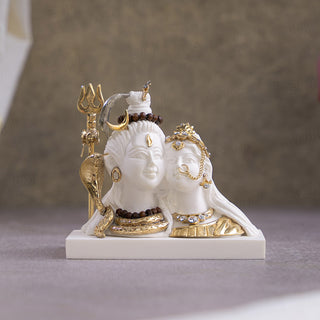
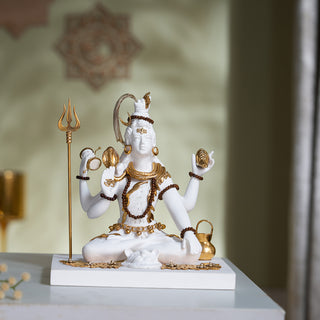
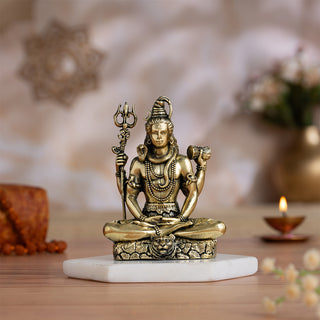
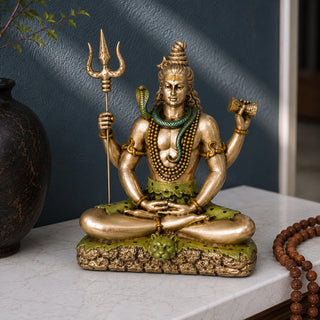
Images of Shiva and Parvati are worshipped together, never separately, since the day is about the two of them being joined. Many families keep a Shiv Parvati murti in the home shrine for exactly this reason. If you are setting one up for the first time, our guide on keeping a Shiva statue at home covers the placement questions people ask most.
The mother's house sends sindhara, a gift parcel of bangles, mehndi, sweets and clothes, to a married daughter. In Jaipur and Bundi, Parvati is carried through the streets in procession, and the crowds come out for it in the rain.
The practice was never uniform, though. William Crooke wrote about northern India in the 1890s. He recorded a Teej near Saharanpur where girls went to a tank, dropped offerings in the water in honour of Khwaja Khizr, then split into two groups. One played the bride's side and one the bridegroom's, and they walked around a tulsi plant in a mock wedding, teasing each other.5 That is a living festival, not a fixed liturgy.
Three things people get wrong about Hariyali Teej
1. "Parvati took 108 births." The Shiva Purana's own chapter on her penance counts no births at all. It counts years: three thousand of them, in one body.1 Kalidasa's version is also a single girl's tapas, so extreme that her mother begged her to stop. The 108 is devotional arithmetic added later.
2. "Hariyali, Kajari and Haritalika Teej are the same festival." They are three separate days spread across roughly a month. Underhill's 1921 survey of the Hindu year documents only Haritalika, with the Bhavishyottara Purana legend attached to it. The sand linga katha you have read on a Hariyali Teej page has been moved there from somewhere else.
3. "Teej is prescribed in scripture." The underlying story of Parvati's tapas is scriptural. The festival is not. No Purana I could open names Hariyali Teej or fixes its date. It is a strong regional custom that grew around a scriptural memory, and saying so does not lower it. Most of the festivals people love best sit exactly there, including a good deal of what we describe in Maha Shivratri practice.
Why the honest version is the better story
The 108 version makes Parvati patient. She waits, life after life, and eventually the universe relents.
The Shiva Purana version makes her formidable. She walks into the forest herself. She picks the exact grove where Shiva once stood. She stands on one leg for three thousand years, eating nothing, in bark, while her mother shouts at her from the edge of it. Nobody relents. She wins.
That is the goddess the tradition also knows as Durga and as Gauri, and it is the same will that shows up in Durga's many arms. It is why Gauri and Ganpati are worshipped side by side, and why the son she made from her own body could stand up to Shiva himself at her door.
You do not need 108 lives to make that impressive. One was plenty.
A short reading list, if you want to go further
The Shiva Purana's Rudra Samhita is the place to start, because the Parvati Khanda tells the courtship, the penance and the wedding in order. Kalidasa's Kumarasambhava is the poem to read beside it. For the festival calendar itself, Underhill's The Hindu Religious Year is still the most useful single survey, and Sewell and Dikshit's The Indian Calendar explains why your date and mine may differ by a day.
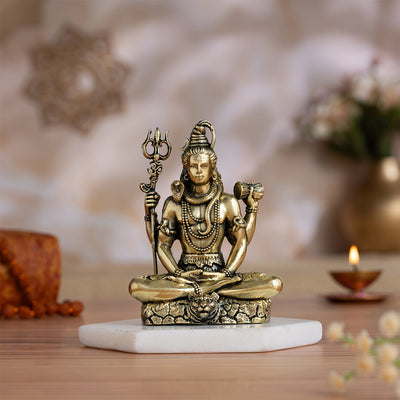
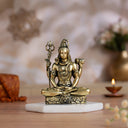
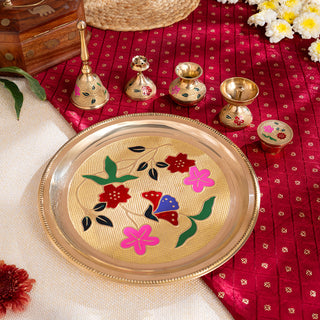
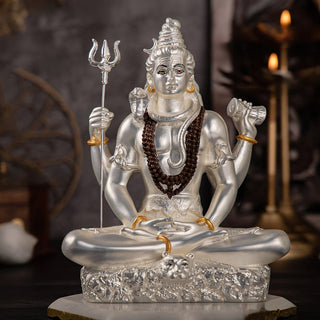
If Shiva is the thread you want to pull, we have written on his avatars, on who can defeat him, on his greatest devotee, and on Jalandhara, the son born of his own fire. For the household side, browse our Shiva idols, the Durga and Parvati idols, and the brass idols that suit a monsoon shrine.
Also read: Kajari Teej: Katha, Rituals and Tithi | Raksha Bandhan Tithi and Timing | Why We Celebrate Chaitra Navratri | Who Are Lord Shiva's Father and Mother | Chhath Puja: Significance and Vrat Vidhi