Ask this question online and you will get a confident answer within three seconds. Ravana. Or Nandi. Or Hanuman. Each answer arrives with a story attached and no source underneath it.
So I went looking in the actual texts (the Shiva Purana, the Bhagavata Purana, Valmiki's Ramayana) expecting to find a ranking. There isn't one. What I found instead was stranger and better: the one time a text does name a supreme devotee in this neighbourhood, the name it gives is Shiva's own.
The answer nobody expects: Shiva is the devotee
Near the very end of the Bhagavata Purana there is a verse that lists things which are the best of their kind. The Ganga among rivers. Achyuta among deities. And then it says the Bhagavatam is among Puranas what Sambhu (Shiva) means in relation to all Vaishnavas (12.13.16).5
In a Vaishnava text, the highest compliment available is not "Shiva is a great god." It is "Shiva is the greatest devotee." Shaiva readers will point out that a Vaishnava book was always going to phrase it that way, and they are right. But the framing is worth sitting with, because it is how these texts think about greatness in general. Being adored is not the top rung. Adoring is.
If you are searching for the biggest devotee of Shiva, the tradition's answer is partly: be like Shiva, who is himself always in worship. It also explains why the Shaiva and Vaishnava Puranas argue so hard about which god is most powerful: each one is trying to place its own deity at both ends of the relationship.
Ravana: the loudest devotee, and the most punished
Ravana is the name people reach for first, and he genuinely belongs in the conversation. He is also the one whose story gets sanded down the most.
Valmiki's Uttara-kanda tells it plainly. Ravana lands near Kailasa, is stopped, and is cursed by Nandi that monkeys will one day destroy his race. He responds by getting his arms under the mountain and shaking it. Shiva does not fight him. Shiva presses the mountain down with his great toe, and Ravana's arms are crushed under it. He screams until the three worlds tremble, and that scream is where he gets his name. Shiva tells him he will be called Ravana, he who causes the worlds to cry out, and gives him the sword Chandrahasa.
That is the whole episode. Note what is in it: devotion, yes, and enormous strength, and arrogance answered with one toe. Note also what is not in it. There is no hymn. The Shiva Tandava Stotra, which every version of this story online says Ravana composed while pinned under the mountain, does not appear in Valmiki's account at all.4
The attribution is later devotional tradition. And it is a beautiful one: it reads his scream of pain as turning into poetry, which is a genuinely moving idea about what happens to suffering when it is offered up. It just is not in the Ramayana, and pretending otherwise does the tradition no favours.
Ravana has no family link to Shiva. He is the son of the sage Vishravas and Kaikasi, daughter of Sumali (Uttara-kanda 9), a rakshasa-brahmin, which is exactly the tension his character runs on, and which also shaped the very different lives of Ravana's brothers.
Nandi is not a devotee at all
This one surprised me more than anything else in the reading.
The Shiva Purana devotes a chapter to Nandi's birth. The sage Shilada performs severe austerities wanting a son, and Shiva appears and says something very specific: I shall become your son by the name of Nandin (Shatarudra-samhita 6.34). The boy is duly born, and the chapter is titled, without ambiguity, "The incarnation of Nandisvara."1
So in the Shiva Purana's own telling, Nandi is on the wrong side of the relationship to be Shiva's greatest devotee. He is Shiva. The bull who sits facing every Shiva shrine in India, whose ear people whisper their wishes into, is presented by the text as a form the god took, not a worshipper the god acquired.
This is not a reason to stop loving Nandi. Whispering to him is one of the warmest habits in Indian temple life. It is just a reason to be careful with the word "devotee", and it fits a pattern, because the Shiva Purana keeps absorbing famous figures into Shiva rather than placing them beside him. That habit is the whole reason counting Shiva's avatars is such a mess.
Hanuman: the texts genuinely disagree
Hanuman comes up constantly in this question, and here the honest answer is that two respected traditions say different things and neither has folded.
The Shiva Purana says the seven sages carried Shiva's seed in a leaf and poured it into Anjani through her ears, and that Shiva was born of it in the form of a monkey named Hanumat (Shatarudra-samhita 20.4-7). Strikingly, that account does not mention Vayu at all. Valmiki's Ramayana makes Hanuman the son of the wind god, which is why every hymn people actually recite calls him Pavanaputra and Maruti.
If you follow the Shiva Purana, Hanuman is Shiva, so the same problem as Nandi applies. If you follow Valmiki, Hanuman is the greatest devotee in the corpus, but of Rama, not of Shiva. Either way he slips out of this particular ranking. The question of who Hanuman's father really is is worth its own reading, as is the older question of whether Hanuman is still alive, since he is counted among the seven chiranjeevis.
Kannappa and the Nayanars: the tradition's own answer
If you ask this question in Tamil Nadu, nobody says Ravana. They say Kannappa.
He was a hunter. He knew none of the rules: he bathed the linga with water carried in his mouth, offered cooked meat, wore his sandals into the shrine. A brahmin priest watched in horror. Then blood began to flow from the eye of the linga, and Kannappa gouged out his own eye and pressed it into the stone. When the second eye began to bleed, he placed his foot on the linga to mark the spot, and reached for his remaining eye. Shiva stopped his hand.
This story belongs to the Periya Puranam and the Tamil Shaiva canon of the sixty-three Nayanars, the Shaiva bhakti tradition, not Sanskrit Purana.7 I want to be clear about that, because it is the sort of thing that gets quoted as "the Shiva Purana says" and it does not. It is a living tradition's own considered answer to exactly the question this article is asking, and that makes it more relevant, not less.
Read next to Ravana, it is almost a direct argument. Ravana brought power, ritual correctness and ten heads of learning, and got his arms crushed. Kannappa brought contaminated food, dirty feet, and no idea what he was doing wrong, and got the god's hand on his wrist. The tradition is not subtle about which one it prefers.
Three things people get wrong about this
1. "Nandi is Shiva's greatest devotee." The Shiva Purana makes him an incarnation of Shiva, born to the sage Shilada after Shiva promises to become his son (Shatarudra-samhita 6.34, 6.45). Loving Shiva through Nandi is beautiful practice. Calling Nandi his greatest devotee misreads which side of the relationship the text puts him on.
2. "Ravana wrote the Shiva Tandava Stotra under Kailasa, and that is why Shiva forgave him." Valmiki's Uttara-kanda 16 has the curse, the shaking, the toe, the crushed arms, the naming and the sword Chandrahasa. It has no hymn. The attribution is later devotional tradition. Keep singing it; just do not cite the Ramayana for it.
3. "Nobody has ever defeated Shiva, so his devotees are the strongest too." The Bhagavata Purana disagrees flatly: at Banasura's city Krishna bewilders Shiva with a yawning weapon, and Shiva's own three-headed fever is overpowered by Vishnu's cold fever and takes refuge with Krishna (10.63.14, 10.63.22-29).6 The Shiva Purana writes the exact mirror image, with Shiva as Sharabha felling Narasimha and afterwards wearing his hide. These are sectarian claims answering each other, not a record of events, which is the honest starting point for who can actually defeat Shiva.
The devotees the texts keep half-telling
A few more names come up often enough to be worth placing properly.
Markandeya, the boy fated to die at sixteen who clung to the linga when Yama's noose came, is one of the most retold Shaiva devotion stories in India. It circulates through Puranic and regional tradition rather than a single fixed chapter, so I would rather describe it than hang a false verse number on it.
Banasura is the interesting failure case. He was a devotee of real standing (he had Shiva's protection at his gates) and it did not stop the war at his city going badly, because devotion in these texts buys presence, not immunity.
Bhasmasura is the cautionary one. He asked for the power to burn anything he touched, and then aimed it at Shiva. Shiva ran. Vishnu, as Mohini, had to dance him into touching his own head. Bhakti with a demand attached is treated across these stories as barely bhakti at all: a thread that also runs through the ten avatars of Vishnu, where the same lesson keeps arriving in different bodies.
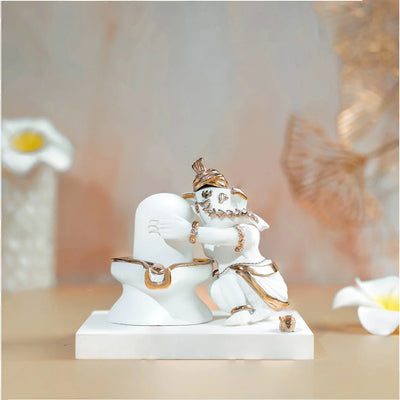
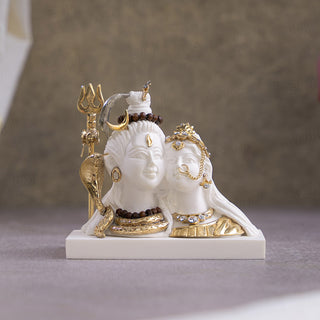
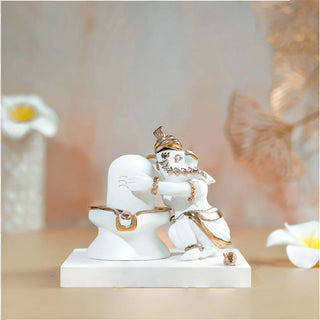
And Parvati deserves naming here, though "devotee" is the wrong word for a consort. Her austerities to reach Shiva are the longest sustained act of devotion in the Shiva Purana, and the Hariyali Teej tradition of her 108 lives is a folk memory of exactly that patience. Her son Ganesha is often shown in worship of a linga himself: a Ganesha seated in Shiv bhakti is one of the few household images that shows a god as a devotee, which is precisely the point this article keeps arriving at. The relationship between Ganpati and Gauri carries the same idea from the other direction.
So who is the biggest devotee of Lord Shiva?
There is no scriptural ranking, and the absence looks deliberate.
Every candidate the texts hand us is disqualified in an interesting way. Nandi and Hanuman get absorbed into Shiva himself. Ravana has the intensity but is punished for the ego that produced it. Banasura has the standing and loses anyway. Kannappa, who has none of the qualifications, is the one the tradition actually holds up, and he is remembered in Tamil bhakti poetry, not in a Sanskrit list.
What these stories reward is not the volume of worship. It is the absence of self in it. Ravana lifted a mountain to be noticed. Kannappa did not know anyone was watching. That is the whole difference, and it is why the Bhagavata's answer (that Shiva, who wants nothing, is the foremost devotee) is not a dodge. It is the same point made at the top.
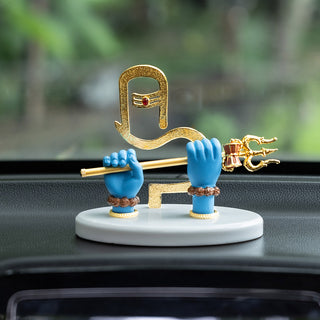
Which also means the question has a usable answer for the rest of us. The texts are not asking you to out-worship Ravana. The Shiva Purana is remarkably relaxed about the mechanics: it says a linga may be made of clay, cow-dung, flowers, jaggery, butter, ashes or even cooked rice, and worshipped with whatever means are easily available (Vidyeshvara-samhita 11.32-33, 19.18). The one condition it actually insists on is that the worship be daily, and it explicitly scales that to your capacity. If you have wondered whether you can keep a Shiva statue at home, that is your answer, in the text's own words.

A note on the rules people worry about
Most of the anxiety around Shiva worship comes from rules the Shiva Purana never wrote. Its Shivaratri chapter is almost entirely positive instruction: four three-hour worship periods through the night, staying awake with pleasure and jubilation, songs and dance until daybreak (Kotirudra-samhita 38.35, 38.74). It lists no penalty for sleeping and none for eating. Most of the long avoid-list is household custom sitting on top of a rite whose one real requirement is the night vigil, which is worth knowing before you next read about things to avoid on Maha Shivratri.
The tulsi rule is the clearest example. In the Shiva Purana's own Tulasi chapter, Vrinda's curse falls on Vishnu, not on Shiva's worship, and Shiva then grants that tulsi shall be the most important constituent of the materials of worship of the gods (Yuddha-khanda 41.45). The blanket "never offer tulsi to Shiva" is custom: widely followed, worth respecting, and not in that chapter. The tulsi and Ganesha question runs on the same kind of logic, and the whole Vrinda episode belongs to the story of Jalandhara, who is far less Shiva's son than his name suggests.
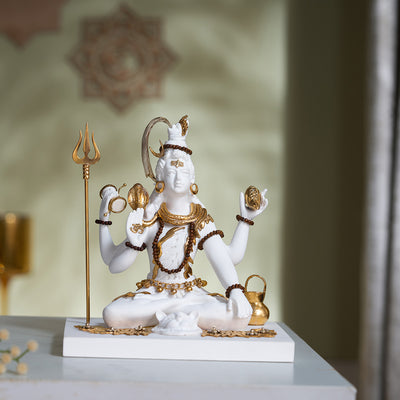
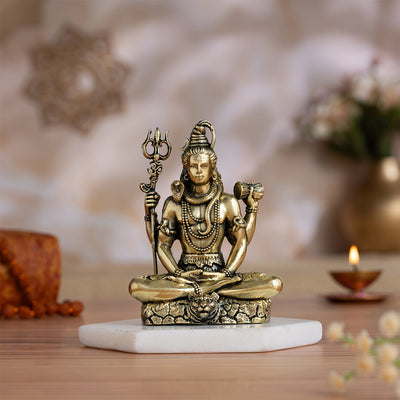
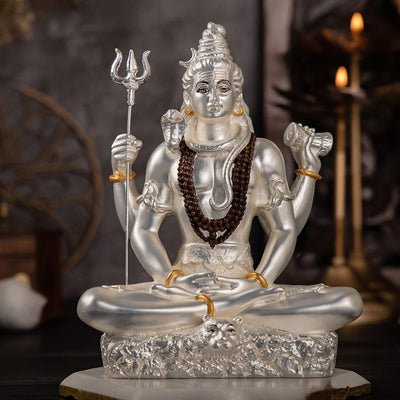
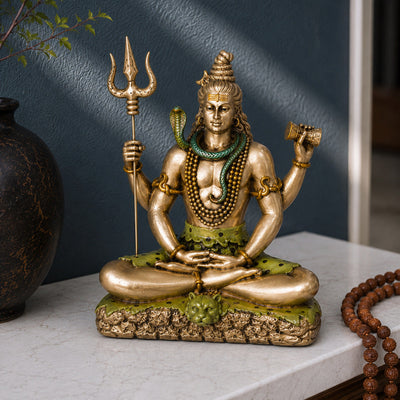
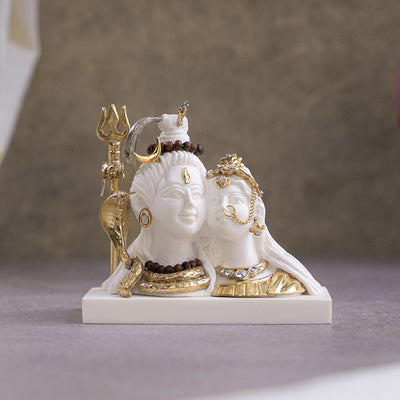
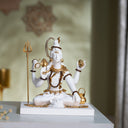
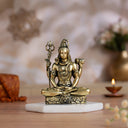
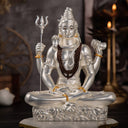
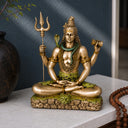
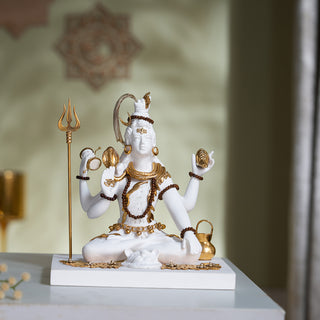
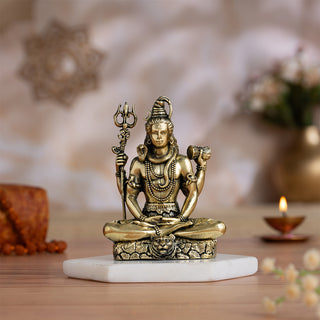
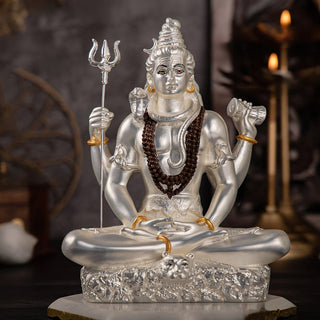
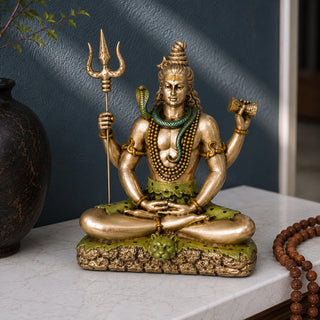
If you keep a Shiva murti at home, the choice matters less than the daily habit. A simple brass idol that gets water every morning is closer to what the text asks for than an expensive one that gets attention twice a year. Our Shiva idols and Mahashivratri collection are built for that first kind of use.
The rest of the Shiva cluster shows the same pattern of confident internet claims and quieter textual reality: who Shiva's father and mother are, the five daughters of Shiva, and the Vaishnava mirror of this very question, Vishnu's first devotee.
Also read: Who Can Defeat Lord Shiva | How Many Avatars of Shiva | Who Are Lord Shiva's Father & Mother | Can We Keep a Shiva Statue at Home | Things to Avoid on Maha Shivratri
Cover photo: Ravana shaking Mount Kailasa, rock-cut relief at Ellora, Arian Zwegers, CC BY 2.0, via Wikimedia Commons.