Type "19 avatars of Lord Shiva" into Google and you will get the same list on about forty different pages. Piplaad, Nandi, Veerabhadra, Bhairava, Ashwatthama, Sharabha, Grihapati, Durvasa, Hanuman, Vrishabha, Yatinath, Krishnadarshan, Avadhut, Bhikshuvarya, Sureshwar, Kirat, Sunatnartak, Brahmachari, Yaksheshwar. Nineteen names, always in that order, always described as "according to the Shiva Purana."
So I went and opened the Shiva Purana at the chapter with that exact title. It lists something else entirely.
That is not a small thing, and it is worth explaining properly, because the real answer to how many avatars Shiva has is more interesting than any list of nineteen.
What the Shiva Purana's "nineteen incarnations" chapter actually says
The chapter is Shatarudra-samhita 5, in the Shastri translation published by Motilal Banarsidass. Its heading is "The nineteen incarnations of Siva." Here is who is in it:
- Tridhama
- Kali, at the gate of the Ganga
- The golden-bodied one
- Bali
- Gautama
- Vedashiras
- Gokarna
- Guhavasin
- Shikhandin, on Himavat
- Jati and Malin
- Attahasa
- The form in the Daruka forest
- The sage at Varanasi
- Langali Bhima
- Sveta, at Kalanjara
- Shulin
- Mundishvara
- Sahishnu
- Somasharman
Nobody recognises these names, and that is the point. They are not dramatic rescues or monster-slayings. They are quiet yogic appearances. Each belongs to a different aeon, in the scheme where a new Vyasa compiles the Vedas in every age. Shiva shows up in each of those ages as a teacher, an ascetic, a man living in a cave, a sage at Varanasi. He teaches a few disciples. He leaves.
So where did the famous nineteen come from? From the chapter headings of the same book. Shatarudra-samhita 6 through 41 each narrate one incarnation: Nandi in chapter 6, Bhairava in 8, Sharabha in 12, Grihapati in 13 to 15, Hanuman in 20, Ashwatthama in 36. Somebody, at some point, counted the headings, got a number close to nineteen, and attached it to a chapter title that was describing something else. Then everyone copied everyone.
The stories in those chapters are real. The number attached to them is not.
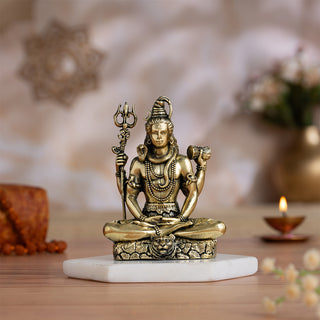
Why the count keeps changing: five, eight, ten, eleven, nineteen, twelve
The Shiva Purana is not trying to give one number. Inside a single Samhita you get several different counts, each built for a different purpose.
Five. Shatarudra-samhita 1 gives the five faces: Sadyojata, Vamadeva, Tatpurusha, Aghora and Ishana.2 These are the panchamukha forms you see carved on a Panchamukhi lingam, each facing a direction. They are less "avatars" than aspects, the same reality turned five ways.
Eight. Chapter 2 gives the eight forms, the ashtamurti tradition, where Shiva is identified with the elements themselves.
Ten. Chapter 17 gives a completely different ten, and this one is fascinating because it is matched one-to-one with the Mahavidyas: Mahakala, Tara, Bala, Shrividyesha Shodasha, Bhairava, Chinnamastaka, Dhumavan, Bagalamukha, Matanga and Kamala.3 This is Shaiva and Shakta theology being stitched together: each of Shiva's ten forms paired with a goddess. If you have read about the iconography of Durga, the logic will feel familiar.
Eleven. Chapter 18 gives eleven more.
Twelve. Chapter 42 counts the twelve jyotirlingas themselves as incarnations: Somanatha, Mallikarjuna, Mahakala, Amareshvara, Kedara, Bhimashankara, Vishveshvara, Tryambaka, Vaidyanatha, Nagesha, Rameshvara and Ghushmeshvara.4 A place can be an avatar. That idea has no equivalent in the Vaishnava lists at all.
Five, eight, ten, eleven, nineteen, twelve. Same book. The text is not confused and it is not contradicting itself. It simply is not counting. It is celebrating, and each chapter picks whichever frame suits what it wants to say.
Shiva's avatars are not the same kind of thing as Vishnu's ten
The dashavatara of Vishnu is a closed, ordered, purposeful list. Matsya, Kurma, Varaha, Narasimha, Vamana, and so on down to Kalki. Ten descents, in sequence, each solving a specific crisis. Together they form something close to a history of the world's rescues. You can number them because they were designed to be numbered. Read the Matsya story or the Vamana story and you will see how tightly each one is fitted into that sequence.
Shiva's incarnations do not work like that. They are situational. A sage needs a son, so Shiva becomes Nandi. Brahma needs humbling, so Bhairava appears. A boy needs a teacher in the Kali age, so Shiva shows up as Somasharman. There is no arc. There is no final avatar waiting at the end of time the way Kalki waits at the end of Vishnu's list.
Which is exactly what you would expect from a deity the texts treat as beginningless. The Shiva Purana calls Ishana "the unborn lord, all pervading, all-bestowing," and describes Shiva's body as being "without a beginning or an end." A being like that does not descend in a sequence. He appears when the situation asks for it. The texts on his parents get genuinely strange too. The Bhagavata Purana gives him a birth from Brahma's anger.8 The Shiva Purana calls one of his five faces "born as the son of Brahma" and another "the unborn lord," twenty-eight verses apart.
The famous incarnations, told properly
Nandi. Most people describe Nandi as Shiva's greatest devotee. The Shiva Purana does not. It has Shiva tell the sage Shilada, "I shall become your son by the name of Nandin," and Nandi is then born to him. In this text Nandi is Shiva himself, not somebody worshipping him. That reframes every temple courtyard you have sat in.
Bhairava. The fierce form, born from Shiva's rage at Brahma's arrogance, who severs Brahma's fifth head and then carries the skull as a beggar's bowl until the sin is worked off. This is the incarnation that gives us Kaal Bhairav, the guardian of Kashi.
Sharabha. The strangest one, and the most revealing. In Shatarudra-samhita 12, Shiva takes the form of Sharabha (thousand-armed, winged, beaked, part bird and part beast) to subdue Narasimha, whose fury has not cooled after killing Hiranyakashipu. Sharabha binds the man-lion's legs and fells him. Virabhadra peels off the hide, and Shiva wears it afterwards.6
You should know what you are reading there. That is a Shaiva text answering a Vaishnava text. The Bhagavata Purana has Krishna defeating Shiva at Banasura's city; the Shiva Purana has Shiva flaying Vishnu's lion form. Neither is a report of an event. Each tradition is writing its own deity as unbeatable, and if you want the full picture of that argument, both sides are worth reading together. It also explains why "who is the most powerful god" has never had a clean scriptural answer.
Vrishabha. The bull incarnation, in chapter 23, where Shiva kills Vishnu's sons and then admonishes Vishnu himself. Same argument, different animal.
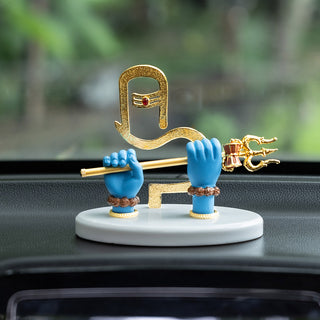
Hanuman and Ashwatthama: where the texts openly disagree
These two come up in every discussion of Shiva's avatars, and both are more complicated than the internet allows.
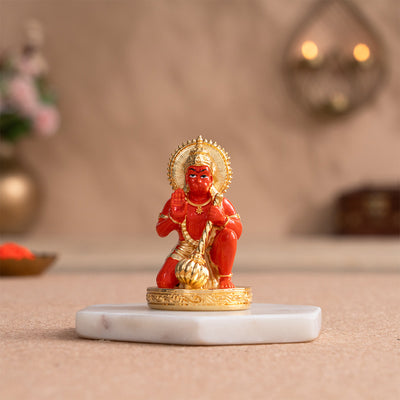
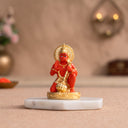
Hanuman. The Shiva Purana's account, in Shatarudra-samhita 20, is vivid and specific. The seven sages carry Shiva's semen in a leaf and pour it through Anjani's ears, and the text says plainly that "Siva was born of it in the form of a monkey named Hanumat."5 What is striking is what the chapter leaves out: Vayu is not mentioned at all.
Valmiki's Ramayana tells it the other way. There Hanuman is the son of the wind god, which is why every hymn people actually recite calls him Pavanputra and Maruti. Both accounts are held by living traditions. Neither cancels the other, and pretending there is a settled answer does nobody a favour: the question of Hanuman's father is genuinely open, which is part of why the Panchmukhi form carries so much Shaiva imagery. If you have ever wondered whether Hanuman is still alive, the same texts place him among the seven chiranjeevis.
Ashwatthama. The popular version says he is an avatar of Shiva. The Mahabharata says something more precise and much more interesting. In the Adi Parva, Drona's son "was born on earth of the united portion of Mahadeva, Yama, Kama, and Krodha": Shiva, Death, Desire and Rage, combined.7
That composite is the whole character. He carries the destroyer's power with none of the destroyer's detachment, which is exactly why his story ends the way it does. The Shiva Purana does list him among Shiva's incarnations in chapter 36, so the two traditions differ here, and the difference is worth reporting rather than flattening into one line.
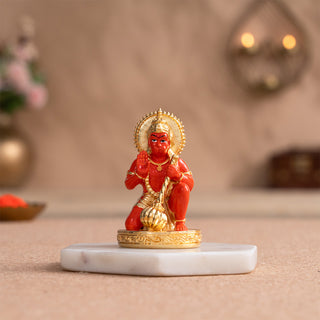
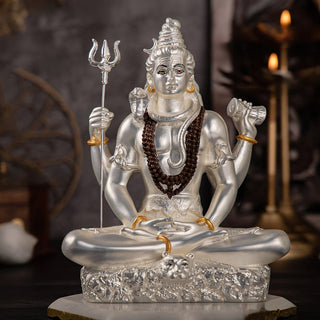
Three things people get wrong about Shiva's avatars
1. "The Shiva Purana says there are 19 avatars." It says no such thing. The chapter with that title lists nineteen entirely different figures, most of them ascetics nobody has heard of.1 The famous nineteen is a modern list assembled from chapter headings. If you want to cite a number, cite the chapter you are actually reading.
2. "Shiva's avatars are like Vishnu's dashavatara, just more of them." They are a different category. Vishnu's are sequential descents in a salvation history. Shiva's are situational appearances, and one whole set of them (the twelve jyotirlingas) are places rather than persons. Counting them the same way is what creates the confusion in the first place.
3. "Nandi is Shiva's greatest devotee." Lovely idea, but the Shiva Purana puts him on the other side of that relationship. Shiva announces he will be born as Shilada's son and then is. Nandi is an incarnation. Loving Shiva through Nandi is beautiful practice; calling him the greatest bhakta misreads the text.
A fourth one, since we are here: Sharabha is not proof that Shiva is stronger than Vishnu, any more than the Banasura episode proves the reverse. They are mirror-texts. Read them as theology, not scoreboard.
So what should you actually say?
If someone asks you how many avatars Lord Shiva has, the honest answer is: it depends which chapter you open, and the tradition never settled on one number because it was never trying to.
You can say nineteen if you mean the chapter heading. You can say five if you mean the panchamukha faces, ten if you mean the Mahavidya set, twelve if you mean the jyotirlingas, sixty-four if you follow the Tamil Shaiva tradition of the sixty-four sports of Shiva at Madurai. Every one of those is defensible. What is not defensible is repeating a list of nineteen names and attaching a citation that does not contain them.
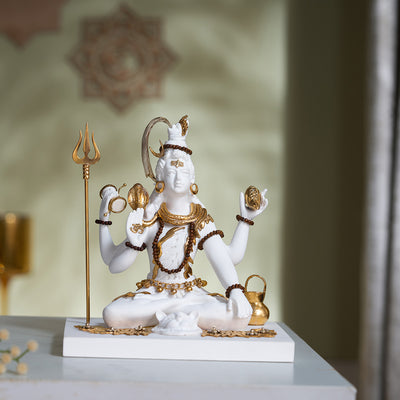
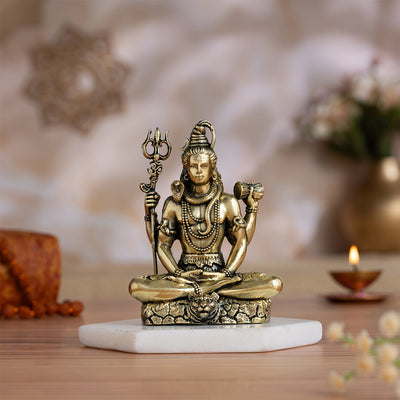
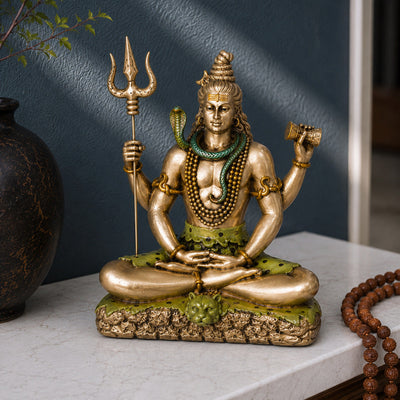
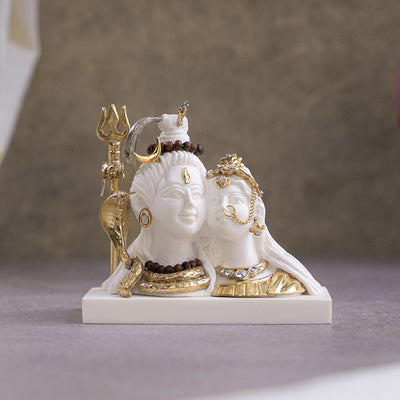
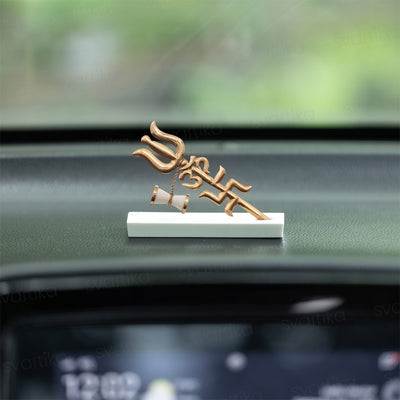
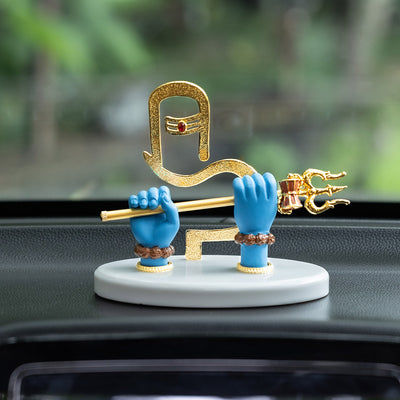
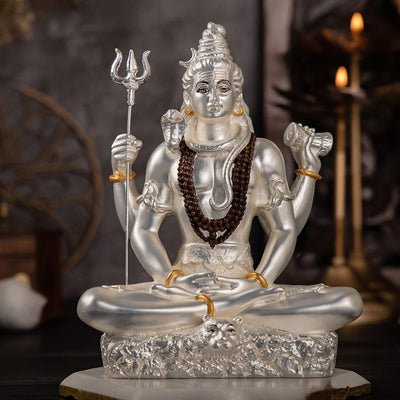
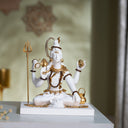
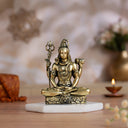
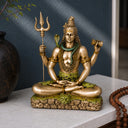
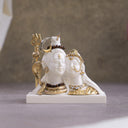
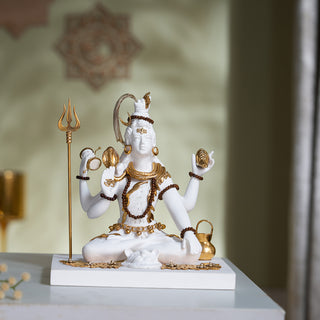
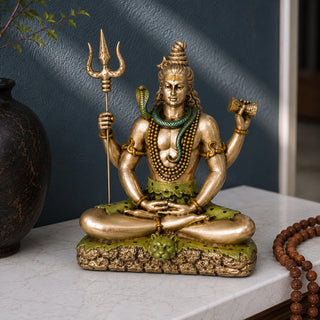
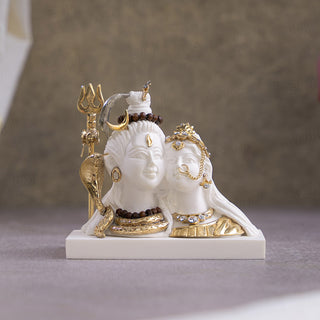
There is something fitting in this. The god who is worshipped as a formless pillar of light, whose most common image at home is not a battle scene but a figure sitting perfectly still, was never going to fit a numbered list. The forms of Shiva people keep in their pooja rooms (the meditating Mahadev, the lingam, Shiv-Parvati together, the trishul and damru) are mostly not from the nineteen at all. They are the everyday Shiva. That is its own kind of answer.
And if you are setting up a corner for him at home, two of our other pieces cover the practical side honestly: what the Shiva Purana actually permits about keeping a Shiva statue or lingam at home (far more than you have been told), and what is genuinely prohibited on Maha Shivratri versus what is household custom. Our Shivratri collection and the brass idols are built around those everyday forms rather than the dramatic ones.
The Puranas were not written to be counted. They were written to be told. Once you stop asking for the number, the stories get a lot better, including the one about Jalandhara, born from the fire of Shiva's third eye and raised by the ocean, and the tangled question of Shiva's daughters, where only one name survives contact with a primary text.
Also read: Who Are Lord Shiva's Father & Mother | Who Can Defeat Lord Shiva | Who Is the Biggest Devotee of Shiva | Relation Between Ganpati and Gauri | Parvati's 108 Lives