Search for the five daughters of Lord Shiva and you will find the same five names on twenty different pages. Ashok Sundari. Jyoti. Manasa. Vasuki. Sometimes a fifth that changes depending on the site. None of them cite a text. Not one.
The Puranas name exactly one daughter. The story behind her is about Parvati's loneliness on Kailasa, not about Shiva at all.
Where does the number five even come from?
Nowhere in Sanskrit scripture. There is no chapter in the Shiva Purana, the Padma Purana, the Skanda Purana or the Linga Purana that sits down and enumerates Shiva's daughters the way the texts happily enumerate his forms, his names, his eleven Rudras or his many incarnations.
What exists instead is a scatter. One daughter in one Purana. A goddess who is called Shiva's daughter in Bengali folk poetry. A naga king who somehow ended up on the list by mistake. Someone at some point put five of them in a row, and the internet did what the internet does.
That is worth saying plainly, because the alternative is to repeat a list nobody can source. The tradition itself is not shy about lineage: it is very precise about Brahma's ten sons, for instance. When it goes quiet about something, the silence usually means something.
Ashokasundari: the one daughter the Puranas actually name
She appears in the Padma Purana, Bhumi-khanda, chapter 102, and the chapter is titled after her.
The scene is domestic. Parvati is on Kailasa. She grows curious about the Kalpavriksha, the wish-yielding tree of the Nandanavana garden, and asks for it. Then, wanting company of her own, she "mentally conceived a very virtuous and beautiful gem of a body" (Bhumi-khanda 102.43).1 The tree grants it. A daughter appears.
The girl is told two things about her future: "You will be known in the world as Asokasundari", and that Nahusha of the lunar dynasty, a king so righteous he would briefly occupy Indra's throne, would be her husband (102.71 to 74). Fourteen chapters later, at Bhumi-khanda 116, the marriage actually happens. The chapter is titled "Nahusa Marries Asokasundari".
Notice what the text does not say. It does not say Shiva fathered her. Parvati wants her, Parvati conceives her, the wish-tree provides. Shiva is not the agent of this birth in any sense the chapter describes.
There is one more silence around her worth recording, and it is the reason this section has no picture. Searching the open image archives for a depiction of Ashokasundari returns nothing at all. The one daughter scripture actually names has, so far as we could find, never been painted or carved. Every other figure in this article has an image; she does not. For a goddess who exists in a single chapter and is then married off in another, that absence is not a gap in our research. It is the same evidence, in another form.
One more piece of honesty: the popular gloss on her name ("the beauty who removed sorrow", from a-shoka, without grief) is a reasonable reading of the Sanskrit, but the Padma Purana does not stop to explain the etymology. It just names her. Treat the meaning as a good guess, not a quotation.
Why Parvati made a daughter at all

The text gives the reason as loneliness, and that is the part I find genuinely moving.
Parvati is the goddess who chose this life. Her earlier birth as Sati ends in fire; she is reborn to Himavan and undertakes years of austerity to win Shiva back, a story retold every monsoon in the Hariyali Teej vrat. She gets the husband she fasted for, and the husband is an ascetic who disappears into meditation for ages at a stretch.
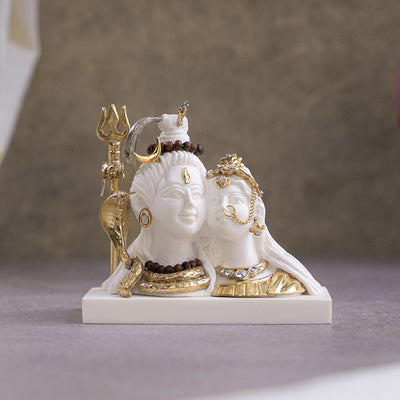
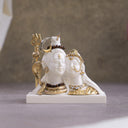
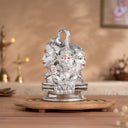
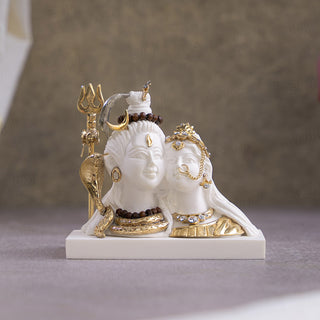
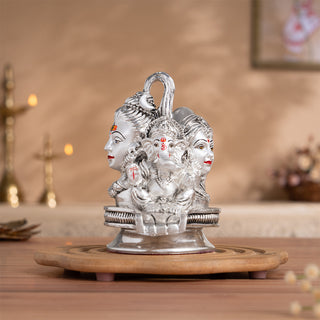
So she makes a daughter. Not a warrior, not an avatar with a mission: a companion. Households that keep a Shiv Parvati murti in the mandir are, whether they know it or not, honouring exactly this: the pair as a household, not the ascetic alone on his mountain.
Compare that with how the same Puranas describe Shiva's other children and the contrast is sharp. Their births are cosmic emergencies. Ashokasundari's is somebody wanting company.
The other names on the list, one by one
Manasa

Manasa, the snake goddess, is the strongest of the remaining candidates and she deserves respect rather than dismissal. In the Bengali Manasa-mangal poems (a living devotional literature with centuries of songs, vows and household worship behind it) she is Shiva's daughter, and she is worshipped as such by millions in Bengal, Assam and Bihar.
But her parentage shifts from text to text. Elsewhere she is a daughter of the sage Kashyapa, born among the nagas. There is no pan-Indian Puranic chapter that settles it the way Bhumi-khanda 102 settles Ashokasundari. So the accurate sentence is: Manasa is Shiva's daughter in a major regional tradition, not in the Sanskrit Puranic record.5 Both halves are true.
Vasuki
This one is simply an error that got copied. Vasuki is male. He is the naga king who serves as the churning rope at the Samudra Manthan, and he is the serpent coiled around Shiva's own throat in nearly every image of Mahadev you have seen. Any list that puts him among five daughters has copied from a list that copied from a list.
Jyoti or Jwala
I could not trace this name to any allowed primary source. Jwalamukhi is a famous Shakti Peetha in Himachal, where a natural flame is worshipped as the goddess herself: a goddess identity in her own right, of the same order as Durga in her many-armed forms. Demoting an independent goddess into somebody's daughter is not a small thing, and I will not do it without a verse.
Three things people get wrong about this
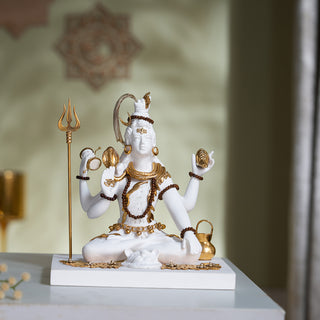
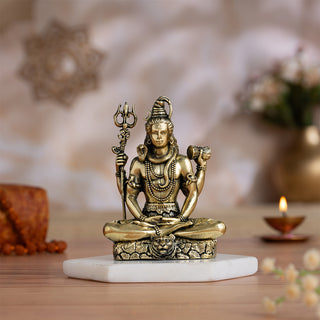
1. "The Shiva Purana lists his five daughters." It does not. The Shiva Purana is a book that loves counting (it gives five faces, eight forms, ten incarnations tied to the Mahavidyas, nineteen more, twelve jyotirlingas) and daughters are not on any of those lists.4 If you have seen a page cite "Shiva Purana" for the five daughters without a samhita or chapter number, that is the tell. Those chapter numbers exist and are easy to give when a claim is real.
2. "Ashokasundari was born to Shiva and Parvati." The Padma Purana is specific and the popular retelling drops the specifics. Parvati conceives the body mentally, the Kalpavriksha fulfils the wish, and the girl is named and given her future husband in the same passage. Shiva is not described as fathering her. It matters, because the whole point of the episode is Parvati's solitude.
3. "Every child associated with Shiva is his child." The Shiva Purana is careful here in a way retellings are not. Take Jalandhara, routinely called Shiva's demon son. The text says the brilliance from the eye in Shiva's forehead was cast into the briny ocean, where it became a boy crying at the meeting of the Ganga and the sea; the Ocean raised him, and it was Brahma, not Shiva, who named him: "since he was able to make my eyes water, let him be famous in the name of Jalandhara" (Yuddha-khanda 14.24).3 Energy discarded and adopted by the sea is not the same as a son. The same care applies to daughters.
The children the texts are actually sure about

The Puranas are sure about two children of Shiva, Kartikeya and Ganesha. Both are sons, and both arrive with the sky falling.
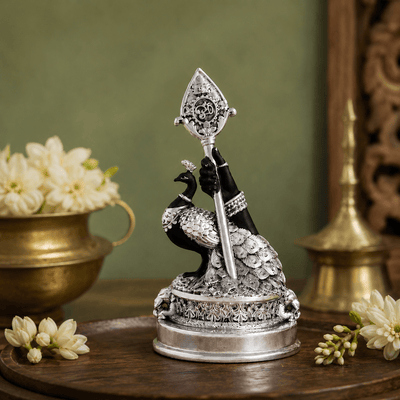
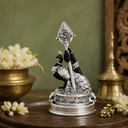
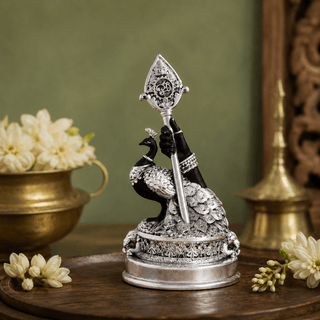
Kartikeya, called Skanda in the north and Murugan in the Tamil country, is born because the gods need a commander against Taraka. His birth involves fire, the Krittika stars, and reed beds: everything except an ordinary family. He is a warrior before he is a child, and he is worshipped that way: the Vel Mayil Murugan form, spear in hand, peacock beneath.
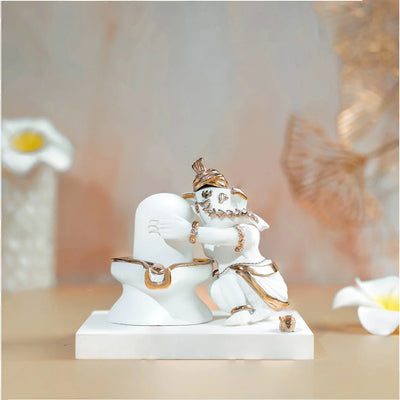
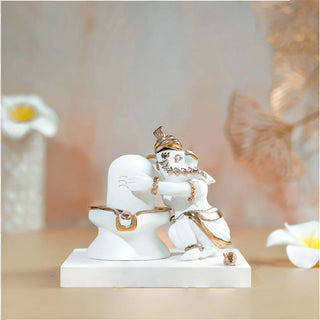
Ganesha's story runs the other way and is the more human of the two. Parvati makes him from the turmeric paste of her own body, to guard her door. Again the goddess alone conceives the child, which should tell you something about the pattern here. What follows is the beheading and the elephant head, and a relationship between mother and son that the Ganpati and Gauri tradition still celebrates every year. Even the story of how his tusk broke gets a full chapter's attention somewhere.
Two sons, thoroughly documented across Puranas. One daughter, in one chapter of one Purana. That imbalance is real, and pretending otherwise helps nobody.
Why the daughters live in folk song instead

The Sanskrit Puranas organise divine families around succession, war and cosmic function. They were compiled, copied and commented on largely by men in a temple-and-court world. Daughters do not serve those functions, so daughters fall out.
The women's traditions kept them. Manasa-mangal is sung. Teej and Gauri vrats are kept by women for women.67 In village retellings across India, Shiva has daughters, quarrels with them, marries them off, worries about them. That material is real devotional literature. It is simply oral and regional rather than Sanskrit and pan-Indian: a different kind of source, not a lesser one.
So when someone in your family tells you a story about a daughter of Shiva that no Purana carries, they are not wrong. They are quoting a different library.
What this means for how you worship at home
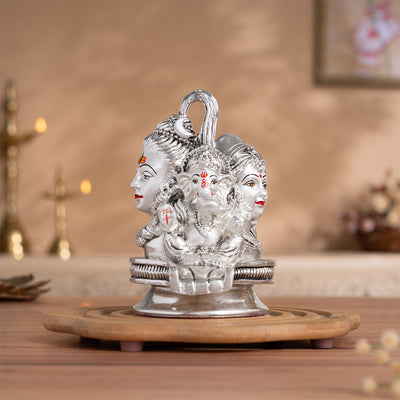
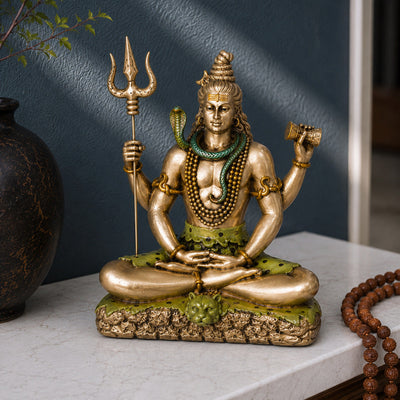
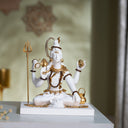
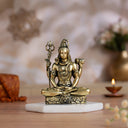
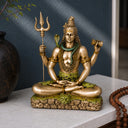
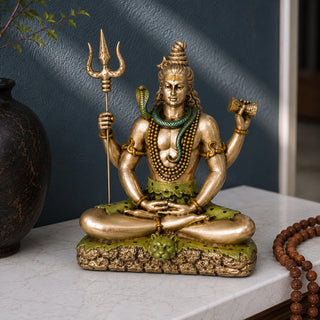
Not much, honestly, and that is a relief. Devotion has never required a verified genealogy. People keep a Shiv ji murti or a Shiv-Parvati-Ganesh group because the family, not the family tree, is what they are inviting in.
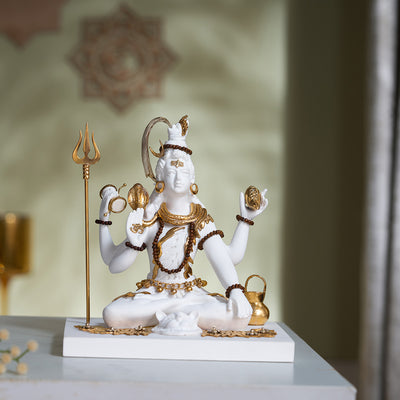
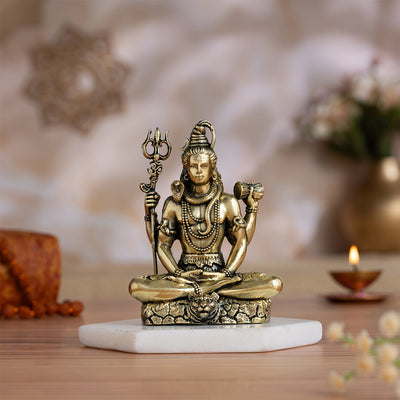
If it helps: the Shiva Purana is unusually relaxed about home worship. It permits a linga of clay, cow-dung, flowers, jaggery, butter, ashes or even cooked rice, worshipped "with such modes of service as are easily available", at any place that allows daily worship (Vidyeshvara-samhita 11.32 to 33, 19.18).2 That generosity is the actual scriptural attitude, and it is worth remembering the next time somebody tells you you cannot keep a Shiva statue at home, or hands you a long list of Maha Shivratri prohibitions that the text never wrote.
Whether you are setting up for the Shivratri vigil or just arranging a pooja room, that is the spirit to hold on to.
The short version
One daughter is scriptural: Ashokasundari, Padma Purana, Bhumi-khanda 102, created by Parvati, married to Nahusha at chapter 116. Manasa is a daughter of Shiva in Bengali tradition. Vasuki is a male naga and does not belong on the list. The rest could not be traced to a source at all.
That is a shorter answer than the one you came for. It is also the only one anybody can back up, and the Shiva of these texts, who elsewhere gets argued over in terms of who could ever defeat him, who his greatest devotee was and whether he is the most powerful god of all, has never needed a longer one.
Also read: Who Are Lord Shiva's Father & Mother | Jalandhara: The Demon Born of Shiva's Fire | How Many Avatars of Shiva Are There | Relation Between Ganpati and Gauri | Who Is the Biggest Devotee of Lord Shiva