Who is the most powerful god in Hinduism?
Three gods have a real scriptural claim: Vishnu, Shiva and the Goddess. Each one is called supreme by a major text, and the tradition kept all three claims instead of deleting two of them.
Ask the same question online and you get two dodges. Someone picks a winner and defends it hard. Or someone says "all gods are one, it doesn't matter" and moves on.
The scriptures argue about it openly, in plain quotable sentences. A Vaishnava text will say Vishnu is supreme and the others are lesser. A Shaiva passage will say Shiva made Brahma. A Shakta text will say the Goddess made all three. And the tradition kept every one of these arguments in its canon instead of deleting the losing side.
That is unusual. Most traditions settle a question like this once and then police the answer. Hinduism did not. So when people ask who can defeat Lord Shiva or why Vishnu's ten avatars read like a list of world-saving interventions, they are stepping into a debate that has been running for two thousand years without a referee.
The Mahabharata argues with itself
The Mahabharata calls Vishnu supreme in one book and Shiva supreme in another.
In the Vana Parva, the sage Markandeya survives the dissolution of the universe and meets a small boy floating on the cosmic water.3 The boy tells him exactly who he is:
"I am Vishnu, I am Brahma and I am Sakra... I am Siva."
Straightforward Vaishnava supremacy. Narayana is everyone.1
Now go to the Anushasana Parva of the same epic. Bhishma is on his bed of arrows, teaching Yudhishthira. He calls Mahadeva "indestructible and Supreme Brahman." He says Shiva created Brahma. And he adds something startling. Krishna himself gained his universe-pervading power by doing a thousand years of penance to Shiva at Badari.2
Same epic. Two flatly opposed claims. No editor stepped in to reconcile them.
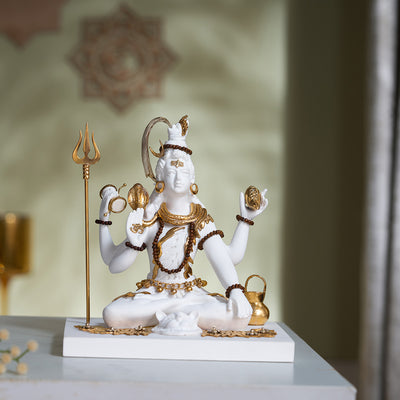
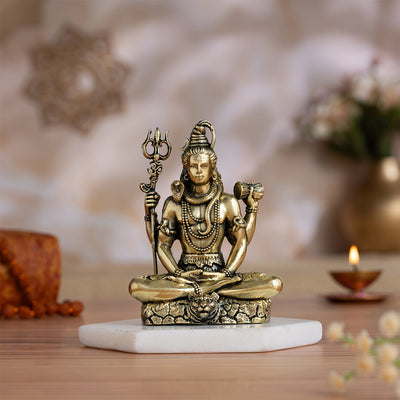
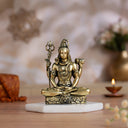
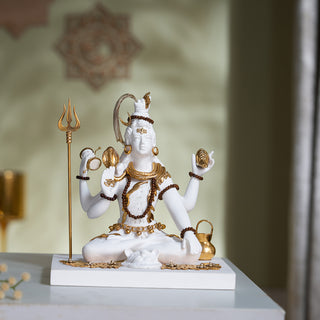
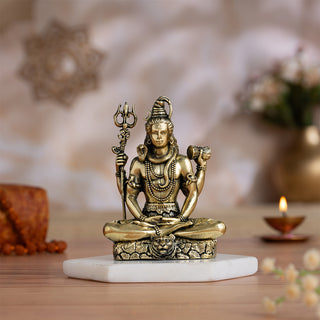
The compilers of the Mahabharata were not careless. They were keeping two living devotional traditions that grew up around the same stories, and they let both speak. If you have ever wondered who Shiva's parents are and found the texts giving different answers, this is the same thing happening: memory kept by different communities, written down side by side. The Shiva murtis people keep at home today descend from the Shaiva side of exactly this conversation, and the many avatars of Shiva are that tradition making its own case.
The Bhagavata Purana ranks them, and doesn't apologise
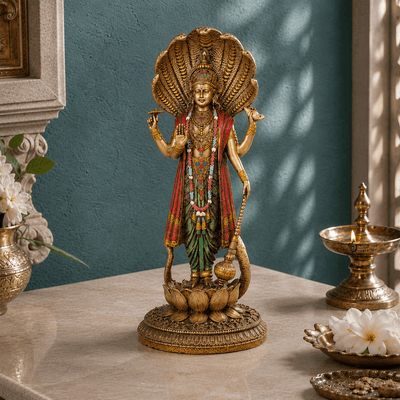
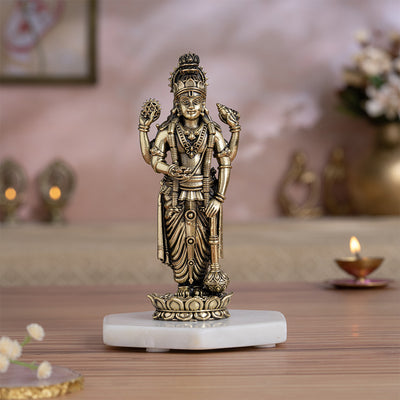
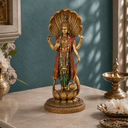
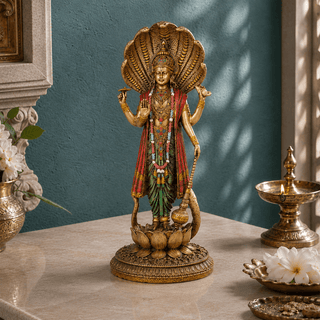
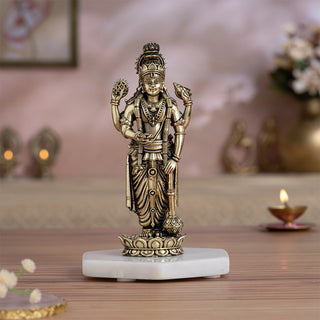
The Bhagavata Purana puts Vishnu at the top, and it does so in its first canto.
It maps the three gods onto the three gunas, the qualities that make up all of nature. Vishnu is sattva, goodness. Brahma is rajas, passion. Shiva is tamas, darkness and dissolution. Then it says the rest out loud. Liberation comes through the form of goodness, so those who seek it should worship Vishnu and, in the text's own words, reject the less attractive forms of the demigods.4
That is not a hint. It is a ranking, stated by a major Purana, and it is the hardest quote to square with the popular idea of a co-equal trinity.
The Bhagavata is consistent about it too. Its whole architecture (Narasimha tearing apart Hiranyakashipu, Vamana stepping across the worlds, Krishna in the tenth canto) is built to show one deity holding creation together while everyone else plays a role inside it. Even Brahma, whose ten mind-born sons populate the universe, is a created being in this account, not the source.
Shaiva and Shakta commentators read these passages as arthavada, praise fitted to its context, meant to deepen devotion rather than settle metaphysics. That is a serious reading, not a dodge. Vaishnava commentators return the favour when they reach the Anushasana Parva.
Then the Devi Mahatmya turns the whole thing over
The Devi Mahatmya says the Goddess made all three gods, and it puts the claim in Brahma's own mouth. The text sits inside the Markandeya Purana, and here Brahma praises her:
"Since Visnu, I and Siva have been made by thee to assume bodies, who then may be powerful enough to extol thee?"
Read that again. The creator god is saying that he, the preserver and the destroyer all took physical form only because she arranged it. The text also calls her Mahamaya, whose power of illusion deludes even those who know.5
This is the Shakta answer, and it does not compromise. It does not say the Goddess is one aspect among several. It says the three male deities are downstream of her.
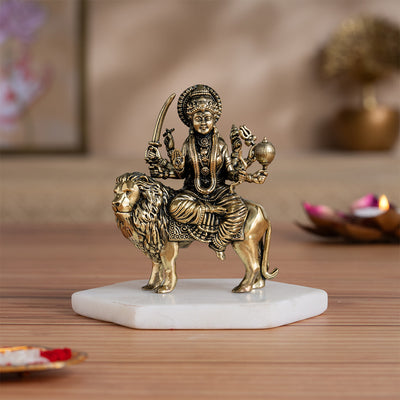
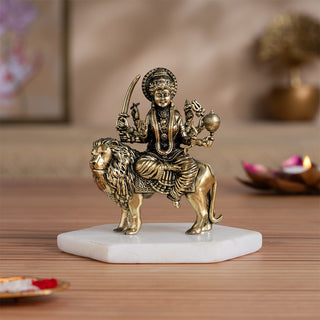
Millions of Indians live inside this answer without ever calling it a position. If your house comes alive during Chaitra Navratri, if you have ever counted how many hands Durga has and wondered why each holds a different god's weapon, that iconography is making the Devi Mahatmya's argument in pictures. The weapons were given to her. She is the one who uses them. Anyone who keeps a Durga murti at home has already picked a side in this debate, whether or not they meant to.
What the Vedas said before any of this began
The Rigveda does not name a supreme god at all. Go back to that oldest layer and the supremacy fight has not started yet. The gods invoked most often there are Indra, Agni and Soma.6 Vishnu and Rudra are present, but they are not the main event. The Puranic contenders are barely on the field.
And on this exact question, the Rigveda's most famous line refuses the premise:
"They call him Indra, Mitra, Varuna, Agni, and he is heavenly nobly-winged Garutman. To what is One, sages give many a title; they call it Agni, Yama, Matarisvan."
One reality. Many names. The oldest text in the tradition is saying that who is most powerful is a naming problem, not a power problem.
The Bhagavata agrees, in a verse that sits oddly next to its own ranking. The one reality is known as Brahman, as Paramatma, and as Bhagavan. Three names, one thing, seen from three different distances. The philosopher meets Brahman. The meditator meets the Self within. The devotee meets a person he can love. Nothing has changed except the seeker.
Is Shiva stronger than Vishnu, and who are the top 3 gods?
These are the two things people actually type into a search box, so here they are answered flat, before the caveats.
Is Shiva stronger than Vishnu? Both answers sit inside the same epic. The Anushasana Parva says Shiva made Brahma, and that Krishna earned his all-pervading power through a thousand years of penance to Shiva.2 The Vana Parva has Narayana say "I am Vishnu, I am Brahma and I am Sakra... I am Siva."1 Neither passage was edited out to protect the other. Anyone who tells you the Mahabharata settles this has read half of it.
Who are the top 3 gods in Hinduism? Not Brahma, Vishnu and Shiva. That is the Trimurti formula, and Brahma is the odd one out in it: no major Purana argues that he is supreme, and he has almost no temple worship of his own anywhere in India. The three with a real claim are Vishnu, Shiva and the Goddess Devi, and each has a text that says so in plain language.
And a top 5, if you want the list? No scripture publishes one. Every ranked list online was assembled by whoever wrote it, usually by counting who wins fights. Rank instead by how strong the textual claim to supremacy actually is, and it comes out like this:
- Vishnu — the Bhagavata Purana ranks him above the other two in its first canto, and does not soften it.4
- Shiva — the Anushasana Parva calls him the indestructible Supreme Brahman, and the maker of Brahma.2
- Devi — the Devi Mahatmya has Brahma himself say that all three of them took bodies only because she willed it.5
- Krishna — in the Gita he does not claim a rank. He claims every rank at once.7
- Brahma — named in the Trimurti, but a created being in the Bhagavata's own account, and barely worshipped today.
Read that as a map of the arguments rather than a scoreboard. Which leads straight into the thing most lists get wrong.
Five things people get wrong about this question
1. "Brahma, Vishnu and Shiva are three equal aspects with complementary roles." No major Purana says this. Each one argues for its own deity, in blunt language. The neat "creator, preserver, destroyer, all equal" formula is a modern teaching summary. It is useful for explaining the tradition to a newcomer, but no text states it as a balance of power.
2. "The Vedas establish Vishnu (or Shiva) as supreme, and the Puranas just elaborate it." They don't. The supremacy debate is a Puranic and sectarian development. The Rigveda's answer to "which one" is "to what is One, sages give many a title."
3. "Whoever wins fights in the stories is the most powerful." Battle outcomes in the Puranas are theological arguments, not scorecards. A text that wants to establish its deity writes the fight so that deity wins. This is also why questions like whether Hanuman is still alive or how many of the seven Chiranjivis really got a boon give different answers in different texts. Each text has a case to make.
4. "The trinity are the only candidates." Even leaving aside the Goddess, older and regional traditions have made Indra, Surya, Agni, Skanda and Ganesha supreme in their own texts. Supremacy in Hinduism is something a text confers, not a fact it reports.
5. "One of these positions must be wrong." Only if you assume the question has one correct answer. All three schools have serious philosophers, unbroken lineages and a reply to every objection. Sringeri, Kanchi, the Vaishnava sampradayas and the Shakta lineages have argued this for centuries, each knowing the others well. Nobody has won, and the arguing is part of what kept the tradition alive.
The Gita's answer isn't a rank at all
The Bhagavad Gita's answer is that Krishna is the best of every category, not the top of a list. Chapter ten is where it happens.
Krishna first says that neither the gods nor the great sages know his origin, because he is the source of all of them. Then he says something quieter: "I am the Self... existent in the heart of all beings."
Then, instead of claiming a rank, he claims every rank. Of the Adityas, he is Vishnu. Of the gods, he is Indra.7 Down the list he goes, naming himself as the best of each class.
That is not "I am number one." That is "any excellence you can point to is already me." Supremacy as pervasion, not a league table. It is why the same tradition can honour the story of Krishna receiving the Sudarshan Chakra and also treat him as the one who gives everything. And it is why devotional practice (a name repeated, a lamp lit, one of the Krishna mantras said every morning) has never really needed the theological question settled.
So who do you actually worship?
Whoever you love. That is the tradition's real answer, and it has a name: ishta-devata, the chosen deity.
Every scripture writes as though your chosen one is supreme, because that is how devotion works. You cannot half-love a god. The Bhagavata is written for someone whose heart is already Vishnu's. The Devi Mahatmya is for someone who has already called the Goddess "Maa." Neither is lying. Each meets a devotee where he stands and gives him the whole truth from there.
So the question "who is the most powerful god in Hinduism" is answered by the person asking it. The texts exist to take you deeper into your own answer, not to arm you against someone else's.
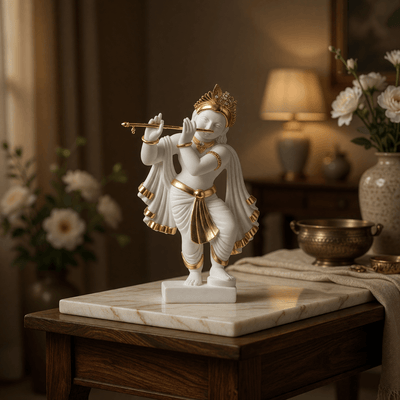
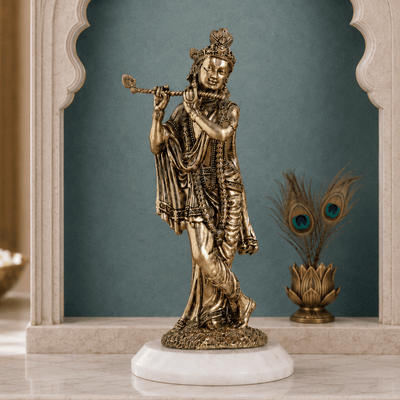
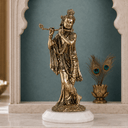
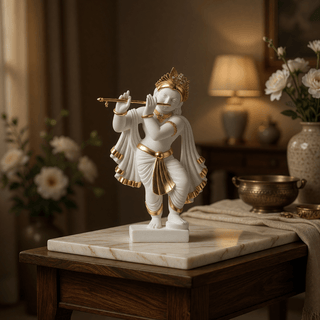
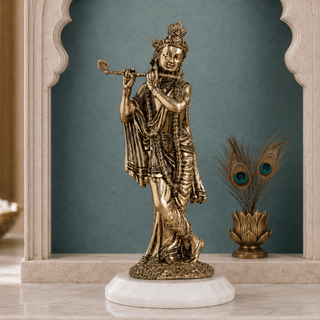
Which is also why the shelf in an Indian home usually holds more than one form: a Ganesha at the front, a family deity in the middle, a small Krishna with his flute that someone's grandmother brought. Nobody in that house is confused about theology. They are doing what the tradition has always done: keeping every answer, and worshipping the one they love. If you are setting up that space, our notes on what to keep in a pooja room and on keeping a Shiva statue at home cover the practical side, and the full range of god idols is a good place to start.
Also read: Who Can Defeat Lord Shiva | The 10 Avatars of Vishnu | The 10 Sons of Brahma | The Biggest Devotee of Shiva | Lord Vishnu's First Devotee