Ask this question on the internet and you'll get "Prahlada" within four seconds. Ask the texts and something more interesting happens: they don't answer it. Not once, in any standard source, does a verse say "X was the first devotee of Vishnu."
That sounds like a dead end. It isn't. No text crowns a first devotee, but one text does something better: it ranks the authorities on devotion, in order. That list is short, checkable, and almost nobody quotes it.
The list that actually settles it
In the sixth canto of the Bhagavata Purana, Yamaraja is instructing his messengers about who really understands bhagavata-dharma: the path of devotion. He says it is known to twelve, and then he names them (6.3.20–21):
स्वयम्भूर्नारदः शम्भुः कुमारः कपिलो मनुः। प्रह्लादो जनको भीष्मो बलिर्वैयासकिर्वयम्
In plain English: Svayambhu (Brahma), Narada, Shambhu (Shiva), Kumara, Kapila, Manu, Prahlada, Janaka, Bhishma, Bali, the son of Vyasa, and myself.
Bhagavata Purana 6.3.20–21. Yamaraja is speaking, and the next verse calls these twelve. The Sanskrit has "Kumara" in the singular; English versions usually expand it to the four Kumaras.
These twelve are called the mahajanas. The order matters: it is not alphabetical and it is not random. Brahma is first. Prahlada is seventh. Bali, the asura king who gave Vamana three paces of land and then his own head, is tenth.
Now put that beside the second canto. Brahma is born at the start of creation with no teacher, no scripture and nobody to ask. He performs penance for a thousand celestial years.2 The Lord then appears to him and gives him four verses (the catuh-shloki, Bhagavata 2.9.33–36) which become the seed of the entire Purana. Everything after that is transmission. Brahma teaches Narada, Narada teaches Vyasa, and the chain runs down to us.
So if you insist on a textual answer, it is Brahma. He is first in the list and the first being anywhere to receive the teaching directly. That is as close to "first devotee" as any scripture gets. For the wider family tree, we've written about Brahma's ten mind-born sons separately.
So why does everybody say Prahlada?
Because Prahlada is, honestly, the better story. And because the claim people are reaching for isn't really "first in time": it's "first to be a devotee against everything."
Prahlada is a small boy in a household run by Hiranyakashipu, an asura king who has made himself close to unkillable and who has forbidden the name of Vishnu in his own kingdom.4 The boy will not stop saying it. He is thrown from cliffs, given poison, put among elephants and snakes. None of it works, because he isn't performing devotion: he simply cannot see the world any other way.
The Bhagavata is precise about how that ends. Hiranyakashipu's boon (7.3.35–38) rules out death by any created being, inside or outside, by day or night, on the ground or in the sky, by any weapon, by man or animal, by deva, asura or serpent. And 7.8.29 answers every single clause in one verse: a form that is neither beast nor man, at the threshold of the doorway, at dusk, the demon laid across a lap, opened with fingernails.
That's why Prahlada carries the association. He's the devotee the Lord came out of a pillar for.5 But the same Purana that tells his story puts him seventh in its own list, and Prahlada himself descends from Brahma's own line through Kashyapa, born long after the transmission had already begun.
Dhruva: the five-year-old who wouldn't move
Dhruva was a king's son, five years old, pushed off his father's lap by his stepmother and told he had no right to sit there. He walked into the forest to ask for something better than a lap. Narada met him on the way, tried to talk him out of it, and when that failed gave him a mantra: om namo bhagavate vasudevaya.
The Bhagavata's fourth canto carries the whole narrative, and the Vishnu Purana's first book tells it too. Dhruva stood in penance until the Lord appeared. He is remembered afterwards as the pole star: the one point in the sky that does not move.8
He isn't the first devotee either. But he's the clearest illustration of what the tradition actually values, which is not seniority. It's steadiness.
The devotees who were never not devotees
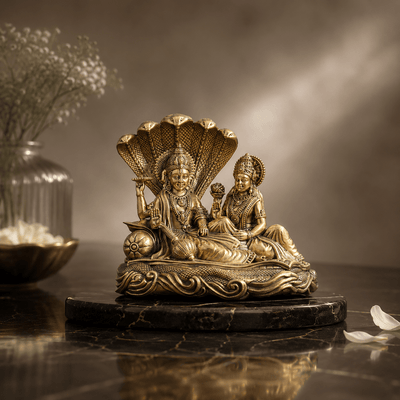
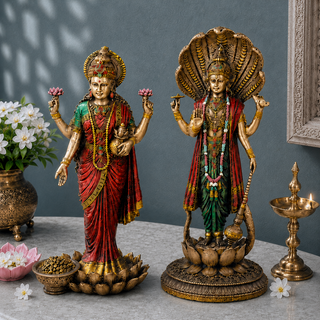
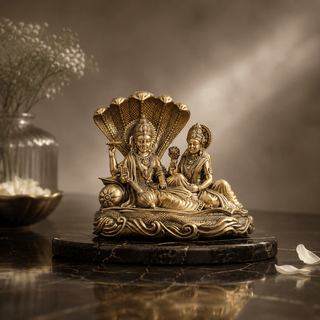
Shesha, the thousand-hooded serpent Vishnu reclines on. Garuda, the eagle he rides. Lakshmi, who is not a follower but a consort and is present in the same breath as him. None of these three has a conversion story. There is no moment where they began. In Vaishnava theology they are nitya-siddhas: eternally perfected associates who were never anything else.
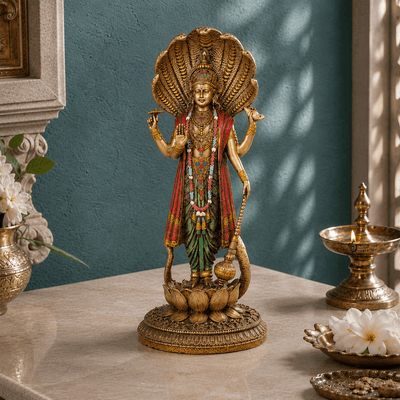
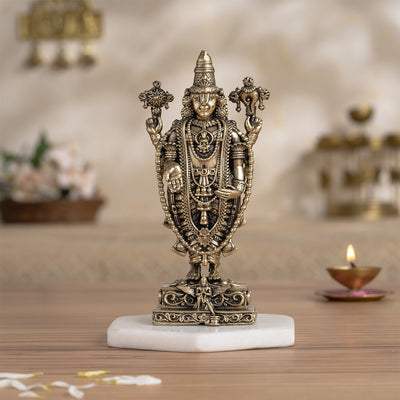
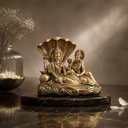
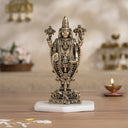
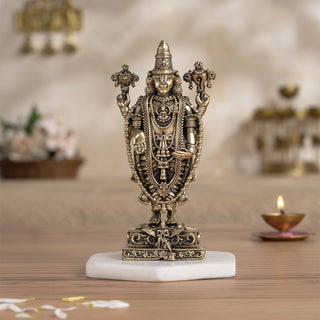
You can't ask which of them came first, because the question assumes a "before," and for them there isn't one. Anyone who has stood in front of a Balaji murti mounted on a Garuda base has already seen this stated in metal: the carrier and the carried, arranged as one object, with no suggestion that either arrived later.
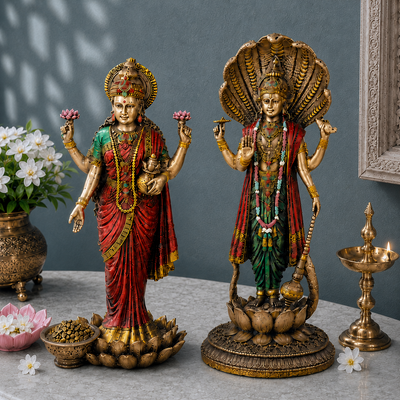
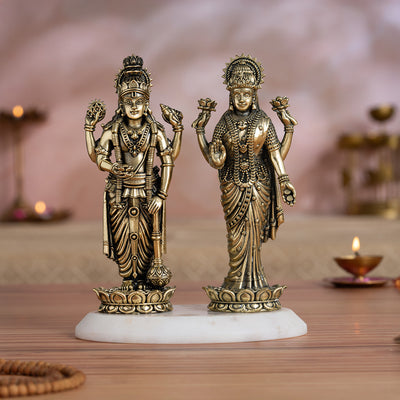
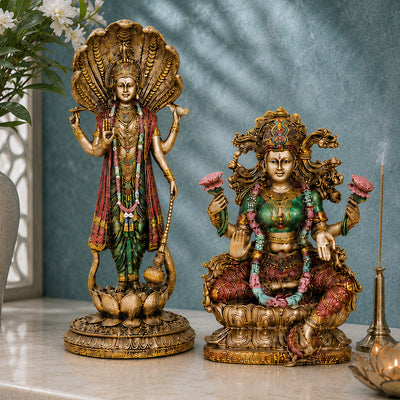
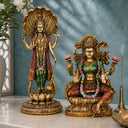
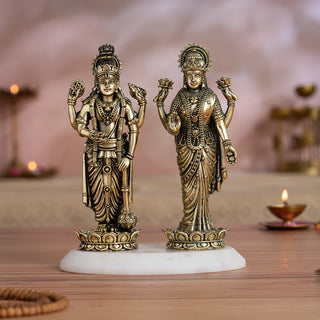
This is also why Vishnu and Lakshmi are so often kept as a pair rather than as a deity and an attendant. In the Ramayana's closing chapters Brahma tells Rama outright: "Seetha is no other than Goddess Lakshmi, while you are Lord Vishnu" (Yuddha Kanda, Sarga 117.28).7 The pairing is structural, not decorative.
Four things people get wrong about this question
"Prahlada was the first devotee." No verse says so. The Bhagavata's own list of devotional authorities (6.3.20–21) opens with Brahma and places Prahlada seventh. Prahlada is the most striking devotee in the whole corpus, and probably the first to be one in total opposition to his surroundings, which is what the claim is really trying to say. But "first" is not a claim the texts make.
"Brahma is the creator, so he can't be a devotee." The Bhagavata treats him as both, without any tension. He creates within a universe he did not originate, after receiving instruction he did not possess. His thousand-year penance in Canto 2 is the act of a devotee, not an administrator.
"Narada was the first, since he goes everywhere singing the name." Narada is second on the list, not first, and he is Brahma's own son: he receives the teaching from Brahma.1 He's the great transmitter of devotion, which is a different job from being its origin.
"There must be one right answer somewhere in the scriptures." There isn't, and pretending otherwise is how bad articles get written. What exists is a ranked list, a transmission chain, and several traditions that emphasise different names. Reporting the disagreement beats manufacturing a winner. The same honesty applies elsewhere: you'll find it in our piece on who counts as Shiva's greatest devotee, where the texts are just as split.
Why "first" may be the wrong question
Every version of this question smuggles in an assumption: that there was a starting line.
Vaishnava cosmology doesn't work that way. Time runs in cycles. Each kalpa opens with a fresh Brahma, and the Bhagavata is explicit that this has happened before and will happen again: when the boar lifts the earth in the Vishnu Purana's account, the Earth herself asks him to lift her up as he lifted her long ago (1.4.12–13). The Varaha rescue is a repeat performance, and the text says so.
In a universe with no first moment, "first devotee" isn't a trivia question with a missing answer. It's a category error. What the tradition offers instead is the parampara: a line of transmission you can trace, name by name, from Brahma down to whoever taught your grandmother a mantra.
That's also why the descents themselves resist counting. Most people know the ten avatars of Vishnu, and that standard dashavatara list opens with Matsya, the fish, as the first avatar. But the Bhagavata's own primary list (1.3.6–25) names twenty-two, beginning with the Kumaras and ending with Kalki. Then 1.3.26 says the incarnations are innumerable, "like rivulets from inexhaustible sources."3 The tradition keeps declining to give round numbers. That's a feature.
The candidates, side by side
- Brahma: first in the list of twelve; first to receive the teaching directly, after a thousand years of penance. The strongest textual case.
- Prahlada: seventh in the list; the most vivid devotee, and the first recorded to hold to devotion against total opposition. The strongest devotional case.
- Narada: second in the list; Brahma's son, and the teacher of Dhruva, Vyasa and Valmiki. The great transmitter.
- Dhruva: not on the list at all, and beloved anyway. Five years old, taught by Narada, fixed in the sky.
- Shesha, Garuda, Lakshmi: eternal associates. Not "first" because they were never later.
- Bali: tenth in the list. He offered his own head for the third step, and the Lord's answer was "I shall always be with you and give you protection in all respects" (Bhagavata 8.22.35).6 Not a punishment, a promotion. He is also counted among the seven chiranjeevis, the deathless ones, and Kerala still marks his annual return at Onam.
Different sampradayas weight these differently, and that's fine. A Gaudiya teacher will start with Brahma because the parampara begins there. A grandmother telling the story at bedtime will start with Prahlada, because a boy who won't stop saying a name is a better story than a thousand-year penance.
What this actually means for a home shrine
If the tradition has no interest in who was first, it has a great deal of interest in who is consistent. That thread runs through every one of these lives: Brahma's thousand years, Dhruva's refusal to leave the forest, Prahlada saying one name while the sky falls on him.
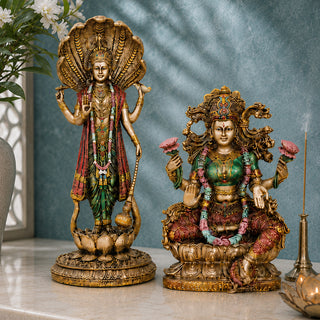
Practically, that translates into unglamorous things. A settled place for the murti. The same time each day. Clean hands and a clean shelf. Nothing about posture, direction or price tag matters half as much, and if you've been worried about the standing-versus-seated question, we've answered it from the Shilpa Shastra in can we keep a standing Vishnu idol at home. The short version: standing, or sthanaka, is a fully prescribed pose, and no text forbids it in a house.
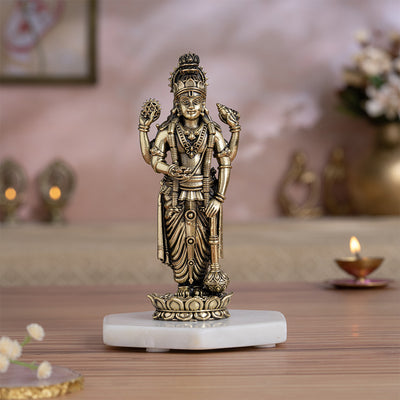
Whether you keep a Vishnu murti, a Balaji, or a small brass form that travels with you, the texts are unanimous on one point at least: the Lord's own promise to Bali was about presence, not about ranking. Nobody in that list of twelve got there by being early.
And if you want the rest of the story around it (how the Sudarshana Chakra actually reached Krishna, why Mohini counts as a full avatar, what the fish was doing during the flood in the Matsya story, or why the Kurma churning produced three separate descents rather than one) those threads all run back into the same cantos this article is built on.
Also read: The 10 Avatars of Vishnu | Narasimha Avatar | Who is Balaji | Most Powerful God in Hinduism | Ram Avatar of Vishnu