Every year around February, the same list goes around. Don't sleep. Don't eat rice. Don't use turmeric. Don't offer tulsi. Don't pour coconut water. Don't use a broken bilva leaf. And behind each one, a quiet threat about what happens if you slip.
So I went looking for where those rules are written, in the text the festival comes from. The Shiva Purana, in the Kotirudra-samhita, has a chapter titled "The greatness of Sivaratri".
Here is what surprised me. The chapter is a to-do list. It tells you what to offer, when, and how many times to say the mantra. It almost never tells you what not to do. The whole architecture of fear around this festival sits on a text that isn't afraid of anything.
So what does the Shiva Purana actually ask of you on Shivratri?
One thing, mainly: stay awake.

The chapter lays out four worship periods across the night, each roughly three hours: the four praharas.1 Each has its own offerings, its own bath for the lingam, and its own mantra count.
Stay awake, with gladness and delight.
Shiva Purana, Kotirudra-samhita 38.35
And at the end of the night:
गीतैर्वाद्यैस्तथा नृत्यैर्नयेत्कालं च भक्तितः। महोत्सवैर्भक्तजनैर्यावत्स्यादरुणोदयः
In plain English: Pass the time with songs, music and dancing, in devotion, in great celebration with other devotees, right up until sunrise.
Kotirudra-samhita 38.74
This is not a text asking you to sit rigid and terrified of breaking a rule. It is asking you to throw a night-long party for someone you love. The jagarana (the vigil) is the rite. Everything else is decoration.
For the fuller picture of who this night belongs to, our piece on Shiva's father and mother shows the same Purana holding two contradictory ideas about him at once.
The one thing the text really does exclude: the ketaki flower
The ketaki flower is the one genuine textual prohibition, and it comes with a good story. In the Vidyeshvara-samhita, Brahma and Vishnu argue over who is greater. A pillar of fire appears with no visible top or bottom. Vishnu dives for its base and comes back honest: he could not find it. Brahma flies up, fails, and comes back lying. His witness is the ketaki flower, which had been falling from somewhere up the column and agreed to say it came from the summit.

Shiva calls the flower a cheat, and then shuts the door:
ममापि प्रेम ते पुष्पे मा भूत्पूजास्वितः परम्
In plain English: Flower, I am fond of you even so. But from now on you have no place in my worship.
Shiva Purana, Vidyeshvara-samhita 8.15
Most retellings stop there, which is why people believe ketaki is untouchable anywhere near a Shiva shrine. But a few verses later the text softens. Shiva says it is not right for him to wear the flower, then adds that his attendants may wear it and that it may decorate the canopy over his image (8.19–21). The middle line is the one almost nobody quotes:
त्वं वै वितानव्याजेन ममोपरि भविष्यसि
In plain English: You will still stand above me, in the form of the canopy.
Vidyeshvara-samhita 8.20
So ketaki is barred from the offering, not from the shrine. It can decorate the canopy. Shiva's ganas can wear it.
Brahma gets the same treatment. He loses his temple and festival for lying, but keeps a share in every sacrifice.2 Punishment here is almost always partial. Worth remembering when someone tells you a whole category is "forbidden".
Same with which flowers Ganesha is offered.
The tulsi rule: where it actually comes from
This is the one repeated most confidently: never offer tulsi to Shiva, because Shiva destroyed Vrinda's husband and she cursed his worship.
Open the Shiva Purana's own Tulasi chapter and the story runs the other way. Vrinda was the wife of the asura Jalandhara, and her chastity was the source of his invincibility. So Vishnu took Jalandhara's form and deceived her. When she realised it, her curse fell on Vishnu: that he become a rock, which is why the shalagrama is what it is.3 She asks the question the text doesn't flinch from: how was a devotee killed for another man's sake, without any offence?
The curse is on Vishnu. Not on Shiva, and not on Shiva's worship. And a few verses later Shiva himself grants that tulsi shall be "the most important constituent of the materials of worship of the gods" (Yuddha-khanda 41.45). The chapter's practical rules are about plucking tulsi correctly and keeping shalagrama, tulsi and conch together, not about keeping tulsi away from a lingam.
So where does the rule come from? Temple and household practice, handed down and very widely followed. If your family keeps it, keep it: customs like this carry a household's memory. Just know it's custom rather than command, the same way the tulsi rule for Ganesha comes from a story rather than a rulebook.
Three things people get wrong about Maha Shivratri
1. "Sleeping on Shivratri brings bad karma"
Kotirudra-samhita 38 prescribes the vigil and describes it warmly. It attaches no penalty to sleeping. The reason to stay awake isn't fear of consequence: it's that the four watches of worship happen through the night and you'd miss them. If you nod off at 3am after three watches, you kept Shivratri. You didn't fail a test.
2. "You must fast completely or the vrat is void"
The chapter states no food penalty.1 Fasting on Shivratri is an old and genuine practice, and the phalahar traditions around it are lovely, but the strict "if you eat, it's cancelled" framing isn't in this chapter. A Kashmiri Shaivite, a Lingayat and a Tamil Shaiva household won't keep the same rules, and none of them is doing it wrong.
3. "The text lists dozens of forbidden items"
It lists one flower, with an exception attached. That's it. The turmeric rule, the coconut-water rule, the broken-bilva rule and the rest are custom layered on over centuries. Some have real logic: turmeric and kumkum are auspicious markings tied to Devi and to married women, so they sit oddly on the ascetic form of Shiva. That's a genuine theological instinct. It's still not a verse.
A fourth, since it comes up every Shivratri: the belief that Ravana composed the Shiva Tandava Stotra while pinned under Kailasa. Valmiki's Uttara-kanda has no hymn in it. Ravana shakes the mountain, Shiva presses it down with his great toe, his arms are crushed, and he screams until the three worlds tremble, which is how he gets the name Ravana, "he who makes the worlds cry out".6 The stotra's attribution to him is later devotional tradition, and a gorgeous one, reading his scream as turning into a hymn. Just not history. His family is covered in Ravana's six brothers.
The same pattern shows up across the Shiva material. The famous "19 avatars" list isn't in the chapter that carries that exact title: we went through that in how many avatars Shiva actually has. And whether nobody can defeat Shiva depends entirely on which Purana you are holding: a question the most powerful god in Hinduism takes apart properly.
The customary avoid-list, honestly labelled
None of this is scripture. All of it is practice real families follow, and there's nothing wrong with following it. Here it is, with the reasoning where reasoning exists:
- Turmeric and kumkum on the lingam. Bhasma is the traditional counterpart. Custom, and a coherent one.
- Broken or inverted bilva leaves. Offered smooth side down, ideally with all three lobes intact. A care-and-attention rule: the same instinct that says you don't hand someone a chipped plate.
- Coconut water for abhisheka. Avoided because coconut water is treated as an offering in itself rather than a bathing liquid. Regional; plenty of temples do use it.
- Non-vegetarian food and alcohol. Standard for any Hindu vrat day, not specific to Shivratri.
- Arguing and harsh speech. Not a rule so much as the point of the night. Hard to keep a vigil for Shiva while picking a fight in the next room.
Notice what is missing: any consequence. Custom is about fittingness, not punishment. The internet converted "this doesn't suit the occasion" into "this will ruin your year", and that is the actual problem.

What to do instead: the part the text actually cares about
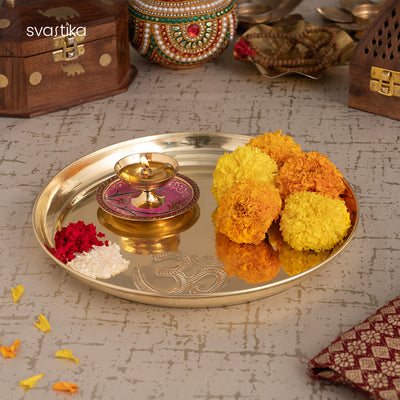
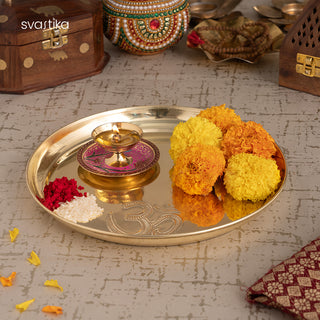
Bathe the lingam through the night. The four watches each carry their own abhisheka: water, milk, curd, ghee, honey and so on, escalating as the night goes. If you can only manage water, the same book explicitly says that is fine. A pooja thali and a shankh cover the whole sequence; if you keep one, how to keep a shankh in the pooja room is worth two minutes.
Offer bilva. The three-lobed leaf survives every version of the tradition.
Use bhasma. Sacred ash on the lingam and on yourself. It carries the ascetic meaning that turmeric doesn't.
Chant, and keep chanting. The chapter is specific about rising mantra counts through the four watches. Om Namah Shivaya is enough.
Then celebrate. Songs, instruments, dance till daybreak: the text says so outright.
And here is the passage that should be printed on every Shivratri article. In the chapter on worshipping the lingam, the Shiva Purana says the site can be a holy centre, a riverbank, "or anywhere facilitating a daily worship" (Vidyeshvara-samhita 11.2–3). The lingam may be made of clay, cow-dung, flowers, jaggery, butter, ashes or cooked rice (11.32–33). The ideal size is twelve fingers of your own hand, and shorter is less effective while longer does "no harm" (11.8). A shortened sequence is accepted when capacity is limited (11.29).
That is a scripture written for people with almost nothing, and it bends to meet whoever is worshipping. The modern anxiety about doing Shivratri "wrong" would probably puzzle whoever wrote it.
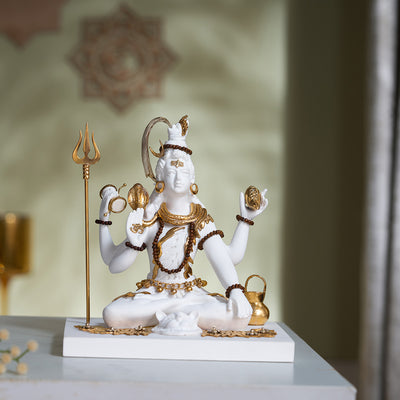
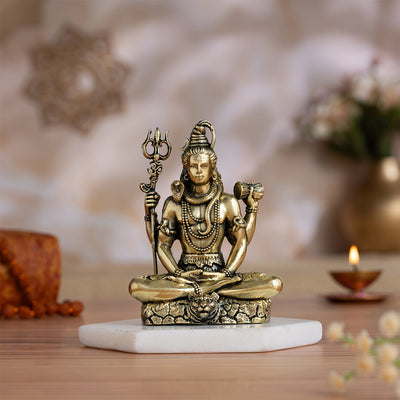
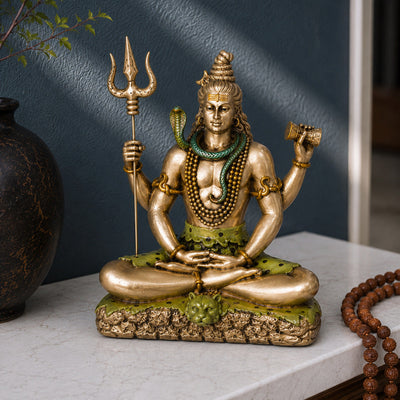
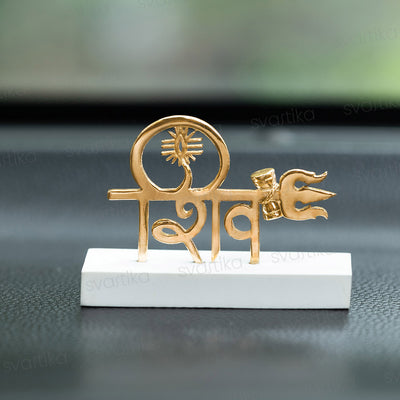
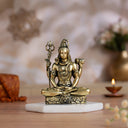
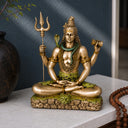
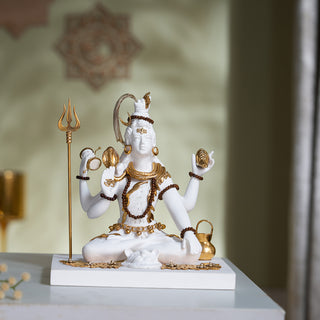
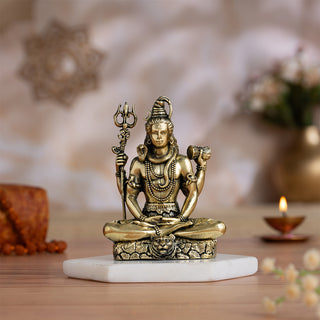
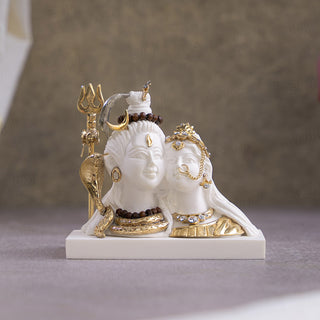
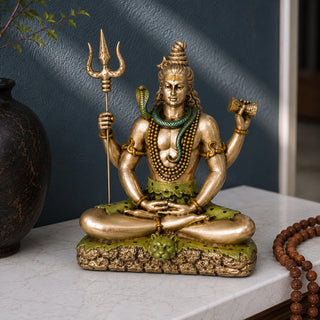
So if your home worship is a small murti on a shelf rather than a full mandir, that sits squarely inside what the text describes. A brass Shiva in meditation you sit in front of daily counts for more, by this book's own standard, than a grand image you walk past. Our Shiva idols and Mahashivratri range are sized for exactly that. On the surrounding worries, see whether you can keep a Shiva statue at home, how to clean a marble idol, and what belongs in a pooja room.
A note on dates, fasting and regional differences
Maha Shivratri falls on the fourteenth night of the waning moon in Phalguna or Magha, depending on whether your calendar is Purnimanta or Amanta. Both are correct. They point at the same night.
What the night commemorates varies too. Many households keep it as the wedding night of Shiva and Parvati, told across Parvati's 108 lives and the relation between Ganpati and Gauri. Others keep it as the night of the tandava, or of the Lingodbhava, the fire-pillar from the ketaki story above. Not competing claims. Different regions remembering different things on the same date.
Fasting rules differ too. Some keep nirjala, without water. Some eat fruit and milk. Some break the fast at dawn, others at the end of the chaturdashi tithi.5 One schedule presented as the only valid one is just one region's practice dressed up as universal.4 Ask your family or your temple, not a list.
Why any of this matters
The fear-list version of this festival has a real cost. People skip Shivratri because they're travelling and can't fast. People feel they have done damage because a bilva leaf tore. People won't keep a lingam at home because a website called it dangerous, when the Shiva Purana devotes chapters to making home worship easy.
The Bhagavata Purana pays Shiva a compliment worth ending on. Listing the greatest of each category, it says the Bhagavatam is among Puranas what Ganga is among rivers, and what Sambhu, Shiva, is in relation to all Vaishnavas (12.13.16). The highest praise it can find for him is that he is the model devotee. Not the most feared. The most devoted. It's the same point our piece on the biggest devotee of Shiva ends up making.
A god described that way is not keeping score of your turmeric.
Stay awake if you can. Offer water and a bilva leaf. Sing something. That's Shivratri.
Also read: Can We Keep a Shiva Statue at Home | How Many Avatars of Shiva Are There | Who Are Lord Shiva's Father and Mother | The 5 Daughters of Lord Shiva | Who Can Defeat Lord Shiva