Start with the surprising part. Hanuman Jayanti has no single date because the Ramayana never gave one.
That sounds like a gap in the record. It is a clue about how Hanuman is loved. The epic tells us his mother, his father, the cave he was born in and the fall that named him. It does not say when.
The Ramayana tells his birth story but never dates it
The full account sits in Kishkindha Kanda, the fourth book. The old bear king Jambavan is trying to remind Hanuman of his own strength before the leap to Lanka, so he tells him his life from the beginning.
It is a detailed passage, Kishkindha Kanda 66. Anjana is named. The Wind God is named. Even the birthplace is named. (Sanskrit below is Valmiki's; the English is ours.)
एवमुक्ता ततस्तुष्टा जननी ते महाकपे। गुहायां त्वां महाबाहो प्रजज्ञे प्लवगर्षभ
In plain English: So addressed, your mother was pleased, great monkey, and in a cave she gave birth to you, bull among leapers.
Valmiki Ramayana, Kishkindha Kanda 66.20
What is missing is a calendar. Search all seven books and no month, tithi or nakshatra appears for Hanuman anywhere.1 Compare that with Rama's birth, which Valmiki dates precisely: the ninth day of Chaitra, the moon in Punarvasu, Jupiter beside it in Cancer, five planets at their exaltations.2 The poet clearly could date a birth when he wanted to. For Hanuman, he did not.
Who Anjana was, and why Hanuman has two fathers
Jambavan's account starts before the birth. Anjana had been an apsara named Punjikasthala, cursed into vanara form and born again as daughter of the vanara king Kunjar.1 Vayu fathered her son.
Her husband was Kesari. So Hanuman ends up with two fathers in the text, and Valmiki says both in one line: he is the kshetraja son of Kesari and the aurasa son of the Wind (66.29-30). Nobody in the tradition treats this as a problem. He is Pavanputra by begetting and Kesari-nandan by household, and both names are used freely. If you want the fuller version, we have a separate piece on Hanuman's father, and another on the much-debated question of his wife.
The leap at the sun, and how he got his name
The most cartoonish Hanuman story is also one of the most textually secure. The baby saw the rising sun, thought it was fruit, and jumped:
अभ्युत्थितं ततः सूर्यं बालो दृष्ट्वा महावने। फलं चेति जिघृक्षुस्त्वमुत्प्लुत्याभ्युत्पतो दिवम्
In plain English: As a child, seeing the sun risen over the great forest, you thought it was a fruit, and wanting to grab it you sprang up into the sky.
Valmiki Ramayana, Kishkindha Kanda 66.21
Indra's thunderbolt struck him down. The child fell on a mountain peak and his left jaw broke. Valmiki says outright that the name comes from that injury (66.24). Hanu means jaw, so Hanuman means one with a large jaw, which is how Monier-Williams glosses it in 1883 as well.
Chaitra Purnima, the one date we can actually source
In 2027 Chaitra Purnima falls on Tuesday, 20 April; by Drik Panchang's reckoning the purnima runs from 4:51 am on 20 April to 3:56 am on 21 April (New Delhi). The Chaitra full moon comes from recorded Maharashtrian practice. The clearest old record is M. M. Underhill's The Hindu Religious Year, published in 1921, which surveyed the festival calendar as it was actually being kept at the time.

Underhill records "one special day devoted to Hanuman, viz. Hunumajjayanti (Hanuman's birthday), Chaitra full moon", observed "very generally throughout Maharashtra, especially by members of the Ramdas sect". Her table lists it at tithi 15.
That Ramdasi link matters. The Ramdas tradition built and endowed Hanuman shrines across Maharashtra, so the day had an organised community keeping it, which is often how a local observance hardens into a fixed one. Notice what Underhill is describing, though. A custom she watched, not a verse. Nobody in 1921 could point her to scripture for the date either.
Chaitra is the same lunar month that carries Chaitra Navratri, Gudi Padwa and Mahavira Jayanti. It falls across March and April. Ram Navami sits on its ninth bright day, and Hanuman Jayanti closes the same fortnight six days later, which is a neat piece of devotional timing whether or not anyone planned it.
Other regions keep other days. Tamil, Telugu, Kannada and Odia communities each have their own observance, and those are real, living practice in real temples. We are not going to print a tidy table of them here, because we could not confirm any of those tithis in a primary or scholarly source we were able to open. Regional temple custom is a perfectly honest answer. An invented tithi is not.
Why the same full moon can sit in two different months
Because the north and the south end their lunar months at different points. It is a mechanical cause, and it explains a lot of Indian festival confusion.
Sewell and Dikshit's The Indian Calendar (1896) is the standard reference here. It records that northern India uses the purnimanta scheme, where a lunar month ends at the full moon, while southern India uses the amanta scheme, where the month ends at the new moon. In the north, the dark fortnight comes first in the month.
The result is simple. The very same full moon can close one month in the north and sit in the middle of a differently named month in the south. Two regions can be keeping the same lunation and calling it two different things.
Two more mechanics from the same book help. A tithi is not a day. It is the time the moon takes to gain 12 degrees on the sun, and since both bodies vary in speed, tithis vary in length. A tithi with no sunrise inside it gets deleted, called kshaya. A tithi holding two sunrises gets repeated, called adhika.5 That is why a festival sometimes appears to skip a day or to be kept on two days running.
Three things people get wrong about Hanuman Jayanti
1. That the two dates come from two scriptural records. They do not. Valmiki gives no date at all. There is nothing for two texts to disagree about. What we have is different regions settling on different days for a figure the epic left undated, which is a much more ordinary and much more human explanation.
2. That the sun-as-fruit story is a children's tale. It is in Valmiki, told by Jambavan, and it carries the name etymology in the text's own words (66.24). The story you might have first heard from a grandparent is doing real textual work.
3. That it is a birthday like any other. Tradition holds that Hanuman never died. Dowson's Classical Dictionary records that on Rama's return to Ayodhya, Hanuman "received from him the reward of perpetual life and youth". Underhill lists him among the seven immortals. We have written more on whether Hanuman is still alive and on the seven chiranjeevis.
How Hanuman is actually worshipped
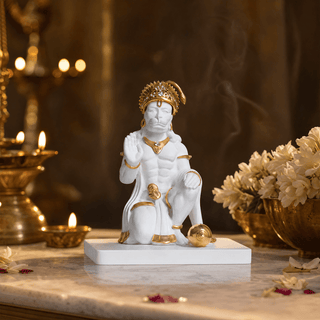
With vermilion and oil, at small shrines, often just outside the village.4 The worship is better recorded than the date, and it has barely changed.

Monier-Williams, writing in 1883 from his own travels, calls Hanuman "a very common village-god in the Dekhan, Central and Upper India". He notes that the images "are always smeared with vermilion (sindura) and oil", are often plainly made, and are commonly found just outside villages rather than inside grand temples. He saw a shrine at Poona being repainted red. At a large endowed temple outside Kaira he was told that "eighty Maunds of oil had recently been offered", and he noticed that the Rama and Krishna shrines inside that enclosure sat in clearly subordinate positions.
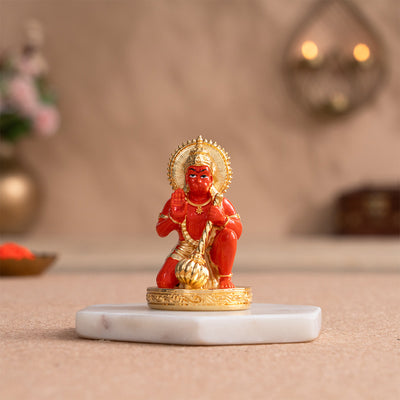
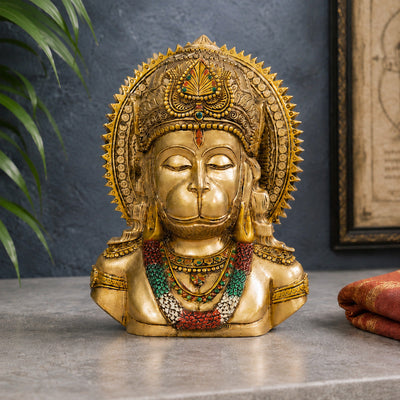
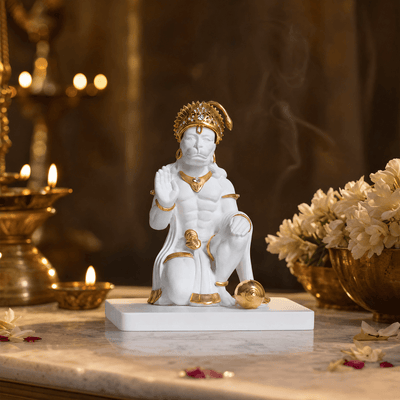
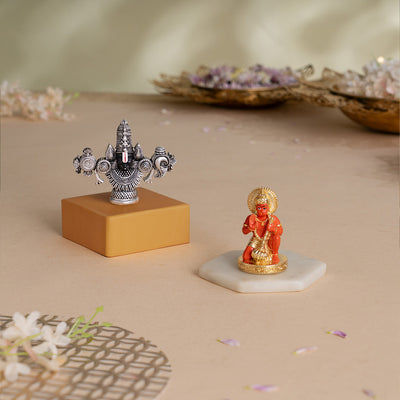
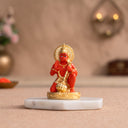
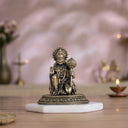
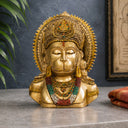
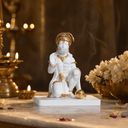
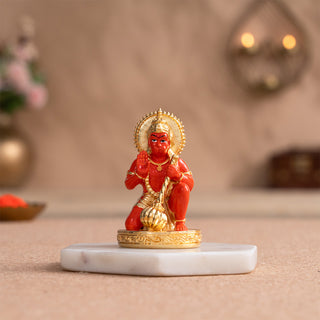
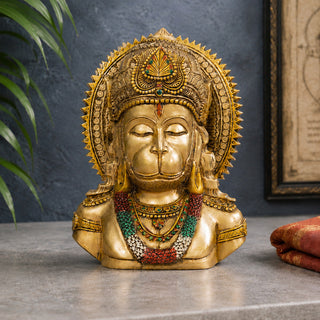
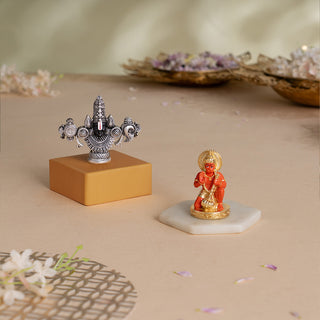
That vermilion is the single most recognisable thing about Hanuman worship, and it is why a sinduri Hanuman murti in that deep orange-red still reads instantly as him, centuries later. If you are choosing one for a home shrine, our guide to which Hanuman idol suits a home covers form and placement, and the full range of Hanuman ji murtis runs from small car-dashboard pieces to larger shrine pieces.
One caution about Monier-Williams. He also offered a theory that Hanuman began as a deified tribal leader whose people resembled apes. That is nineteenth century race thinking, and we are citing him for what he watched and for his Sanskrit, not for that.
A birthday for someone who never left
If Hanuman is a chiranjivi, one who has not died, then a yearly birthday is a slightly strange thing to hold. He did not go anywhere. There is no anniversary of a departure to mark.
Which may be exactly why the date was never fixed. You do not schedule a visit with someone who is already in the room. What the day really does is set aside time to sit with him, read the Hanuman Bahuk or the Chalisa, and remember what he is for: strength that serves, and devotion that does not need to be asked twice.
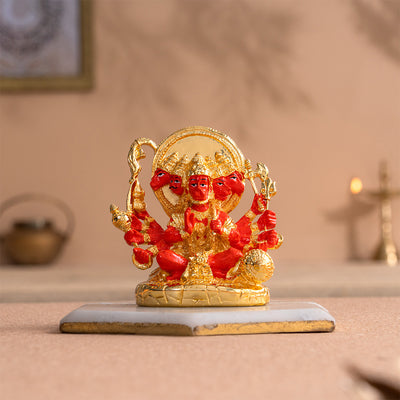
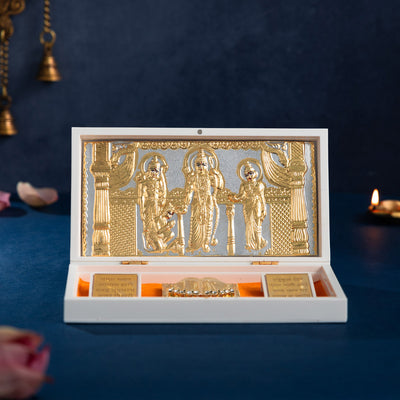
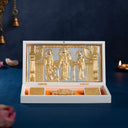
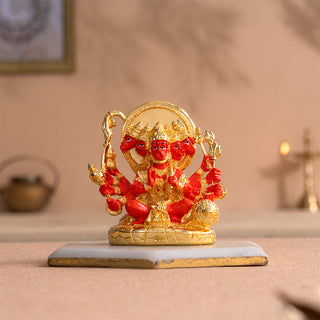
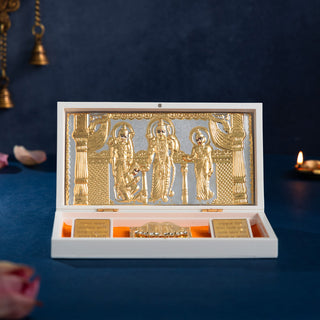
That fits the way people already treat him. He turns up in the Panchmukhi story, in the tale of Makardhwaja, in the question of who could ever defeat him. He is never the point of the story. He is the one who makes the story work, standing beside Rama and his brothers in every Ram Darbar in every house.
Keeping the day at home
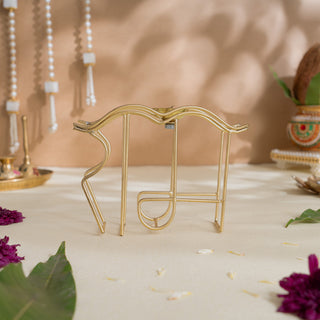
Nothing here is complicated. A bath, clean clothes, a lamp lit at the shrine. Sindoor and a little oil on the murti if that is your family's practice. A red or orange flower. Chalisa, Bahuk or Sundarkand, read aloud rather than played.
On timing, check your own household panchanga. The full moon tithi starts and ends at different clock moments depending on which almanac you follow and where you live, so the New Delhi times above are one almanac's answer for one city. Your local temple and your family calendar are better guides than any website, including this one.
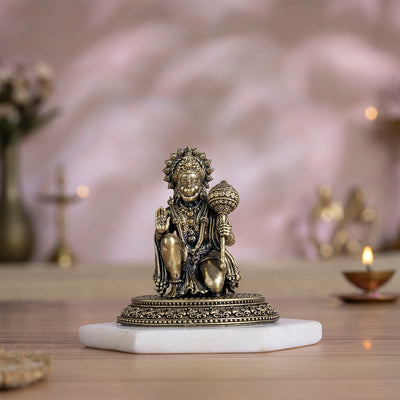
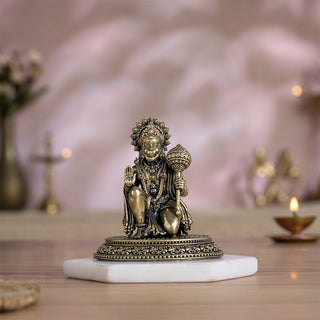
If you keep the day in Chaitra, it comes just after Ram Navami, so many homes simply extend the same shrine. A Ram Navami and Hanuman Jayanti setup usually holds both. Some families prefer brass for daily worship because it takes oil and vermilion well and only looks better with age.
Also read: Is Lord Hanuman Still Alive | Ram Navami: Date, Tithi and Rituals | Who Was Lord Hanuman's Father | Which Hanuman Idol is Good for Home | How Did Ram Die | The 10 Biggest Hanuman Statues in India, by Verified Height