Ask this question in a room full of people and you will get two confident answers within ten seconds. "Devaki." "No, Yashoda." Then someone will say "but Jagannath isn't really Krishna, is he?" and the conversation falls apart.
They are all partly right. The trouble is that the question has two different answers. It depends on whether you are asking about a person born in a prison cell in Mathura, or about a wooden image sitting in a temple in Odisha. Puri's own tradition holds both ideas at once and never quite reconciles them. That is the most interesting thing about this whole subject.
Why the question splits in two
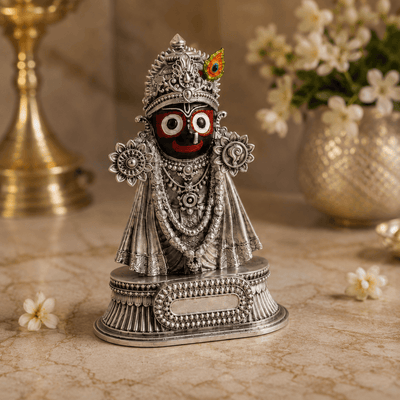
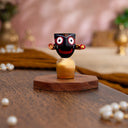
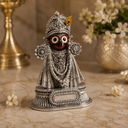
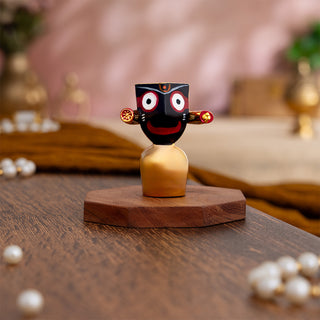
Jagannath, also spelled Jagannatha, is the presiding deity of the temple at Puri in Odisha. His name means lord of the universe. He is worshipped as a form of Vishnu, and more specifically as Krishna, and he stands with his elder brother Balabhadra and his sister Subhadra. Puri also calls him Purushottama, and Darubrahma, the god made of wood. That is why devotees who buy a Jagannath idol for their home think of him the same way they think of Krishna: same god, different face. If you follow that logic, then Krishna's parents are Jagannath's parents, and the question is settled by the Bhagavata Purana. Vishnu's descents into the world are counted and named in the tradition of the ten avatars of Vishnu, and Krishna is one of them.
But at Puri the deity is not described as being born. He is described as being found. That is a completely different kind of origin story, and it is the one the temple's own scripture tells.

Devaki bore him. Yashoda raised him.
The Bhagavata Purana's tenth canto tells the birth plainly. Krishna is born to Devaki, the eighth child, in a cell where Kamsa has been killing her children one by one. Then Vasudeva, his father, carries the newborn out that same night and lays him on Yashoda's bed in Gokul, picking up her daughter and carrying her back to the prison in his place.2
Two mothers, in one night. The text keeps them distinct and does not pretend otherwise. Devaki gives birth. Yashoda wakes up, finds a baby beside her, and raises him. She does not know for years. If you have ever wondered why the same god is called both Devaki-nandana and Yashoda-nandana, that swap is the reason. His father's side of the story follows the same pattern: Vasudeva by birth, Nanda by upbringing.
This is also why Janmashtami is celebrated the way it is, with a midnight birth and then a morning of butter and cradles. One festival, two houses.
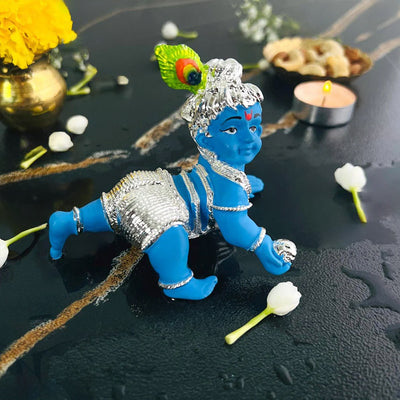
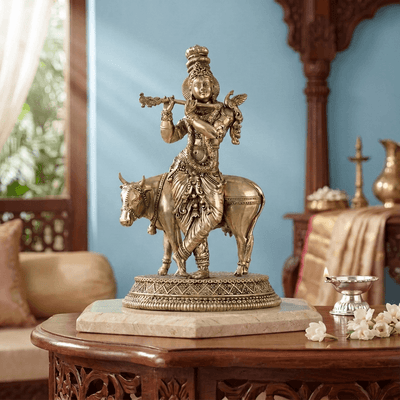
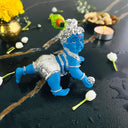
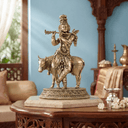
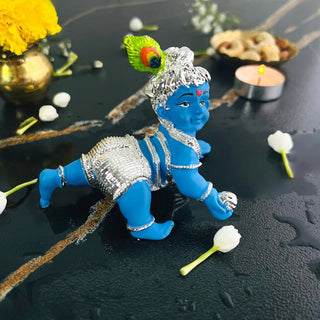
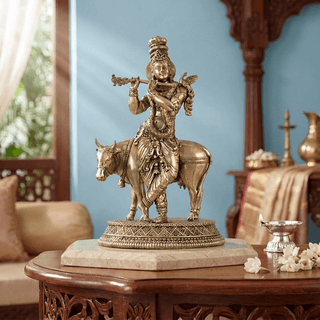
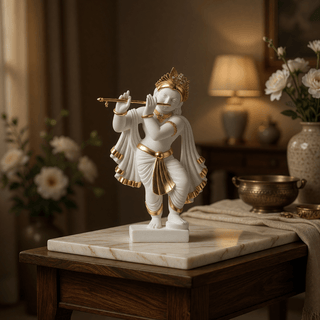
So if the question is "who is Jagannath's mother" and you are treating Jagannath as Krishna, the answer is: Devaki gave him a body, Yashoda gave him a childhood. Most homes that keep a Krishna murti in the pooja room are, without thinking about it, worshipping the Gokul boy rather than the Mathura prince: the crawling baby, the flute, the butter. That is Yashoda's Krishna.
Then whose son is Balabhadra? Not Devaki's
Balabhadra (Balarama) stands on the chariot beside Jagannath as his elder brother. But the Bhagavata says his embryo, the seventh, was moved out of Devaki's womb and into Rohini's, another of Vasudeva's wives, who was living quietly in Vraja away from Kamsa's reach.3 That transfer is why he carries the name Sankarshana, roughly "the one dragged across."
So Balabhadra's mother is Rohini. Not Devaki. The two brothers on the chariots do not share a mother at all.
This is not an obscure footnote either. It is the same text, two chapters earlier, in the middle of the birth narrative that everybody quotes. It just gets skipped, because it complicates a story people like to keep simple. The later years of Krishna's life are full of these small textual surprises once you start reading rather than remembering.
And Subhadra? One word in the Mahabharata gives it away
Subhadra's mother is never stated outright. The Bhagavata names her as Krishna's sister and as the grandmother of Parikshit, and leaves it there.
But the Mahabharata drops a clue. In the Adi Parva, when Krishna is describing her to Arjuna, she is called "the handsome daughter of Vasudeva" and, more usefully, "the uterine sister of Sarana."5 Uterine sister means same mother. And when the Bhagavata lists the sons of each of Vasudeva's wives (Devaki, Pauravi, Rohini, Bhadra, Madira, Rochana, Ila), Sarana appears among Rohini's sons.4
Read the two together and Subhadra's mother is Rohini as well. Which would make her Balabhadra's full sister and Krishna's half-sister.
I want to be careful here: that is an inference from two texts read side by side, not a line anywhere that says "Rohini bore Subhadra." Some traditions name Devaki instead. Treat it as what the texts point to, not as a settled fact. Questions of parentage in these epics are often like this: the question of Sita's real father works the same way, with the answer sitting between two accounts rather than inside one.
Which leaves us with three figures on three chariots and, read strictly, three different origins: Devaki, Rohini, and (as we're about to see) a piece of wood.
At Puri, nobody is born at all
The oldest sustained account of Puri is the Purushottama Kshetra Mahatmya, a long section of the Skanda Purana running to more than forty chapters. It is the source everything else is built on, and there is no mother anywhere in it.
What it has instead is this. King Indradyumna wants to see Vishnu. He sends out an envoy, Vidyapati, who finds a Savara tribal chief named Visvavasu secretly worshipping a blue deity called Nila Madhava. The deity vanishes. Then a tree comes floating in on the sea, and from that wood the images are made. An old carpenter agrees to carve them in the form the king had seen in a dream, and once the work is done he simply disappears.1
The Puri Temple Administration goes further and says outright that the old carpenter was not a craftsman at all, but the Lord himself. He carved his own body.6
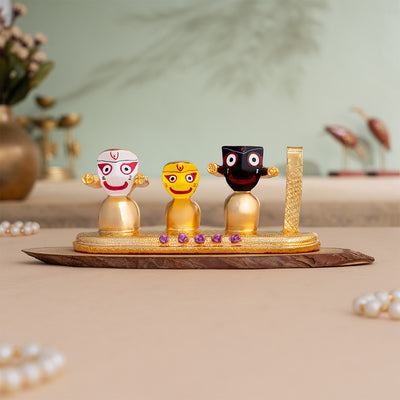
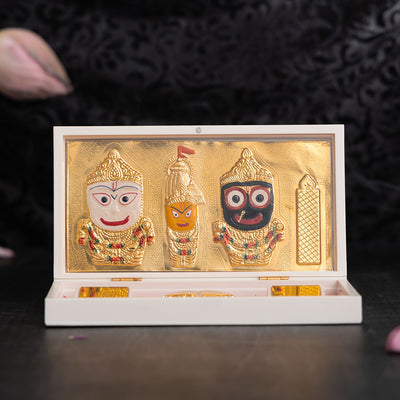
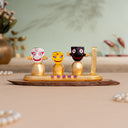
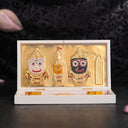
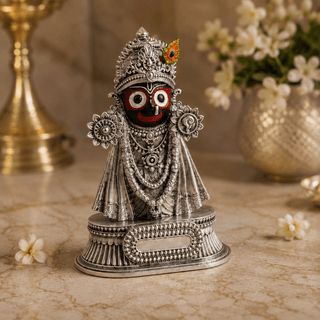
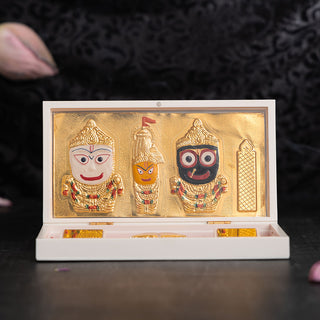
The same chapter of the Mahatmya then tells you who these figures are, and it is theology rather than genealogy: Lakshmi herself was born as Subhadra, Balabhadra is Ananta the king of serpents, and Sudarshana (the fourth, the one people forget) is counted among "these four forms of Lord Vishnu." That discus has its own story of how it came to Krishna, and at Puri it stands on the chariot as a deity in its own right. If you keep the three of them together on one base at home, as in this Jagannath, Subhadra and Balabhadra murti set, you are keeping a group that the Purana describes as forms, not as a family.
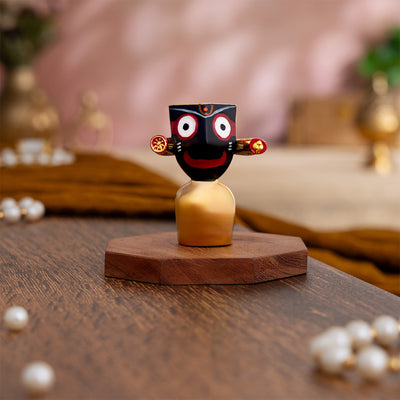
The word the tradition uses for the material is daru: wood. Puri reads it as Da, the bestower of bliss, and Ru, the remover of sorrow. Inside each image there is a cavity holding a sealed casket, the Brahma Padartha, and the temple's own website admits nobody publicly knows what is in it. It lists four competing guesses: a tooth of the Buddha, an image of Vishnu, a salagrama shila, or a fragment of bone from the Krishna incarnation.8
A sealed box instead of a birth certificate. That is the honest Puri answer.
Three things people get wrong about this
1. Gundicha is not his mother, and not his aunt. This one is everywhere. In the Skanda Purana, Gundicha is not a person at all: it is a mandapa, a pavilion, a place where the Lord stays and where devotees earn merit by seeing him. In Puri's own legend, Gundicha is King Indradyumna's queen, the one who persuaded her husband to open the carpenter's door too early. The "aunt" belongs to a different shrine entirely, Mausi Maa on the Grand Road, where the famous poda pitha is offered. Three separate things, collapsed into one by retelling. If you want the actual sequence of the festival, the reason Rath Yatra is celebrated and the full Rath Yatra story lay it out properly.
2. The three deities are not siblings with the same mother. We have just walked through why. Balarama's mother is Rohini, Krishna's is Devaki, and Subhadra's is most likely Rohini too. And at Puri the question dissolves completely, because the images are said to come from wood rather than from a womb.
3. Vishwakarma was not interrupted mid-carving, at least not in scripture. The famous story is that the divine architect asked for twenty-one days behind a closed door, and Queen Gundicha opened it after fifteen, freezing the idols half-made. It is a beautiful story. It is also not in the Skanda Purana, which has the carpenter finish, vanish, and the images decorated in colours in the very next chapter. The twenty-one-day version is Puri temple tradition, told on the administration's own site without a single scriptural citation. That is worth knowing before you repeat it, and it is the real answer behind why Jagannath has no hands. The same goes for the eyes: no verse anywhere describes them. The Purana just calls him lotus-eyed, the ordinary epithet for Vishnu, and the large round eyes belong to the carved form and Odisha's painting tradition, not to a text.
So why does the answer keep changing?
Because there are at least three layers stacked on top of each other at Puri, and each one answers the question in its own language.
The oldest layer is tribal. The temple administration says this itself, without any hedging: Jagannath "was originally a deity of the aboriginal tribes and was known as Nila Madhava, his image being made of some sort of blue stone."9 A deity like that does not have a mother. He has a place and a clan.
The second layer is Puranic. Once the deity is identified with Vishnu and then with Krishna, the whole Mathura-Gokul family arrives with him: Devaki, Yashoda, Vasudeva, Rohini, Balarama, Subhadra. That is where the mother question comes from in the first place.
The third layer is Odia devotional, and it is the warmest of the three. It gave us the queen who opened the door, the deities who fall ill after their bath and vanish for a fortnight, the elephant faces of the Hati Besha, and the whole household feel of a god who eats, sleeps, gets sick and goes travelling. This is the layer that makes people talk about aunts and mothers at all, because it treats him like family.
None of those layers is fake. They just answer different questions. And the temple is remarkably honest about its own limits: its history page says reliable historical material only begins around the 9th century, and that attempts to push the cult back to Kharavela in the 2nd century BC have achieved "almost negligible" success.10
What to say when someone asks you
Say this: as Krishna, his mother is Devaki, who bore him, and Yashoda, who raised him, and the Bhagavata Purana keeps both women in the story on purpose. As the deity of Puri, he has no mother, because he is not born. He arrives as wood from the sea, and what sits inside him is a sealed casket nobody has opened.
Then, if the person is still listening, tell them the better fact: the three figures they see side by side on the chariots have three different origins, and the temple has never tried to tidy that up. Balabhadra's charioteer isn't even the one most people name: the sarathi of Nandighosh is a small myth-bust of its own. There are plenty of genuinely strange facts about the temple that need no exaggeration, starting with the fact that the deities are periodically remade and the old ones buried.
Every year during Rath Yatra, all of this comes out onto a public road for anyone to see, and Puri turns into something no photograph gets right. Nobody in that crowd is thinking about genealogy. Which may be the point: the Skanda Purana's own stated reason for the festival is not commemoration but salvation for whoever sets eyes on him. A god who needs no mother, and no introduction.
Also read: Why Jagannath Has No Hands | Why Jagannath Has Big Eyes | The Rath Yatra Story | Facts About the Jagannath Temple | Who Is the Father of Lord Krishna | Does the Jagannath Temple Flag Fly Against the Wind?