Search for Sita's father name and you get four confident answers. Janaka. Ravana. The earth goddess. A "secret" the Ramayana is supposedly hiding.
Only one of those is in Valmiki. And there was never a secret. Janaka tells the whole story out loud, to Rama, in front of a hall of people, at the moment he is offering his daughter in marriage. A man covering something up does not do that.
Sita's father name: what Janaka actually says
Janaka says he found Sita in a furrow while he was ploughing a field for a yajna. The passage sits in the Bala Kanda, sarga 66. He is setting out the terms of the bow-contest, and before he does, he explains where the girl came from.
He calls her ayonijaa, "not uterine-born". He repeats the word later in the same chapter when he states the marriage condition.1
अथ मे कृषतः क्षेत्रं लांगलादुत्थिता ततः ॥१३॥ क्षेत्रं शोधयता लब्धा नाम्ना सीतेति विश्रुता। भूतलादुत्थिता सा तु व्यवर्धत ममात्मजा ॥१४॥ वीर्यशुल्केति मे कन्या स्थापितेयमयोनिजा
In plain English: As I was ploughing the field, she rose up behind the plough. I found her while clearing that ground, and she became known by the name Sita. She rose from the earth and grew up as my daughter. She was not born from a womb.
Valmiki Ramayana, Bala Kanda 1.66.13b–15a
That is the whole answer, and there is no drama in it. The name says it too. Sita means the furrow: the line a plough cuts in the ground. She is named after the place she was found.
So the text quietly corrects the question. Nobody fathered her. She was found. And the Ramayana treats being found as a perfectly good way to belong to somebody. For an epic obsessed with lineage, that is a radical thing to put on the page.
This is also why Janaka is called Videha, the bodiless one, and why his line is the Videha line. The man who raises a daughter out of the earth is the one the tradition remembers as least attached to the body.
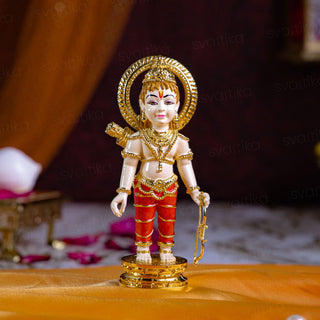
If the earth is her mother, who exactly is the earth?
Bhudevi. Prithvi. Madhavi. Different names in different texts for the same figure: the earth as a goddess with a will of her own, not a metaphor for soil.
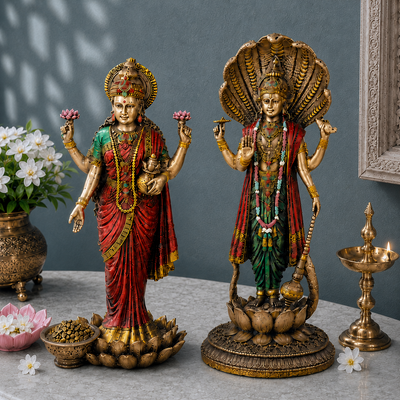
She is not a minor character in the Vishnu story either. The Varaha avatar exists entirely because of her. Vishnu takes the form of a boar to lift the earth out of the cosmic waters. In several traditions Bhudevi becomes Vishnu's consort alongside Lakshmi. So when the earth hands a daughter to a king in Mithila, and that daughter marries an avatar of Vishnu, the family tree is doing something deliberate.
Read the ten avatars of Vishnu in a row and the pattern is hard to miss. The earth keeps showing up as the thing being rescued, held, married or returned to.
The Bhagavata Purana gives a different kind of answer
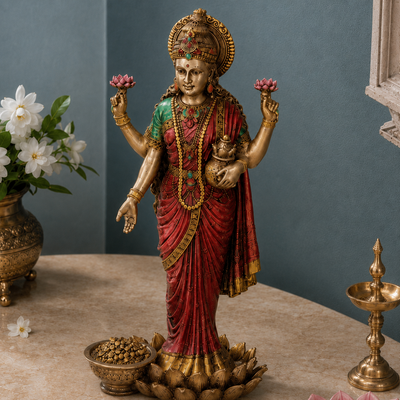
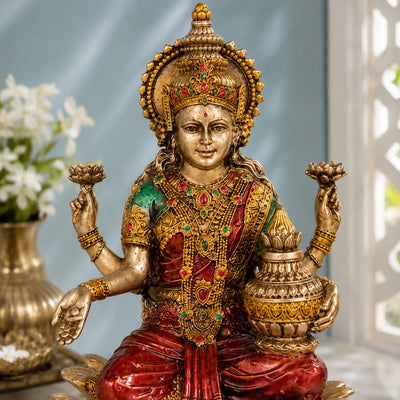
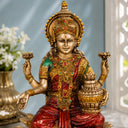
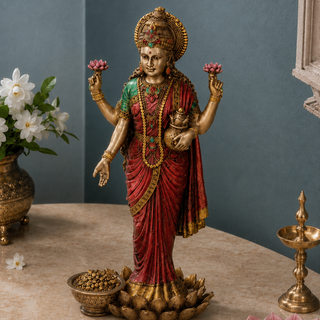
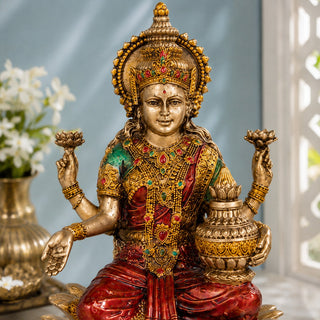
The Srimad Bhagavatam says Sita is Lakshmi, the Goddess of Fortune.6 It skips the furrow and gives the theological answer instead. Vishnu comes down as Rama, and she comes down with him, as she always does.
The same chapter says the Lord appeared "along with three of His expansions" as the four sons of Dasharatha. That is the Purana's compressed way of telling what Valmiki tells slowly, through the payasam and the three queens. We wrote that up in Lord Rama's brothers, including the odd detail that Dasharatha "thought a while" before handing the leftover share of the sacred rice pudding to Sumitra a second time.3
Two texts, two answers, and they do not clash. Valmiki tells you where she was found. The Bhagavata tells you who she is. That is normal in Hindu texts. The tradition usually holds several answers at once rather than choosing one.
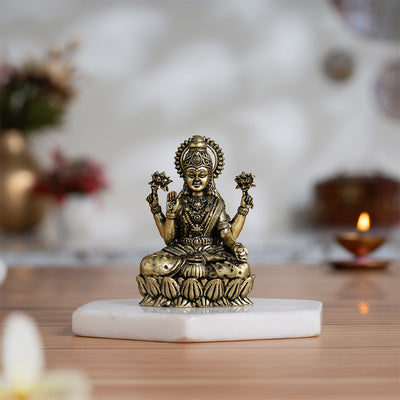
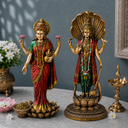
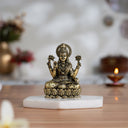
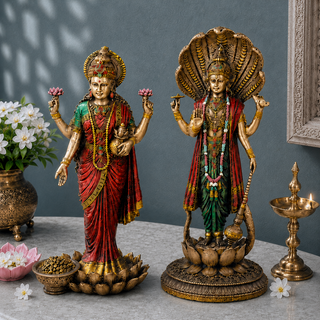
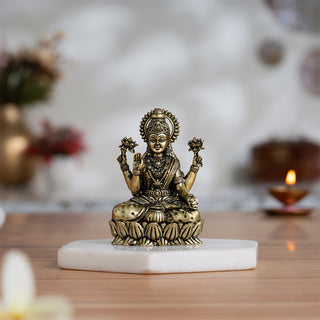
It is also why so many homes keep Lakshmi murtis and a Ram Darbar in the same mandir without thinking twice. The identification is old and it is scriptural.
Three things people get wrong about Sita's birth
1. "The Ramayana says Sita was secretly Ravana's daughter"
Valmiki says nothing of the kind. There is no verse. Janaka's furrow account is the only origin story the Ramayana gives, and it is stated plainly and repeated.
The daughter-of-Ravana idea is real, though. Just not Valmiki's. A.K. Ramanujan, in his well-known essay "Three Hundred Ramayanas", traces the motif to a Jain tradition (the Vasudevahindi) and to folk tellings in Kannada and Telugu. In one of them Sita is born from Ravana's sneeze after he eats a mango meant for his wife.8 These are genuine, old, much-loved retellings. They are not the Valmiki text, and any article that gives you a chapter-and-verse number for "Sita, daughter of Ravana" is inventing one.
2. "The Adbhuta Ramayana proves the Ravana paternity twist"
The Adbhuta Ramayana is not a paternity story at all. Its famous break from the standard telling is something else, and much wilder: a hundred-headed Ravana whom Sita herself kills, in a form closer to Kali than to the quiet queen of popular imagination. If you have only ever met Sita as patient and passive, that version will rearrange your head. People cite it for the paternity twist without opening it.
3. "Janaka isn't really her father, so the whole thing is a cover-up"
The opposite. He announces it. He tells Rama, unprompted, at the moment of the proposal, and he uses the word for non-uterine birth twice. He also calls her his soul-born girl in the same sentence. That is not the language of a man distancing himself.
The cover-up framing says more about how we read families now than about the text. Valmiki simply does not treat "found" and "belongs to me" as opposites.
She left the way she arrived
Sita ends her story by asking the earth to take her back. That is the strongest proof that the earth really is her mother, and it is not in her birth chapter at all.
In the Uttara Kanda, after the second exile, her sons Lava and Kusha grow up and sing the epic back to their own father. Sita is then asked to swear her purity one more time in public. She does something else instead. She calls on the earth goddess and asks to be taken back: "if in thought I have never dwelt on any but Rama, may the goddess Madhavi receive me", and the ground opens and receives her.4
That is not a random ending. It is her birth, run backwards. She came out of the furrow and she goes back into it. In the text's own grammar, that is the answer to who her parent is.
Rama's own end follows the same logic of return, and it is not what most people think: no curse, no weapon, no defeat. We went through it verse by verse in how Ram died, including the disagreement between Valmiki and the Bhagavata Purana about whether there was a river at all. Consorts who leave before or after the god they came with is a pattern across the epics. What happened to Radha after Krishna left Vrindavan runs on very similar rails.
One honest caveat. Both the Ravana genealogy and this closing sequence sit in the Uttara Kanda, the seventh book, which a good deal of scholarship treats as a later addition. A widely used online edition of Valmiki carries only six kandas and leaves it out entirely.9 That does not make the episode worthless, since it has shaped a thousand years of devotion. But it is fair to know which book you are standing in.
Why the tradition kept inventing fathers for her
Later poets gave Sita a father because it makes the war hurt more. If Ravana is her father, the abduction becomes a man destroying his own house, and the prophecy that his daughter would end him lands with a thud. That is good storytelling, and Jain and folk poets knew it.
The Jain Ramayana does something similar with Ravana himself. It counts him among the sixty-three great men of its cosmology: a learned king who earned his powers, rather than a demon. Once you know that, the standard listicles about his family look thin. We picked that apart in the brothers of Ravana, where the famous "six" turns out to be about three, with a cousin promoted and a character from a later Bengali retelling quietly added in.
The epic has always been rewritten. That is not a scandal. It is how the story stayed alive across languages for two thousand years. The only real error is calling a rewrite "the Ramayana" without saying which one.
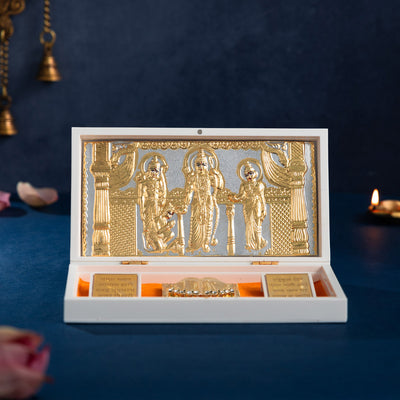
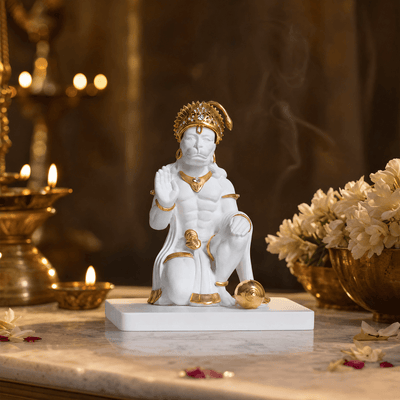
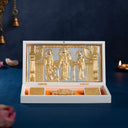
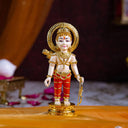
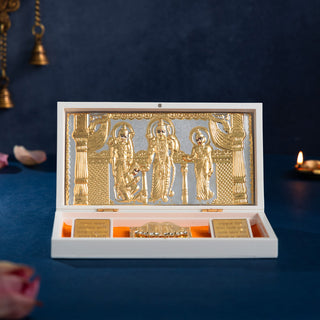
And the household version, the one most of us grew up with, keeps all of it together anyway. A Ram Darbar puts Rama, Sita, Lakshmana and Hanuman in one frame: a king, a woman the earth gave up, a brother who chose exile, and a devotee who found her when nobody else could. Found family, arranged in brass, on a shelf. Nobody in that group is there by accident of birth. It is also why Ram murtis are almost never sold as a single figure in Indian homes. The story does not work alone.
A few loose threads worth pulling
Hanuman is the one who finds Sita in Lanka, and that search is the hinge of the entire epic. His own story keeps going long after Rama's ends. The tradition holds he is still here, which we looked at in is Hanuman still alive and in the seven chiranjeevis. For the strange later material there is Makardhwaja, and the near-invincibility explored in who can defeat Hanuman.
The bow Rama breaks at the swayamvara is Shiva's, which pulls a second god into Sita's marriage. Worth reading beside Shiva's own parentage and the five daughters of Shiva, where the same question of what "born" means comes up again and again.
And if you have wondered why Rama's homecoming got attached to lamps, the honest answer surprised us. Valmiki spends two full chapters on how Ayodhya was decorated, and nobody lights a lamp for Rama. We traced where the lamps actually come from in Diwali diya decoration and the Ramayana. For the practical side of keeping any of these murtis at home, what to keep in a pooja room and which Hanuman idol suits a home cover the ground.
So who is the father of Sita Mata?
Janaka. Not by blood, and he says so himself. Her mother is the earth, and the text proves it twice: once when the plough lifts her out, and once when the ground takes her back. Everything else is a later telling. Some of those later tellings are magnificent. They are just not Valmiki, and the difference is worth keeping straight.
Also read: How Did Ram Die | Lord Rama's Brothers | The 6 Brothers of Ravana | Ram Avatar of Vishnu | Ram Navami 2027