Ask anyone in India why Krishna didn't marry Radha and you get a confident answer. She was already married to a man called Ayan. There was a curse. She was older than him. Their love was too pure for anything as ordinary as a wedding.
None of those answers come from the oldest sources. When you actually open the Mahabharata, the Vishnu Purana and the Bhagavata Purana, the question starts to dissolve. Radha is not in them.
Why Krishna didn't marry Radha: the texts in order of age
The Krishna story is very old. Radha's place at the centre of it is not. Reading the sources oldest first makes this clear. The translations quoted below are the standard public-domain ones: Ganguli for the Mahabharata, H. H. Wilson (1840) for the Vishnu Purana, Edwin Arnold (1884) for the Gita Govinda, and the Sacred Books of the Hindus series (1920) for the Brahma Vaivarta.
Start with the Mahabharata. There is a Radha in it. She is not from Vrindavan. In the Vana Parva, a Suta charioteer named Adhiratha goes down to the Ganga with his wife, "his wife named Radha was unparalleled on earth for beauty." She finds a box floating in the river, and inside it is a baby. She raises him. That baby is Karna, and this is exactly why he is called Radheya, son of Radha.
So the great epic does know a Radha. She is a charioteer's wife who adopts an abandoned child. She has nothing to do with Krishna.3
This matters because the Mahabharata is not shy about Krishna. He drives Arjuna's chariot, speaks the Bhagavad Gita, argues in the Kuru court and watches his own city fall. If a beloved from Vrindavan were part of that life, the epic had eighteen books in which to mention her.
Next comes the Vishnu Purana. It tells Krishna's life in full: Vrindavan, the cowherds, Kamsa, Dwarka. It also counts his marriages. Krishna "had sixteen thousand and one hundred wives; of these the principal were Rukmini, Satyabhama, Jambavati, Jatahasini, and four others." If you want the fuller story of that number, we have written about how many wives Krishna had. Radha is not one of them. Her name does not appear anywhere in the Purana's text.2
The gopi the Bhagavata Purana refuses to name
The Bhagavata Purana is where the Rasa-lila lives: the circle dance Krishna holds at night in the forest with the gopis, the cowherd women of Vrindavan. It is the scene every later poet built on. In the middle of it Krishna slips away with one gopi, and the others notice.
अनयाराधितो नूनं भगवान् हरिरीश्वरः । यन्नो विहाय गोविन्दः प्रीतो यामनयद्रहः ॥
In plain English: She must have worshipped the Lord Hari perfectly. Govinda was so pleased with her that he left the rest of us and took her away to a private place.
Bhagavata Purana 10.30.28
Read it again. No name. Sukadeva, the sage telling the whole Purana, describes her and then walks past her name.
Gaudiya Vaishnava tradition says the name is hidden inside the verse itself. The second word above is aradhitah, "worshipped", and Radha's name sits inside it. The great commentator Visvanatha Cakravarti writes that Sukadeva "has tried with all endeavor to keep Her name hidden, but now it automatically shines forth from the moon of his mouth."5
That is a beautiful reading, and millions find their daily worship of Krishna in it. But be clear what it is: a commentator reading a name out of a verb. Visvanatha frames it that way himself. The verse does not say Radha. He says the verse is concealing her.
Radha arrives around 1150 CE
The poet who put Radha at the centre of Krishna's story is Jayadeva, who wrote the Gita Govinda in Sanskrit. Arnold gives the date from the scholar Lassen: Jayadeva "wrote, according to Lassen, about 1150 a.d."
Arnold also says where the plot came from. The theme "is found in the tenth section of the Bhagavata." So Jayadeva took the old Rasa-lila and did something new with it. He gave the unnamed gopi a name, a voice, jealousy, longing, and the whole second half of the poem. Radha appears 59 times in it.4 She is the centre.
Wilson reached the same conclusion from a different direction. He called the Radha-Krishna devotion "a form of belief of known modern origin." A nineteenth century Sanskritist and a twelfth century poet's own translator are saying the same thing. The love story is roughly a thousand years younger than the epic.
The Brahma Vaivarta Purana's answer: she is his left half
The Brahma Vaivarta Purana says Radha came out of Krishna's own left side. It is the one Purana that tells her story at length.
In plain English, the passage says: from Krishna's left side a beautiful woman appeared. The sages who know the Puranas call her Radha. And because she came out of his own life, she is dearer to him than his life.
Brahma Vaivarta Purana, Prakriti Khanda. Rendered in plain English from the 1920 translation; no Sanskrit text was verified for this passage.
She does not arrive from another village. She comes out of him. The same text goes further: "Whoever regards Radha and Krisna as distinct suffers endless torments of hell."
Sit with that. In this Purana there is nobody for Krishna to marry, because Radha is not another person. She is his own left half, standing outside him so that love can happen at all. A wedding would be a downgrade: it would make two out of one.
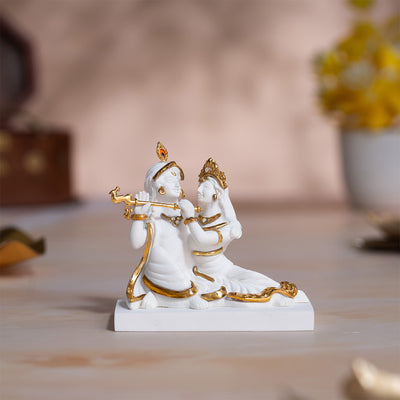
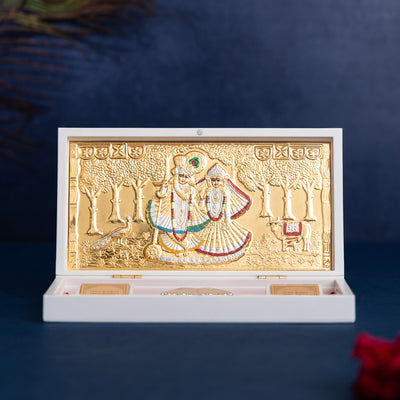
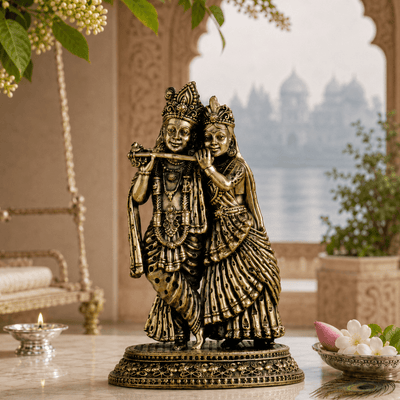
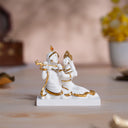
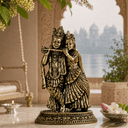
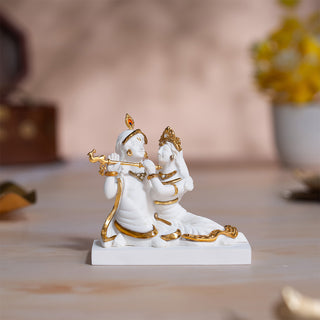
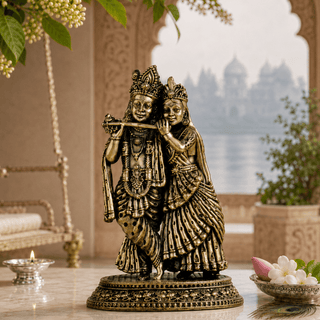
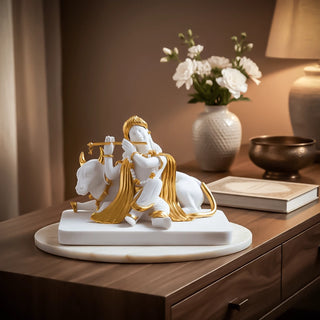
This is also why the paired Radha Krishna murti is made the way it is, with the two figures leaning into a single silhouette rather than standing side by side like a married couple. Older Radha Krishna idols across Indian workshops follow the same rule. The form is telling you the theology.
One more detail from that Purana kills a popular myth on its own. Radha manifests already "16 years of age" at the moment she appears. There is no age gap, because there is no separate birth.1 We have looked at that claim in detail in was Radha older than Krishna.
Three things people get wrong about Radha and Krishna
"Radha was already married to Ayan, so Krishna couldn't marry her." This does not appear in the Mahabharata, the Vishnu Purana or the Bhagavata. It is later and regional, carried by folk retellings and by the Bengali and Braj poets who came after Jayadeva. I could not open a text that contains it, so I will not give you a verse number for it. Treat it as tradition.
"A curse kept them apart." Same problem. The oldest sources have no curse, because they have no Radha in Krishna's life to curse. The Brahma Vaivarta, the one Purana that does tell her story fully, gives a reason that has nothing to do with an obstacle: they were never two.
"The Radha-Krishna romance is one of Hinduism's oldest stories." It is one of the newer ones. Jayadeva wrote around 1150 CE. The Mahabharata is many centuries older and does not know her. This does not make her less real to the people who love her. It makes her a genuine development in Indian religious history, which is more interesting than a flat claim of antiquity.
The traditions themselves disagree
Two major traditions read this question in opposite ways.
The Gaudiya Vaishnava school, the tradition of Chaitanya in Bengal, actively prizes parakiya, love outside marriage, as the higher devotional mood. In that reading the unmarried state is the point. Love that owes nothing to duty, contract or family is love in its purest form.
The Nimbarka sampradaya holds the opposite. Radha and Krishna are eternally wedded in Goloka, the highest spiritual world, and the marriage simply happened outside our history rather than inside it.
A later section of the Brahma Vaivarta Purana is also said to describe a secret wedding at Bhandirvan, with Brahma himself performing the rites. That section was not in the volume I was able to open, so I am not attaching a verse to it. You will see it quoted often. Now you know how much weight it can carry.
Two respected traditions, reading the same god, reach opposite conclusions. That is not a failure of the sources. That is what a living religion looks like.
Why none of this takes anything away
It would be easy to read all of this as a debunking. It isn't one.
What the oldest texts give Krishna is a kingdom, a war, sixteen thousand queens and a death by a hunter's stray arrow. Those are the facts of a life. What devotional India added, slowly, over centuries, is something the epics never offered him: a love that owns nothing and asks for nothing. No dowry, no lineage, no throne. Just longing.
That is why Radha is worshipped first. In the Brahma Vaivarta, Krishna worships her on the Kartika full moon night before she worships him. It is why her name is said before his in Radhe Krishna, and why Radha Ashtami is kept in Barsana with the same care as Janmashtami. A tradition that understood she was his own self was never troubled by the marriage question. We are the ones who keep asking it.
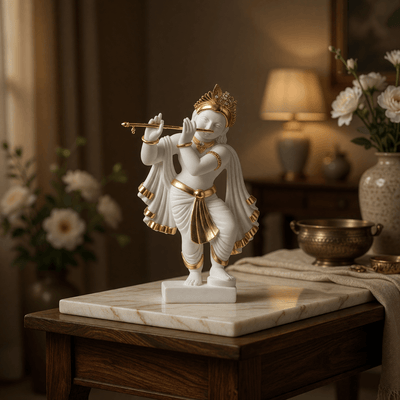
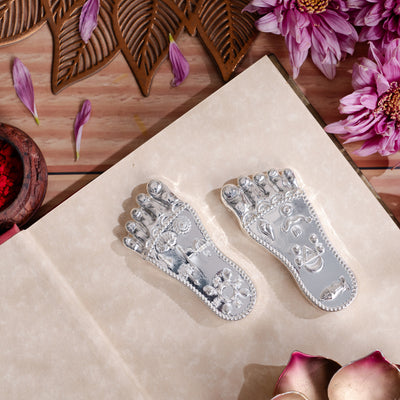
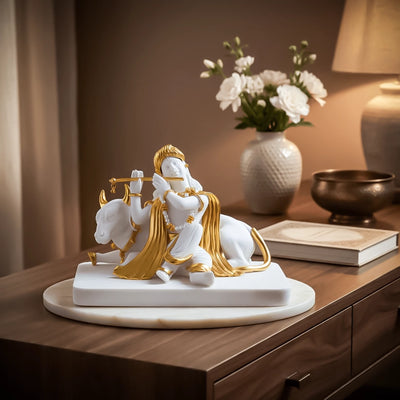
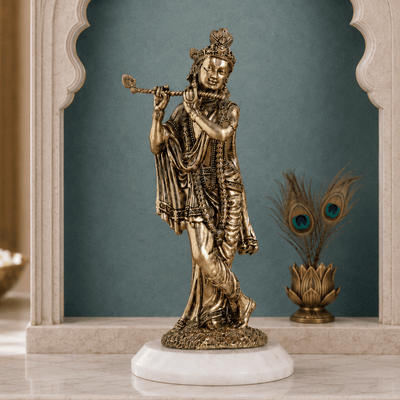
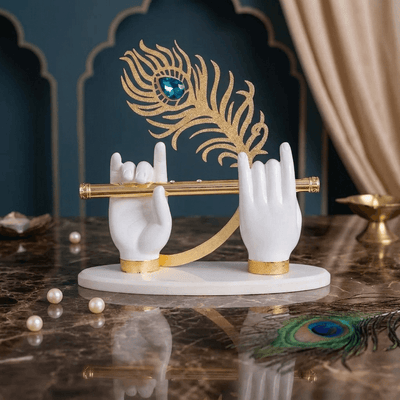
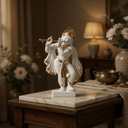
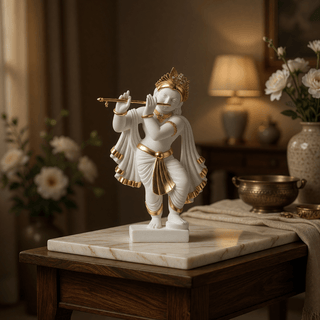
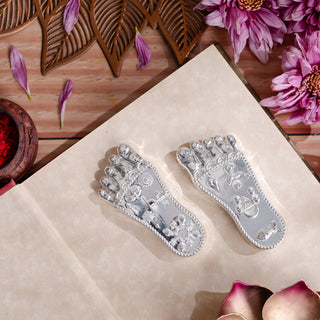
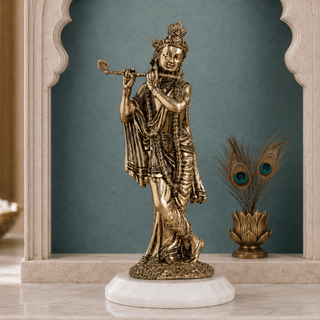
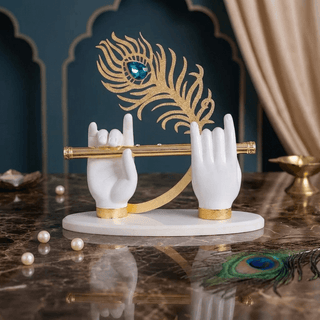
If you keep them at home, the pairing carries this meaning quietly. Many families place a decorated Krishna idol with his flute beside Radha, or keep his lotus feet as the object of daily surrender. Krishna idols in brass are often passed down for generations, so a little care matters: our guide on cleaning a marble idol covers the safe method. And if you want the sound of the tradition rather than its history, the Krishna mantras are where most people start.
The friendship in Krishna and Sudama works the same way. Indian devotion keeps finding relationships that carry no power in them at all, and keeps deciding those are the holiest ones.
Also read: What Happened to Radha After Krishna Left Vrindavan | How Did Radha Die | How Many Wives Krishna Had | Who is the Father of Lord Krishna | The 10 Avatars of Vishnu