Ask ten people how to worship Krishna and you will get ten shopping lists. Peacock feather, silver thali, a specific number of tulsi leaves, a mantra repeated an exact number of times, all of it delivered with the confidence of someone quoting a rulebook.
So I went looking for the rulebook. It is thinner than you would expect, and much kinder.
The shortest answer in scripture is four things
The Bhagavad Gita gives the minimum in one verse. Chapter 9, verse 26: patram pushpam phalam toyam (a leaf, a flower, a fruit, water). Krishna says that when someone offers these to him with devotion, he accepts them.
The list is tiny. Four things anyone in any village in any century could find in ten minutes, free. The heavy word in the sentence is not any of the items. It is bhaktya (with devotion). That is the actual condition. Everything else is negotiable.
This matters because most articles about worshipping Krishna start by telling you what to buy. The Gita starts by telling you what you do not need.
Two verses earlier, in 9.17, Krishna calls himself the father, the mother, the support and the grandsire of the whole universe. A striking claim from someone who in the story has two fathers of his own, Vasudeva and Nanda. The worship is being offered to someone the text insists is already family.
The nine ways to worship Krishna, according to Prahlada
If the Gita gives the floor, the Bhagavata Purana gives the curriculum. In Canto 7, chapter 5, the boy Prahlada is asked what he has learned. He answers with nine limbs of devotion, the navadha bhakti, listed at 7.5.23-24:
- Shravanam: hearing about him. Reading, listening, sitting through a katha.
- Kirtanam: singing his names.
- Smaranam: remembering him through the ordinary day.
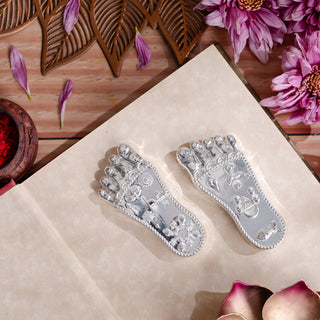
- Pada-sevanam: serving his feet.
- Archanam: formal worship of the image.
- Vandanam: prayer, bowing.
- Dasyam: serving him as a servant serves.
- Sakhyam: friendship with him.
- Atma-nivedanam: giving yourself away.
Only one of the nine (archanam) is what most of us mean by "puja". The other eight need no lamp, no thali and no fixed hour. You can do smaranam on a crowded local train. You can do sakhyam by simply talking to him the way you would to a friend who is late.
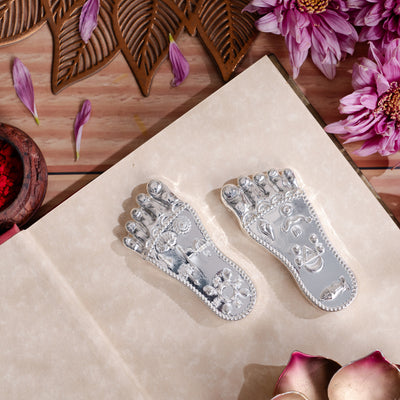
The fourth limb is the one people skip because they do not know what to do with it. Pada-sevanam is service at the feet, and it is treated as a distinct practice, not a poetic mood. This is where the lotus feet imagery comes from. The Bhagavata is specific about those feet: at 10.30.25 the gopis recognise Krishna's footprints in the Vrindavan dust by the marks on his soles, naming a flag, a lotus, a thunderbolt, a barleycorn and an elephant goad, then adding "and so on".5 In the Gopi-gita a few verses later they beg him to place those feet on their hearts, and worry that the sharp forest grass is hurting feet "more beautiful than a lotus" (10.31.7, 10.31.19).6 Many homes keep a pair of Krishna's charan paduka on the altar for exactly this limb: the feet stand in for the whole person, and touching them is how you say you accept his authority.
A home puja that is actually described in the text
In Bhagavata Purana 4.8, a five-year-old boy called Dhruva walks off into the forest determined to find God, and the sage Narada gives him instructions. Not philosophy: instructions. It reads like a puja vidhi because that is what it is, and it is one of the reasons Dhruva is remembered as one of Vishnu's first great devotees.
Go to the bank of the Yamuna at Madhuvana, bathe, and prepare a seat. Chant om namo bhagavate vasudevaya. Worship with pure water, garlands of forest flowers, roots, fruit, fresh grass, buds, bark and tulsi leaves. (Bhagavata Purana 4.8.42-43, 4.8.53-56, paraphrased)
Strip the forest setting and you have the bones of a home puja: a clean place, a bath, a seat, a mantra, and offerings that cost nothing. Notice that tulsi is named outright at 4.8.55. It is the one item modern lists treat as optional and the text does not. Worth remembering, because tulsi behaves very differently across deities, and there is a whole tradition about why it is kept away from Ganesha.
Notice also what is absent. No fixed hour. No number of repetitions. No instruction to buy anything.
What to chant
The twelve-syllable mantra Narada gives Dhruva (om namo bhagavate vasudevaya) is the best-documented Krishna mantra in the entire corpus, because we can see the verse where it is given, who it was given to, and what for. The Bhagavata names it the dvadashakshara, the twelve-syllabled one.
The sixteen-name Hare Krishna maha-mantra traces to the Kalisantarana Upanishad, a short Mantra-Upanishad of the Krishna-Yajurveda. It is a late and minor Upanishad, and saying so takes nothing away from it: millions of people chant it daily and the tradition around it is real. It just is not Vedic in the way people sometimes claim.10
Gita 18.66 (sarva-dharman parityajya, mam ekam saranam vraja) is recited less as a request and more as a mood. Give up everything else, come to me alone for shelter. If you want a wider set, we have looked at seven Krishna mantras and where each one actually comes from, including which ones are bhajans rather than scripture.
Prahlada's second limb, kirtanam, is the reason any of this counts as worship in the first place. Chanting is not a warm-up for the real puja. In the Bhagavata's own list it is the puja.
Three things people get wrong
1. "Gita 18.66 tells you to surrender at Krishna's lotus feet."
It does not mention feet at all. The verse says mam ekam saranam vraja (come to me alone for shelter).2 The lotus-feet vocabulary is genuinely scriptural, but it lives in the Bhagavata Purana and in bhakti poetry: the footprint verse at 10.30.25, the Gopi-gita at 10.31.7 and 10.31.19, and Prahlada's pada-sevanam. Quoting the right text for the right idea is the difference between an article you can cite and one you cannot.
2. "There is one correct sixteen-step procedure and doing it wrong is dangerous."
The detailed sixteen-step shodashopachara most families follow is real and old, but it comes from Agama and Pancharatra ritual literature, not from the Gita or the Bhagavata. If you have been avoiding a home altar because you were scared of getting the sequence wrong, the sources are on your side.
3. "Worship Krishna correctly and you will get what you ask for."
The texts do make large promises, but read what they are promising. The Gita offers freedom from fear and from bondage. Narada tells Dhruva he will see results in seven days (4.8.53). And the context is a child performing severe austerity alone in a forest, not fifteen minutes at a home shelf. Puranas also attach extravagant merit claims to their rituals: the Padma Purana values one Radha Ashtami observance above a thousand Ekadashi fasts. Quote that as the text's own devotional voice, not as arithmetic.
So what are the benefits, honestly?
Steadiness. Every one of Prahlada's nine limbs is a habit, and habits change people. Hearing, singing and remembering are ways of keeping one thing in mind while your life happens around it.
Freedom from fear. This is the promise the Bhagavata returns to more than any other. Not wealth, not outcomes: the removal of dread.
Nearness that does not depend on presence. This is the subtlest one, and it comes from an unexpected place. When Krishna leaves Vrindavan he sends Uddhava back with a message for the grieving gopis: you were never separated from me, since I am present as the Soul of all (10.47.29). He adds that the distance itself is his arrangement, so that their minds stay on him (10.47.34).7 It is the most useful sentence in the tradition for anyone who has ever felt nothing at their own altar. The women of Vraj were told the same thing, by him, directly.
What the texts do not promise is a transaction. The story the tradition tells about this is the one where a poor brahmin classmate walks to Dwarka with four fists of flattened rice begged from neighbours. He is too embarrassed to hand them over, and he never asks for a single thing. He goes home to a palace. The point of that story is not that the rice worked. It is that he did not ask.
Setting up at home, without overthinking it
Pull the practical bits out of the passages above and a home setup writes itself.
- A clean place. The Padma Purana's Brahma-khanda treats sweeping and smearing the temple floor as worship in its own right, not as chores you do beforehand. The Bhagavata's account of Nanda's celebration for the newborn Krishna begins the same way: courtyards swept, then sprinkled with water (10.5.6).8
- A seat for the image. Narada tells Dhruva to prepare an asana. A low chowki does this. So does a clean cloth.
- A lamp. Offering a lamp gets its own chapter in the Padma Purana's Brahma-khanda. If you keep only one object beyond the murti, keep this.
- Something living. Tulsi, a flower, a fruit. Named in 4.8.55 and in Gita 9.26.
- Sound. A bell, a conch, a bhajan on a speaker. The Bhagavata's festival description ends with instruments sounding (10.5.13); worship in these texts is never only visual.
Direction, shelf height and which room to use are a separate conversation, and one worth having properly: we have covered what belongs in a pooja room and, specifically, how to decorate a Krishna idol at home using the Puranic descriptions rather than trends. If you keep a marble or marble-dust murti, learning how to clean it without damaging the finish saves a lot of grief later.
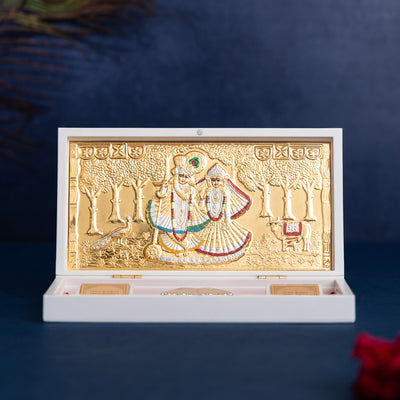
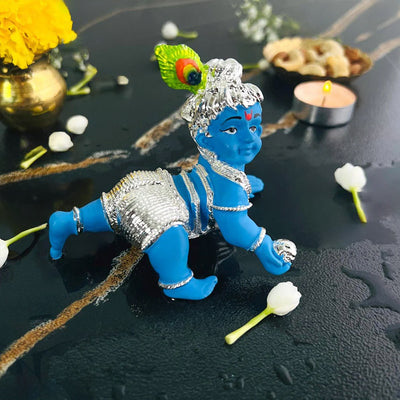
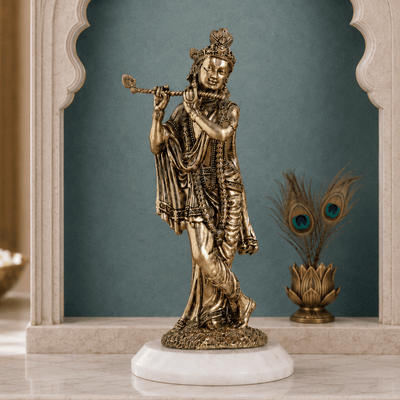
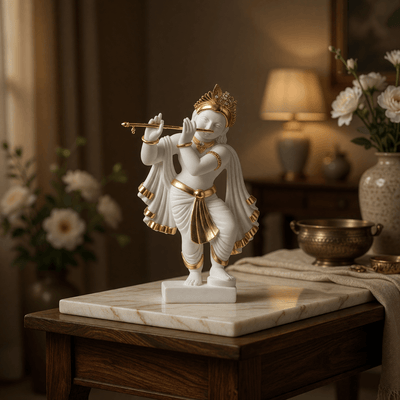
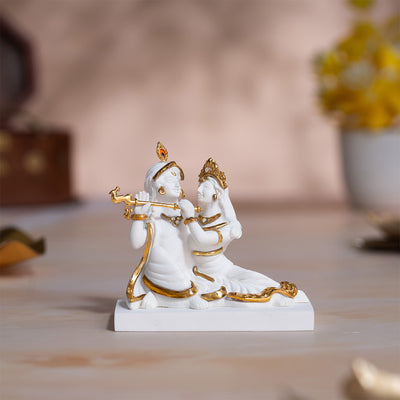
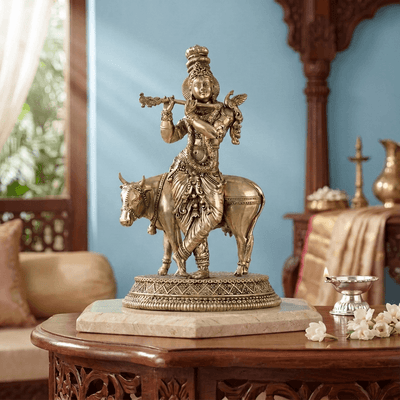
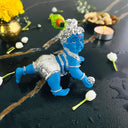
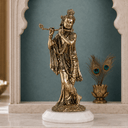
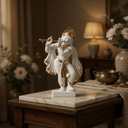
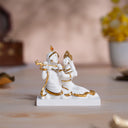
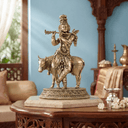
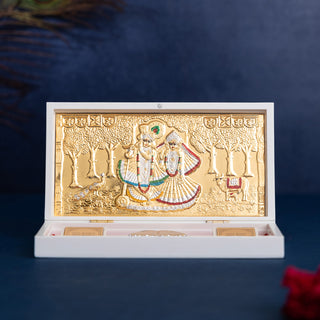
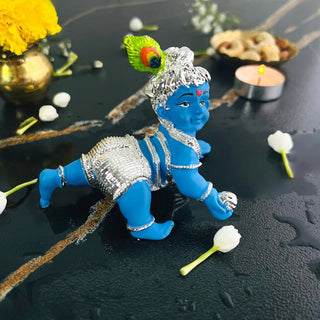
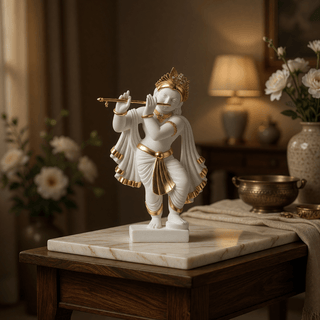
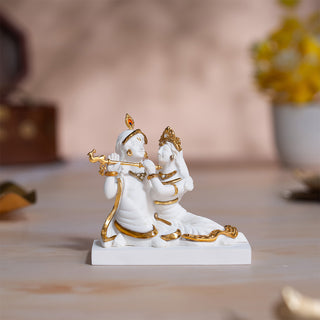
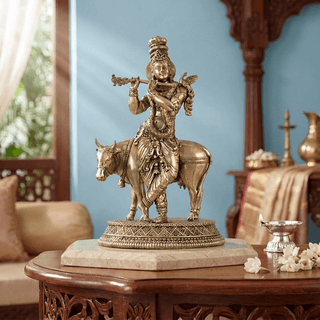
On which form to keep: the texts do not rank them. A Laddu Gopal is worshipped like a child, with food, clothing and a swing, which suits homes with children and a daily rhythm. A standing flute-playing Krishna is the Vrindavan Krishna of the Venu-gita, where cattle stop chewing mid-mouthful and rivers pause to listen. Radha Krishna together is the devotional form that grew later, through the Brahma Vaivarta Purana and Jayadeva's Gita Govinda. Radha is not named once in the Bhagavata Purana, which surprises almost everyone who hears it.

When to do it
Any day. That is genuinely the answer, and the nine limbs are built for it.
Two days do carry weight. Janmashtami is prescribed in the Padma Purana's Uttara-khanda, which sets it on the eighth of the dark fortnight of Shravana and names the day Jayanti when the Rohini nakshatra is visible that night. The same chapter describes the image itself: dressed in white cloth, garlanded with flowers, a lamp set in an arbour of flowers, bathed in milk, smeared with sandal, with music and dance around it.9 Most Janmashtami decoration ideas people share online are older than they realise; the mango-leaf toran over the door is described in Bhagavata 10.5.6.
Ekadashi is the other. It is Vaishnava practice rather than a Krishna-specific instruction, and it is honest to say so.
One last thing
The tradition's own verdict on who worshipped Krishna best is not flattering to any of us. Uddhava is a Yadava prince, a philosopher, and Krishna's own confidant. He is sent to Vrindavan to console the gopis with sound spiritual argument. He comes back and says he would rather be reborn as a bush or a creeper in Vrindavan, just to catch the dust from the feet of women who never read a single verse (10.47.61, 10.47.63).
The man sent to teach them ended up envying them. They had four things and devotion. That is the whole method.
Also read: 7 Powerful Krishna Mantras | The Sacred Lotus Feet of Krishna | How to Decorate a Krishna Idol at Home | How Many Wives Krishna Had | What Happened to Krishna's Body After His Death