Most people who type "Sai Baba miracle mantra for health" into a search box are not doing research. They are sitting outside a ward, or holding a report they don't fully understand, or watching a parent get thinner. They want a formula. Something exact, something with power in it, something to do at two in the morning when there is nothing else to do.
The honest answer is not a formula. It is smaller than that, and more useful.
Did Sai Baba ever give a mantra?
No. And we don't have to guess, because he was asked directly and his answer was written down.
B.V. Narasimhaswami spent years in the 1930s tracking down people who had actually sat in front of Baba, and published their testimony in Sri Sai Baba's Charters and Sayings (1942). In it, Baba talks about his own teacher:
"That Guru, I tell thee true, sitting as I do in this Masjid, never blew any mantra into my ear; nor do I blow any into yours."
And about his own practice, recorded in the same collection:
"Baba never gives Upadesh as is ordinarily understood i.e., he never utters mantra in the ear of any devotee."
That is as clear as a saint ever gets. In the older guru traditions, initiation usually meant a whispered syllable, passed from teacher to student, kept private. Baba refused that whole transaction: receiving it and giving it. So when you see a page offering "the secret mantra Baba gave for illness," the problem isn't that it's the wrong mantra. There isn't a right one. This is a bit like reading about the famous Tirumala temple secrets and finding that the temple itself never claimed most of them.
If you want a formal mantra practice, Hinduism has plenty with genuine textual homes: the Krishna mantras, or the Hanuman Bahuk, which Tulsidas composed while in pain and which is still recited for exactly that reason. Just don't put Baba's name on something he didn't say.
Who was he, and why does this keep coming up?
The Shirdi Sansthan's own history is refreshingly plain about how little is certain. Baba first appeared in Shirdi as a boy of about sixteen, sitting under a neem tree. He went away, and came back in 1858 with a wedding party. The village priest Mhalsapati looked at the young fakir climbing down and said, "Ya Sai": welcome, Sai. That is how he got the name he is known by.5 His birth year is only an estimate, somewhere around 1838. He lived in Shirdi for roughly sixty unbroken years and left his body on 15 October 1918.3
He lived in a broken-down mosque he called Dwarkamai. He begged for his food. He kept a fire going there constantly (the dhuni) and fed it with wood he collected. He healed people, and he refused almost everything that normally comes with being holy: no lineage, no ashram, no initiation, no fees.
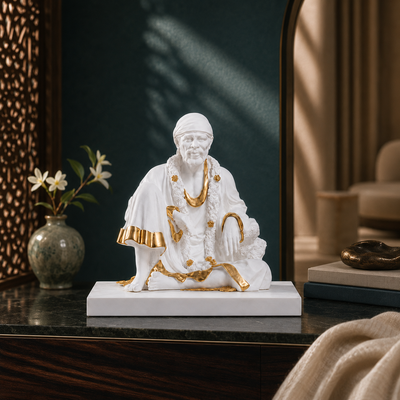
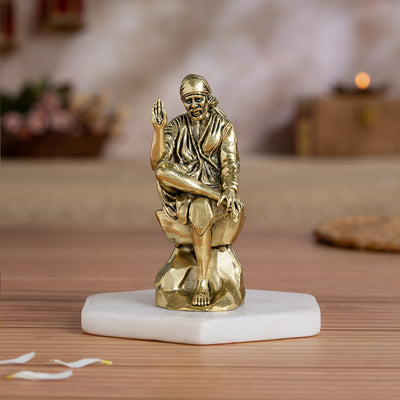
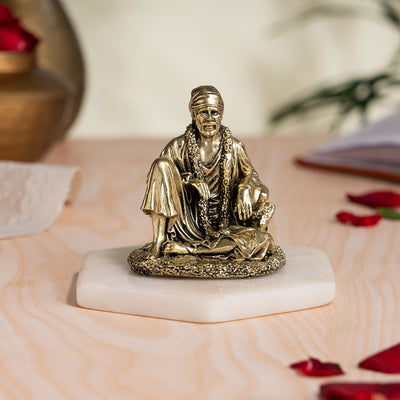
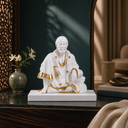
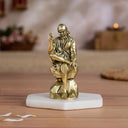
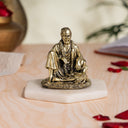
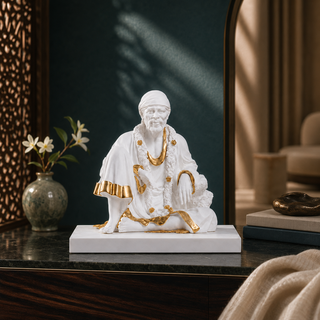
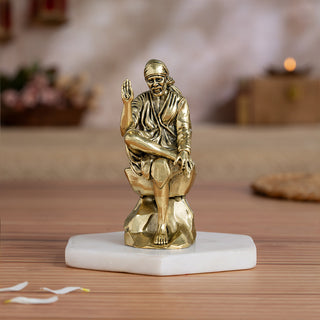
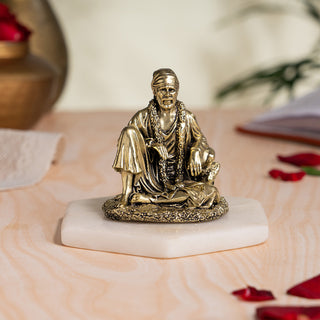
That refusal is exactly why the mantra question keeps coming back. People want a handle. A saint without a formula is hard to hold on to, so devotion invented handles for him afterwards. Millions of homes today keep a Sai Baba idol in the corner where the lamp is lit, and the question "what do I say to him?" is a completely fair one.
What he actually gave sick people: udi
When someone came to Baba with a fever, a scorpion sting, plague in the house, a child not recovering, he reached into the ash of his fire and gave them a pinch of it. That ash is udi. The primary texts are loud about this, and the internet is quiet about it.
The Shri Sai Satcharita, the devotee-written life of Baba that most Sai households own, gives udi two entire chapters. Chapters 33 and 34 are both titled "Greatness of Udi," and they are full of ordinary specifics: a scorpion sting, plague cases, the Jamner episode, Dr Pilley's illness, a doctor's nephew, Shama's sister-in-law. No verse is prescribed anywhere in them. He gave ash and said, in effect, go home.
But the meaning of the ash is the part worth carrying. The Shirdi Sansthan records Baba's own gloss on why he handed out cinders instead of blessings: he "taught by his udi that all the visible phenomena in the universe are as transient as the ash."
Baba's healing gift was a handful of burnt wood that used to be a tree, given to a body that will also one day stop. It is a teaching about impermanence first, and a remedy second. It is the same medicine the Buddha gave Kisa Gotami when she came carrying her dead son and asking for a cure: send her to look for a house untouched by death, and let the looking do the work. That refusal to lie about the body runs through everything the Buddha taught too.
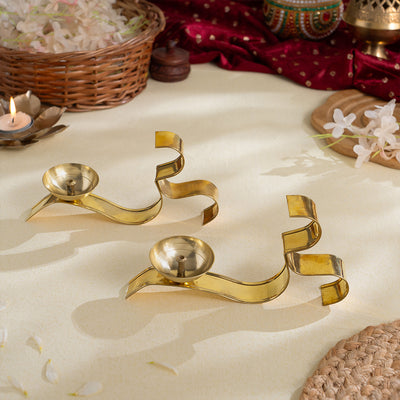
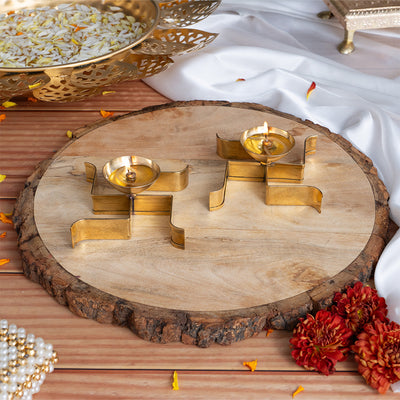
The fire itself is the point. Baba never let the dhuni go out. In most Indian homes the descendant of that idea is the lamp: a brass diya that gets lit at the same hour every evening, whether the news that day was good or bad. It is one of the few genuinely load-bearing things worth keeping in a pooja room, and it does something a mantra can't: it marks time in a house where time has gone strange.
The healing chapter nobody quotes
If you want the closest thing to a "Sai Baba health" text, it is chapter 13 of the Satcharita, titled "More Sai Leelas: Diseases cured." It works through named people: Bhimaji Patil, Bala Shimpi, Bapusaheb Buti, Alandi Swami, Kaka Mahajani, Dattopant of Harda.
What's striking is how unmagical the accounts are. Baba tells one man his condition will get worse before it gets better. He gives another a sleeping arrangement rather than a cure. He is often blunt. The book opens, before any of this, with an image that sets the tone: during a cholera outbreak, Baba sat down and ground wheat. The village watched, confused, and then understood: as the Satcharita puts it, "it was not wheat that was ground but the Cholera itself was ground to pieces and pushed out of the village."
That is the register. Physical work, ash, presence, stubbornness. Not syllables.
Worth knowing if you want to read it yourself: the popular English Shri Sai Satcharita is an adaptation by Nagesh Vasudev Gunaji, not a literal translation of Dabholkar's Marathi original.2 A fuller English edition of Dabholkar's text was published in 2004.6 If a quote matters to you, check which one you're holding.
The one practice he did bless
Baba refused mantras. He did not refuse his name.
Narasimhaswami records him saying:
"Simply say Sai, Sai with heart overflowing."
And: "Those who perpetually repeat my name reach their Goal." The Satcharita's third chapter says the same thing in its own words: that the simple remembrance of his name as "Sai, Sai" will do away with the sins of speech and hearing.
So there is a practice. It just isn't a formula. It has no fixed count, no prescribed hour, no Sanskrit, no pronunciation you can get wrong. Two syllables, repeated by someone who means them. In the wider tradition this is nama-smarana (remembrance of the name), the same instinct behind the way Krishna is worshipped at home, and behind the story of a five-year-old becoming Vishnu's first devotee with nothing but repetition and refusal to leave.
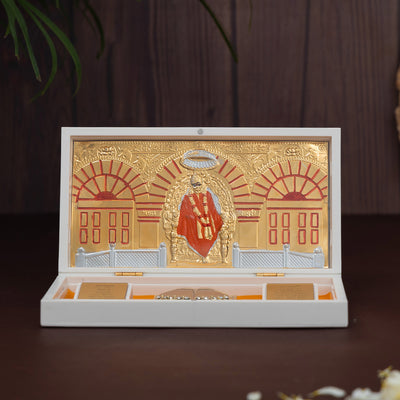
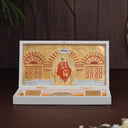
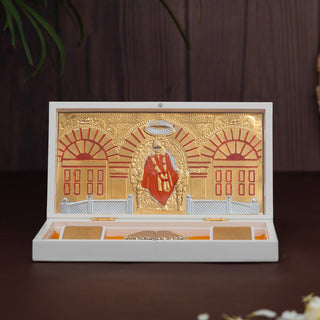
It also happens to be the only spiritual practice that survives a hospital. You can do it in a corridor. You can do it holding someone's hand. This is why so many families keep something small and portable near a bed: a Sai Baba pocket temple that opens on a side table and shuts into a bag, or a small idol on the car dashboard, picked from the dashboard range for the same reason. The object isn't the practice. It's just a reminder to start.
Nishtha and Saburi: the only two things he asked for
Baba's entire demand from a devotee was two words. Faith and patience. Nishtha and Saburi.
To Radhabai Deshmukh, an old woman who had gone on hunger strike outside Dwarkamai trying to force him to make her his disciple, he explained why he had nothing to whisper, and then said this:
"Saburi is courage, do not discard it. It ferries you across to the distant goal."
If you are in a long illness, that sentence is worth more than any formula. Saburi is not passivity. He calls it courage. It is the specific courage of a family in month seven of a treatment plan, where nothing dramatic happens and you simply have to keep showing up. Sitting with something unresolved is the whole discipline behind Zen meditation too, from a completely different direction.
The other half is the line devotees quote most, and it is genuinely attested in Narasimhaswami: "Why should any fear, when I am here?"1
Four things people get wrong about Sai Baba and health
1. "The Sai Gayatri and Om Shri Sainathaya Namaha are Baba's own mantras." Neither appears in the Shri Sai Satcharita or in Narasimhaswami's Charters and Sayings, the two closest records of what Baba actually said. They are later devotional compositions by the movement that grew after him. Sing them with a clear conscience. Just don't attribute them to Baba.
2. "The Eleven Assurances are a single scripture he dictated." They are a compilation, gathered by devotees after his mahasamadhi from things he said at different times. Individual lines inside them are real: "Why do you fear? Am I not there?" is attested. The numbered list as a set is devotional tradition. This is the same distinction worth making about what happened to Krishna's body after his death: much of what we believe is tradition sitting on top of text, and it is stronger, not weaker, for being named honestly.
3. "Baba told devotees to stop taking medicine." The record is more careful than that. There is one instance of him telling a devotee not to take medicines. But his circle was full of doctors (Dr Pandit, Dr Pilley, Dr Captain Hate) and the Satcharita's healing chapter sits beside them, not against them. There is no blanket teaching to refuse treatment.2 Anyone telling you otherwise is quoting a Baba who does not exist in the sources.
4. "Udi is a magic cure." By Baba's own explanation, udi is a lesson about transience. The healing chapters are real and should be told. But the ash's first meaning in the texts is a reminder of what the body is, not a pharmacy. He also, in chapter 32, explicitly disapproved of fasting as a spiritual technique, which tells you something about how he felt regarding punishing the body to please God.
So what do you actually do?
You do the boring, unglamorous thing the sources support, and you do the medical thing properly. Nothing on this page is treatment or a substitute for a doctor. Baba's own circle of physicians is why that sentence belongs in an article about him, not in a disclaimer at the bottom.
Then: light the lamp at the same time every day. Say the name: two syllables, as many times as you like, badly, in your own language, while doing the dishes. Sit for a minute in front of him without asking for anything. Keep going on the days it feels pointless, because that specific keeping-going is what he called courage.
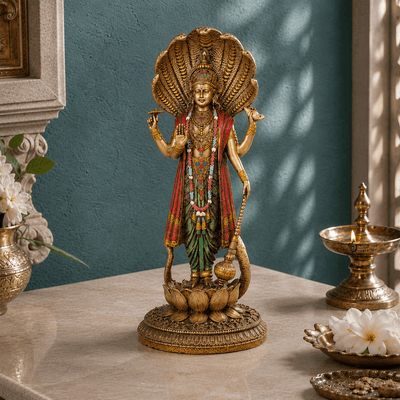
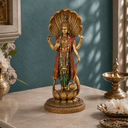
Once, in chapter 27 of the Satcharita, Baba did hand a devotee something to recite: a copy of the Vishnu Sahasranama, the thousand names of Vishnu. Notice the shape of even that. He didn't whisper. He gave a book, in daylight, in front of people, and let the man read it himself. Nothing hidden, nothing exclusive, nothing that needed him as a middleman. If you have ever wondered why Vishnu's ten avatars and the story of Balaji sit so comfortably next to Sai Baba in Indian homes, that's part of the answer: he never asked anyone to leave anything.
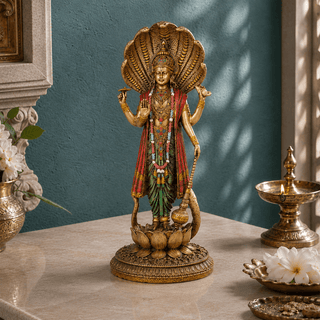
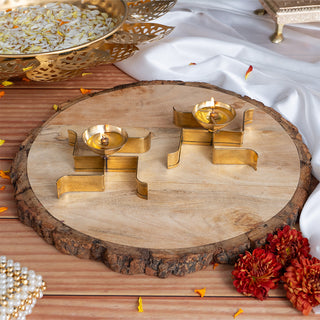
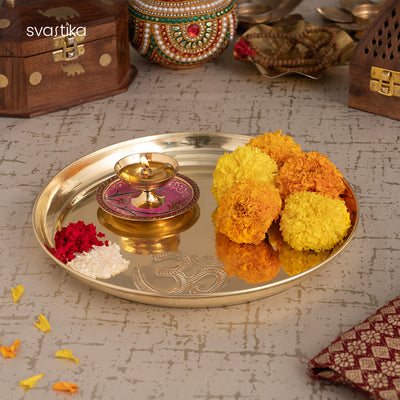
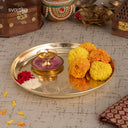
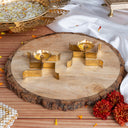
A last, practical note. If a murti of Baba will sit in your house through a difficult year, treat it like something that lives there: dust it, clean the marble properly, keep the thali and lamp in usable condition, blow the conch if that's your family's habit and you know how to keep a shankh. Care is a form of Saburi. So is showing up on a Thursday when nothing has improved.
The idea that a saint is still present is persistent in India, the same instinct that keeps people asking whether Hanuman is still alive. With Baba, the primary texts don't ask you to settle that question. They just ask you to trust, and to wait, and to say the name.
That's the mantra. It was never a secret.
Also read: Who is Balaji: The Story of Lord Balaji | 10 Tirumala Temple Secrets | How Buddha Taught Kisa Gotami the Truth of Life | What is Hanuman Bahuk | 7 Powerful Krishna Mantras